
Why this happens
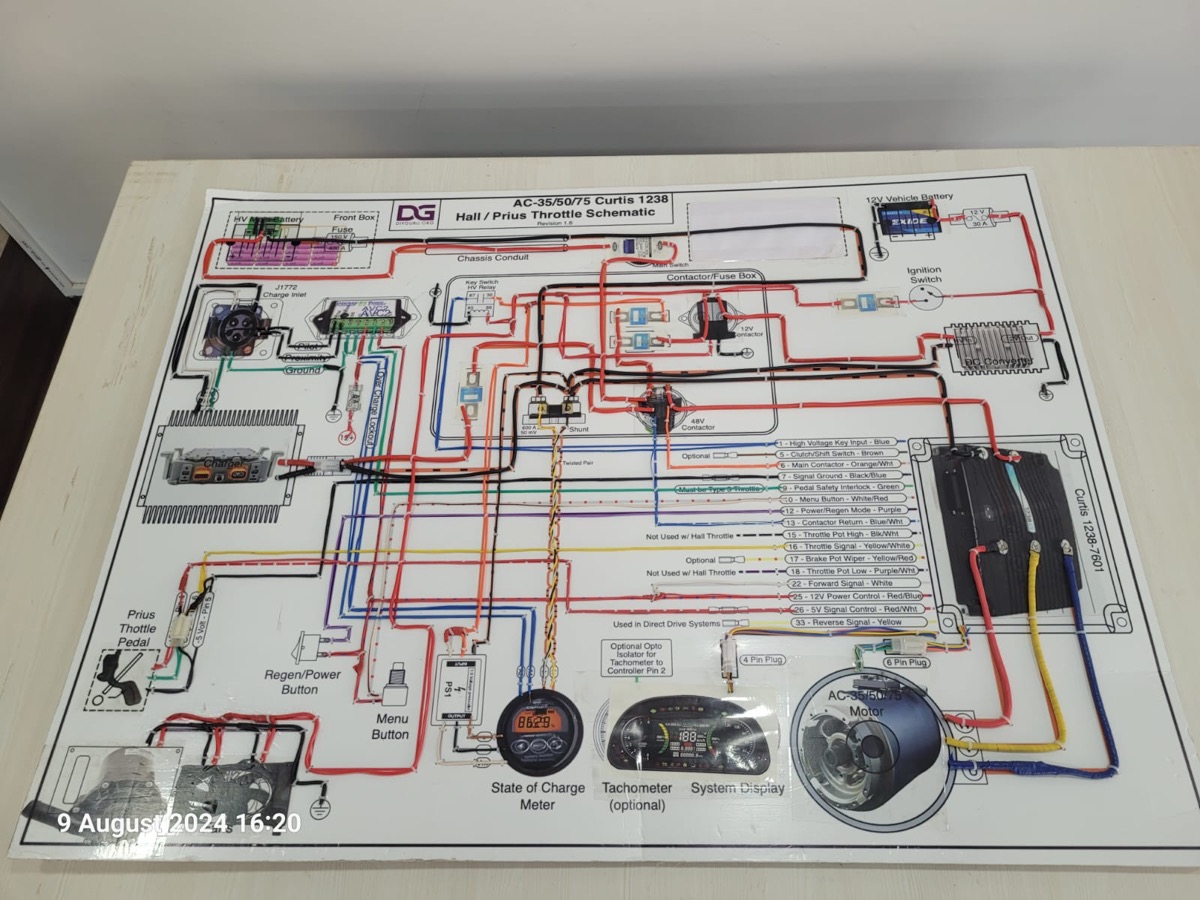
Intermittent faults are usually mechanical: a pin that has backed out of its housing, a conductor broken inside its insulation, corrosion in a connector or a loose ground. They only show when vibration or movement opens the gap. Reproducing the movement while measuring turns the fault from occasional to visible.
What you need
Tools
- Digital multimeter, ideally with a beep or min/max function
- Insulated screwdrivers
- Torch
- Centre stand
- Phone camera
Materials
- Electrical contact cleaner
- Dielectric grease
- Cable ties
- Notebook
Before you start
- Do continuity tests with the battery disconnected.
- Keep fingers and loose clothing away from wheels if testing with the key on.
- Do not wiggle or flex main battery cables or high-voltage car wiring.
- Opening sealed or warranty-labelled harnesses may void warranty.
Step by step
- 1
Record when the fault happens
Note the exact symptom and when it happens: over bumps, when turning the handlebar, after rain, when hot, or at random. That narrows the area. A fault when steering points to the handlebar harness; one over bumps points to connectors and grounds; one after rain points to water ingress.
- 2
Choose a safe measurement
For wiring checks, switch off, unplug the battery connector where the manual allows, and use continuity mode so the meter beeps while a wire is connected end to end. For checking a low-voltage accessory such as a light while it is working, keep the vehicle on its stand with the wheel off the ground and stay clear of moving parts.
- 3
Set up a continuity watch
With the battery disconnected, unplug the connectors at each end of the suspect wire and connect the meter probes to its two ends using clip leads. The meter should beep steadily. If your meter has a min/max or hold function, use it to catch very brief drop-outs.
- 4
Wiggle section by section
Starting at one end, gently flex the wire and its connectors a few centimetres at a time, then push and pull lightly on each connector housing. Do not yank. Listen for the beep breaking. Mark any spot where it drops out. Pay special attention to bends near the steering head, under the seat hinge and at the motor axle.
- 5
Inspect the connector pins
If the fault appears at a connector, unplug it and look closely with a torch. Check that every pin is fully seated and has not been pushed back, and that the sockets grip firmly. Look for green or white corrosion. Clean with contact cleaner and let it dry. A pin that has backed out can often be reseated until its locking tab clicks.
- 6
Check the grounds
Loose or corroded ground points cause many flickering faults. Find the ground terminals on the frame, remove each with the battery disconnected, clean the terminal and contact surface to bright metal, and refit it tightly. Protect it with a thin film of dielectric grease or a corrosion inhibitor once tightened.
- 7
Repair and secure
Repair a broken conductor with a proper crimped splice and adhesive heat-shrink, or replace the wire. Then add support so it cannot flex at the same point: a gentle loop at the steering head, a cable tie to hold the harness, or a grommet at an edge. Apply dielectric grease to connector seals before reconnecting.
- 8
Repeat the test and ride
Repeat the wiggle test on the repaired section; the beep should stay steady. Reconnect the battery, check the circuit works, then ride over the conditions that caused the fault. Keep a note of what you found in case it returns.
How to tell it worked
Flexing the repaired section no longer breaks the meter's beep, and the original symptom no longer appears over bumps, while steering or after rain.
Stop and call a technician if
- The fault is in the main battery cable, battery connector or motor phase wiring.
- The intermittent fault causes the motor to cut out or surge in traffic.
- You find melted insulation or signs of arcing.
Questions
My fault only happens when it rains. Can a wiggle test find it?
Sometimes. Check connectors for water and corrosion as well; drying them, cleaning them and greasing the seals often cures rain-only faults.
Why use the min/max function?
Some breaks last only milliseconds, too fast to hear. Min/max or hold catches the brief drop that tells you the wire is intermittent.