
5 days On-site · lab
Four-wheeler EV high-voltage safety training
Work safely on a 4W EV's high-voltage system: PPE, isolation, battery and powertrain checks and diagnostics.
Fee ₹8,000
View details & enrol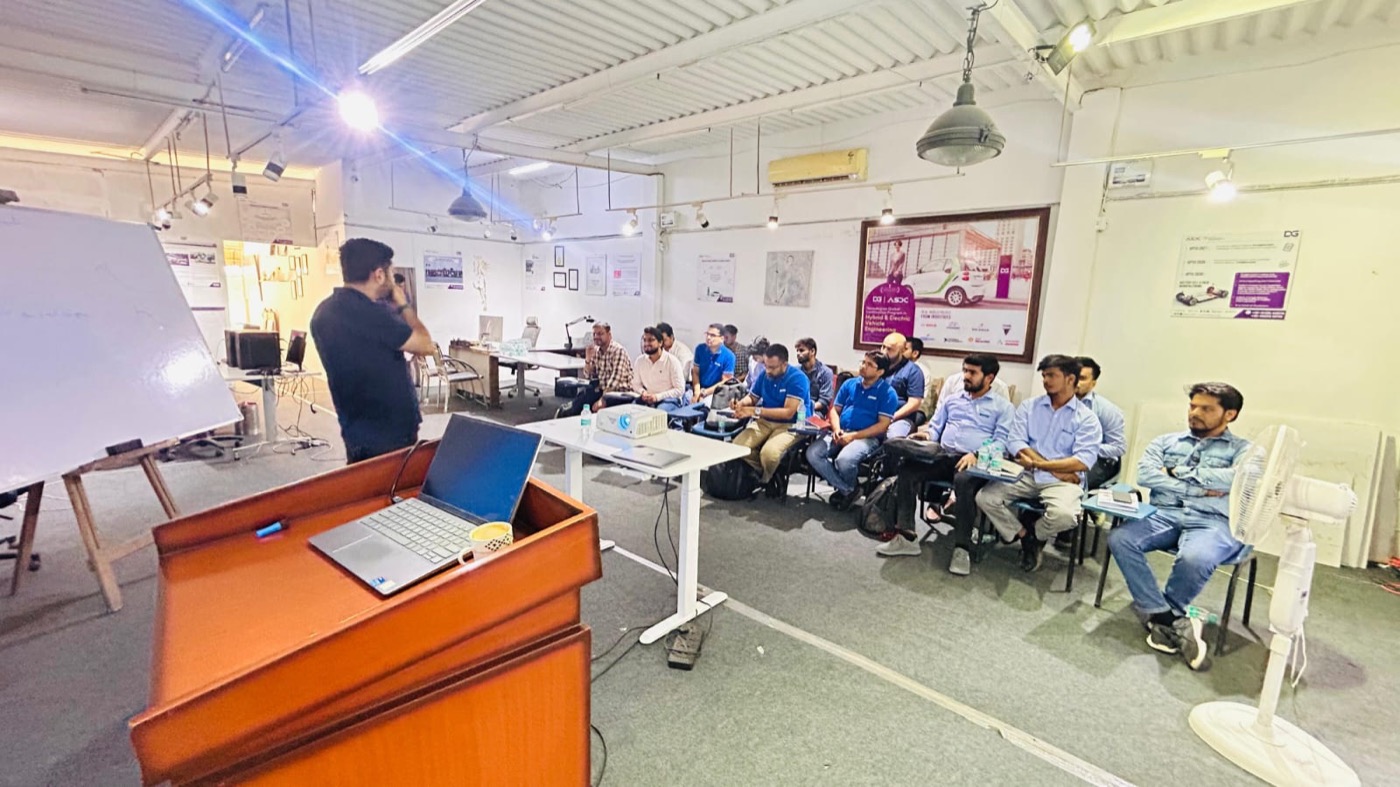
Winter training 2026-27 · B.Tech / B.E.
Your winter break is short, so make it practical. In 5 days to 3 weeks you can work on real battery packs, motors, controllers and EV chargers in our Delhi and Pune labs, or take the online project track from home, and come back to college with an EV project and a verifiable certificate.
We reply by phone or WhatsApp with the December / January batches, fees and the right format for your break.
When
December – January
Duration
5 days · 3 weeks · online
Mode
Online, or hands-on in Delhi / Pune
Who
B.Tech / B.E., any year
Why it matters
The December–January break between odd and even semesters is the one time in the year you can learn a new skill without missing classes. Many colleges also accept winter training towards the internship hours AICTE asks engineering students to complete.
An electric vehicle training is one of the few short programmes that gives you hands-on time on industry hardware. In a few days you go from 'how does an EV work' to measuring cell voltages, wiring a motor controller and diagnosing a fault, the kind of experience interviewers ask about.
Focused 5-day workshops and a 3-week programme that fit between semesters.
Lab benches, battery packs, motor test rigs and real electric vehicles.
Not travelling home or to a lab? Do the online track with a project from anywhere.
A project, a certificate with a verification link and practical hours you can talk about.
Formats
Pick the format that fits your break. Our team confirms the next December / January batch for your city.
Work safely on a 4W EV's high-voltage system: PPE, isolation, battery and powertrain checks and diagnostics.
Fee ₹8,000
View details & enrolBattery pack assembly, the 2/3-wheeler simulator test bench and EVSE charger setup.
Fee ₹11,900
View details & enrolFor a longer break or winter internship credit: the complete lab programme with a project.
Fee ₹21,000
View details & enrolStudy at your own pace over the break and finish a battery and vehicle-performance project.
Fee ₹7,000
View details & enrolMicrocontrollers, sensors and communication for ECE / EEE students.
Fee ₹8,000
View details & enrolCurriculum
01
02
03
04
05
06
Outcomes
Who it is for
A practical first look at EV technology before you choose electives.
Hands-on experience before summer internships and placements.
Pick up skills and a project idea for your final-year project.
Mechanical, Automobile, Electrical, ECE, EEE and Mechatronics.
How it works
Share your branch, year, city and your winter break dates.
Admissions confirms the format, fees and the December / January batch.
Lab sessions with EV trainers, or online lessons with a project.
Complete the assessment and get your verifiable certificate.
FAQs
Yes. The 3-week hands-on EV training and internship runs in December and January too, and the online EV fundamentals programme includes a project internship you can do over the break.
Choose a 5-day workshop for a short break, the 3-week hands-on programme for a longer one, or the self-paced online track.
Winter batches run between December and January, timed around most universities' odd-semester exams. Share your dates and we will suggest the closest batch.
Yes. The training starts from EV basics, and first-year students usually start with the 2-wheeler hardware workshop or the online fundamentals track.
Yes. When you finish the training and its assessments you get a DIYguru certificate with a verification link (emobility.academy/verify) that your college, recruiters or LinkedIn connections can check.
Tell our admissions team what your college's training and placement cell asks for (for example a joining letter, attendance or a project report in their format) before you enrol. They will confirm which documents we can issue for your batch.
At DIYguru's training centres in New Delhi (MG Road, Sultanpur) and Pune (Hinjewadi, and the Centre of Excellence at Ajeenkya DY Patil University, Lohegaon). The online tracks need only a laptop and an internet connection.
No. Short trainings and internships build skills, a project and a certificate for your CV; they are not placement programmes. If you want structured placement support, look at our PG Certificate programme.
Explore
For students
Electric Vehicle Summer Training 2027 for Engineering Students
Read moreFor students
Electric Vehicle Internship for Engineering College Students
Read moreFor students
Electric Vehicle Winter Training 2026-27 for ITI & Diploma Students
Read moreFor colleges
Hands-on Electric Vehicle Workshops for Colleges
Read moreAll student & college programmesLong-term EV programmesEV training in your city
We reply by phone or WhatsApp with the December / January batches, fees and the right format for your break.