emobility.academy
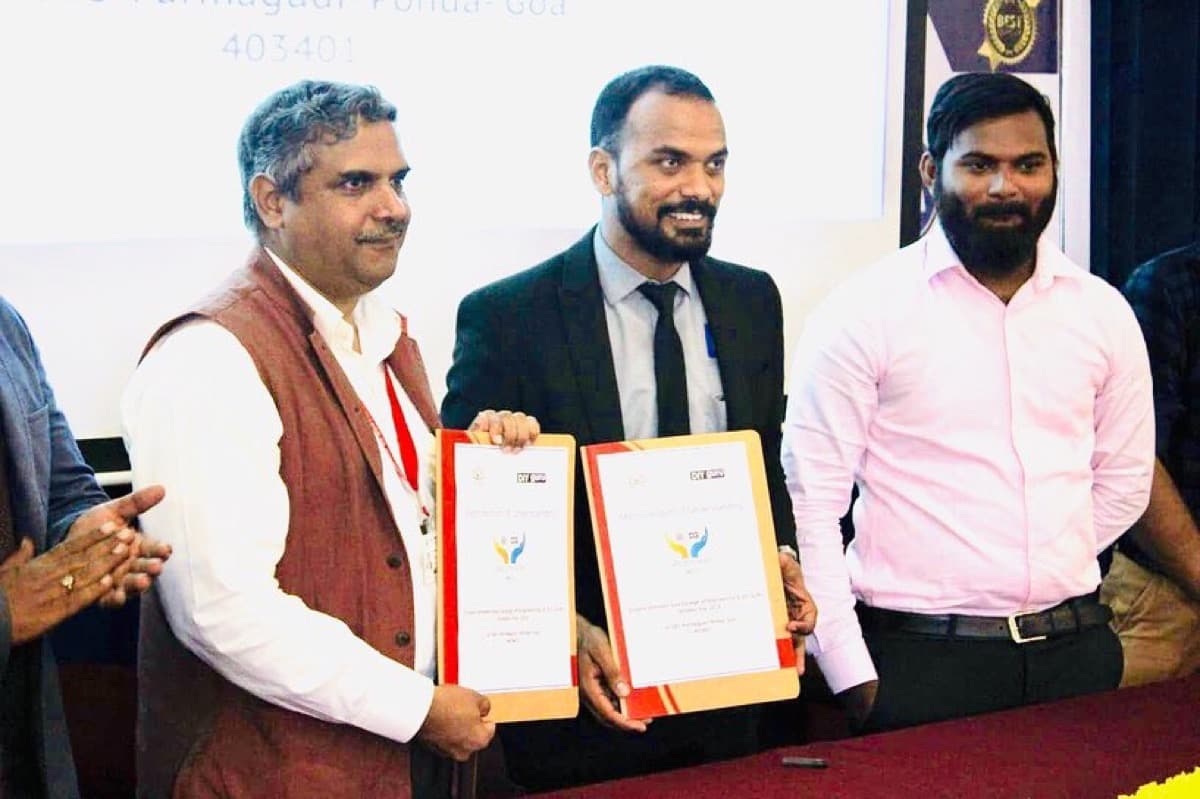
DIYguru team at an MoU signing

For universities in India and abroad

International Collaboration & Exchange in EV Training

Build electric vehicle skills across borders with DIYguru. We work with universities and training institutions in India and abroad on joint EV programmes, online courses for international learners, faculty training and hands-on training visits to our labs in India. Partners get a working EV curriculum, trainers and a learner portal; their learners get verifiable certificates.

  • Joint and co-branded EV programmes
  • Online EV courses for learners abroad
  • Training visits to our Delhi and Pune labs
  • Offices in the Middle East, Asia, Africa and Latin America

Start an international EV partnership

Share your institution, country and what you want to build. We reply within one working day with options.

Partners

Universities, colleges, institutes

Mode

Online · in India · at your campus

Formats

Joint programmes, visits, faculty training

Certificates

Verifiable online

Why it matters

Why partner with DIYguru internationally

Electric vehicles are being adopted in every region, but the training that goes with them is uneven. Many universities abroad want EV content and practical training for their engineers and technicians, and many Indian institutions want international partners and learners. A shared programme is faster than each side building its own.

DIYguru already teaches learners outside India through online programmes priced for their region, and has offices in Saudi Arabia, Malaysia, Nepal, Bangladesh, Mexico and Nigeria. The same EV curriculum is used to train engineering teams at companies such as Hyundai Motor India, HL Mando and Daimler Truck Innovation Center India, and to set up e-mobility centres of excellence in institutions with L&T Edutech.

A tested curriculum

EV fundamentals, batteries and BMS, motors and drives, charging, embedded systems and simulation, already running online.

One learner portal

Lessons, live classes, assessments and certificates on emobility.academy, from any country.

Hands-on in India

Partner students and faculty train on real EVs, battery packs and test rigs in our Delhi and Pune labs.

Local presence

Offices in the Middle East, South and South-East Asia, Africa and Latin America help with coordination.

Formats

Collaboration formats

Every partnership is planned with the partner institution: who learns, in which mode, and which certificate they receive.

Custom Online + hands-on blocks

Joint EV certificate programme

A programme designed with your institution and delivered on our portal, with a joint or co-branded certificate where both institutions agree.

Quoted for your batch

Discuss a joint programme
Self-paced + live classes Online

Online EV courses for your students abroad

Your students enrol in DIYguru's online Nanodegrees, professional certifications or short courses, with fees shown in their currency.

Quoted for your batch

See online programmes
1 – 3 weeks Delhi or Pune EV lab

Training visit to India

Student or faculty groups spend a block in our labs working on battery packs, motors, chargers and complete 2W and 4W EVs, with a certificate at the end.

Quoted for your batch

Plan a visit
Custom Online, or at your campus by arrangement

Faculty training for partner institutions

Train-the-trainer sessions for your faculty and help with EV lab content, so your institution can run EV courses locally.

Quoted for your batch

Discuss faculty training

Curriculum

What partners can draw on

01

EV fundamentals

  • EV architecture: 2W, 3W and 4W
  • Powertrain: motor, controller, transmission
  • Vehicle dynamics and range calculations
  • High-voltage safety and PPE

02

Battery pack & BMS

  • Li-ion cells, chemistries and cell grading
  • Series / parallel pack design and calculations
  • BMS functions: balancing, protection, SOC
  • Pack assembly, spot welding and testing

03

Motors & controllers

  • BLDC and PMSM motors
  • Motor controller wiring and tuning
  • Motor test rig: speed, torque, efficiency
  • Fault finding on a running drivetrain

04

Charging & diagnostics

  • AC and DC charging, connectors and EVSE
  • On-board charger and charging safety
  • OBD and CAN diagnostics
  • Service, troubleshooting and repair workflow

05

Embedded systems for EVs

  • Microcontrollers (Arduino / STM32)
  • Sensors, PWM and motor control code
  • CAN communication basics
  • Data logging from a real EV system

06

Design, simulation & software

  • EV modelling in MATLAB / Simulink
  • Battery and powertrain simulation
  • ADAS and AUTOSAR fundamentals
  • CAD for EV components

Outcomes

What a partnership delivers

  • An EV programme your institution can offer without building it from scratch
  • Online access for learners in any country, with live classes and assessments
  • Hands-on training on real EV hardware in our Indian labs
  • Verifiable certificates for every learner (emobility.academy/verify)
  • Faculty prepared to teach EV courses and run EV labs
  • Access to EV job listings on emobility.careers for learners

Who it is for

Who we partner with

Universities abroad

Engineering and technical universities adding EV content for their students.

Indian universities

Looking for international learners, joint programmes and global exposure for their students.

Training institutes

Technical and vocational centres preparing EV technicians and engineers in their region.

Skills bodies

Planning EV workforce programmes with an experienced training partner.

How it works

Four simple steps

  1. 1

    Start a conversation

    Tell us about your institution, country, learners and what you want to build.

  2. 2

    Agree the model

    We propose the format, curriculum, certificates, fees and what each side does.

  3. 3

    Sign and launch

    An MoU or agreement, then onboarding of learners and faculty on our portal.

  4. 4

    Deliver & review

    Online teaching, lab blocks, assessments, certificates and a joint review each cycle.

FAQs

Frequently asked questions

Can international students study DIYguru's EV courses online?

Yes. Our Nanodegrees, professional certifications and short courses are fully online, with fees shown in the learner's currency on our programmes page for learners abroad.

Do you offer joint or co-branded certificates?

Yes, where both institutions agree; the certificate format, logos and wording are set in the partnership agreement. IIT Jammu co-certification applies only to our PG Certificate and Nanodegree programmes created with I3C–IIT Jammu, not to custom partner programmes.

Can students or faculty come to India for hands-on training?

Yes. Groups train at our Delhi and Pune labs on real EVs, battery packs, motors and chargers. We plan the training schedule with you; travel, visas and stay are arranged by the visiting institution.

Do your trainers travel abroad?

On-site training outside India is possible by arrangement and is quoted case by case. Most international partnerships combine online teaching with a hands-on block in India.

Where does DIYguru have offices outside India?

In Saudi Arabia (Dammam), Malaysia (Johor Bahru), Nepal (Bhaktapur), Bangladesh (Dhaka), Mexico (Chihuahua) and Nigeria (Lagos). Our hands-on training centres are in New Delhi and Pune.

What language is the training in?

English.

Is there placement support for international learners?

We do not guarantee jobs or placement. Learners can browse EV openings on emobility.careers.

Build an EV training partnership with DIYguru

Share your institution, country and what you want to build. We reply within one working day with options.

Request a proposal