An AUTOSAR course teaches you how modern car software is built: how one ECU's code is split into standard layers, how software components talk through the Run-Time Environment (RTE), and how the Basic Software (BSW) is configured for a real microcontroller. This guide covers what a good AUTOSAR course includes in 2026, who it suits, how long it takes, what it costs in India, and how to pick between a short certification course, a six-month nanodegree and a 12-month PG programme.
Quick answer: For a first look at AUTOSAR, a self-paced certification course of about 25 hours is enough (DIYguru's is ₹10,000 + GST). To work in an AUTOSAR role you need hands-on BSW configuration, RTE generation and testing on hardware. That takes a live programme of 3–6 months, such as the Nanodegree in ADAS & AUTOSAR. If you want placement support as well, the route is the 12-month PG programme in EV & Embedded Systems, which has an ADAS / AUTOSAR specialisation.
AUTOSAR courses at a glance
| Option | Format | Duration | Fee (India) | Best for |
|---|---|---|---|---|
| Certification Course in AUTOSAR for EVs | Recorded, self-paced, trainer doubt support | 25+ hours, 12 modules, 48 lessons | ₹10,000 + GST | Beginners, students, engineers new to automotive software |
| Fundamental of AUTOSAR Engineering | Recorded, with STM32 and Simulink demos | 5 modules, 19 lessons | See course page | Engineers who know C and want to see AUTOSAR on hardware |
| Advanced Nanodegree in ADAS & AUTOSAR | Live and hybrid, 1:1 mentoring, optional ARM Cortex kit | 6 months | Fee slabs from ₹49,999 + GST; EMI and DET scholarships up to ₹50,000 | Career switch into AUTOSAR or ADAS roles |
| PG in EV & Embedded Systems | Hybrid, 50+ hardware lab experiments, ADAS / AUTOSAR specialisation | 12 months | Ask admissions; DET scholarships up to ₹50,000 | Freshers and early-career engineers who want placement support |
Fees are base fees, as listed on each page in November 2026. Check the page for the current fee before you enrol.
What is AUTOSAR, and why do companies ask for it?
AUTOSAR (AUTomotive Open System ARchitecture) is a partnership of carmakers, suppliers and tool vendors, started in 2003. It publishes a standard software architecture for electronic control units (ECUs). Before AUTOSAR, each supplier wrote ECU software its own way, so code could not be reused across vehicles or chips. With AUTOSAR, the application logic (for example a battery management function) is written once as a software component and runs on any compliant ECU. The hardware-specific parts sit in standard layers below it.
There are two platforms:
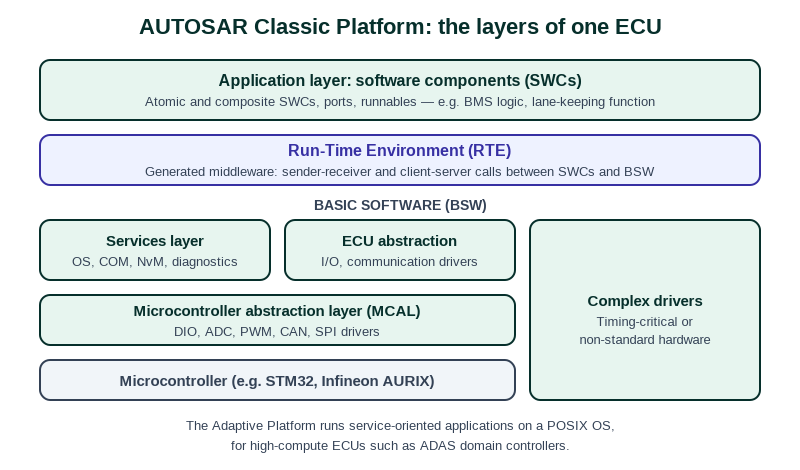
- Classic Platform: for deeply embedded, real-time ECUs such as brakes, BMS, motor control and body control. It is statically configured and runs an OSEK-style operating system.
- Adaptive Platform: for high-compute ECUs such as ADAS domain controllers, infotainment and central compute in software-defined vehicles (SDVs). It is service-oriented and runs on a POSIX operating system.
AUTOSAR publishes a new release every year. The current one, R25-11, was presented in December 2025 for both platforms. A good course teaches the concepts that stay stable across releases: layers, components, ports, RTE and methodology.
AUTOSAR course syllabus: what you should learn
Use this as a checklist when you compare courses. DIYguru's AUTOSAR certification course covers each row; the nanodegree adds the tools and hardware work.
| Topic | What it covers | Why it matters in a job |
|---|---|---|
| Evolution to software-defined vehicles | Mechanical to electronic vehicles, ECU growth, CAN / LIN / Ethernet, SDV challenges | Explains why AUTOSAR exists, a common interview opener |
| Layered architecture | Application layer, RTE, BSW (services, ECU abstraction, MCAL), complex drivers | You must know where any piece of code belongs |
| Basic Software (BSW) | OS, COM stack, NvM, diagnostics, ECU abstraction, MCAL drivers | Most AUTOSAR jobs in India are BSW integration and configuration |
| Software components (SWCs) | Atomic and composite components, functional grouping, reuse | Application developers model their features as SWCs |
| Ports and interfaces | Sender-receiver, client-server, connectors, port compositions | The core of ARXML design reviews |
| Runnables and events | Timing events, mode-switch events, operation invocations | Decides when your code actually runs |
| Run-Time Environment (RTE) | Middleware between SWCs and BSW, generated RTE code, end-to-end data flow | RTE generation errors are a daily debugging task |
| AUTOSAR methodology | Top-down and bottom-up flows; system design, ECU extract, configuration, integration | How real projects move from architecture to a flashed ECU |
| Tools (nanodegree) | ARXML editing, Vector DaVinci Configurator, EB tresos, AUTOSAR Builder, MATLAB / Simulink | Job descriptions list tools by name |
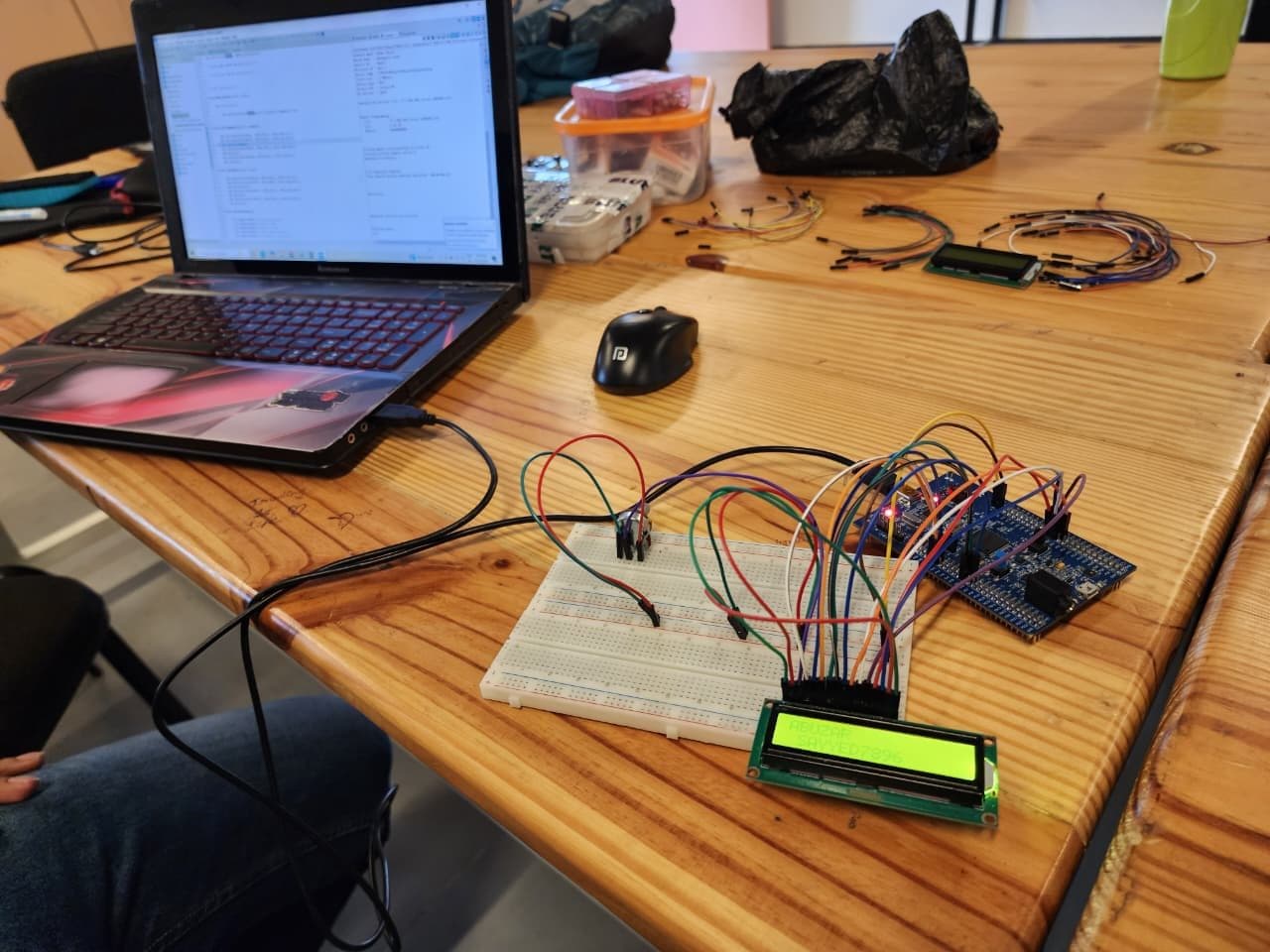
| Hardware practice (nanodegree) | STM32 / ARM Cortex-M, MCAL drivers, sensor integration | Shows an interviewer you have flashed and debugged real code |
The course ends with a project: Development of an AUTOSAR-Compliant Software Architecture, which you submit for trainer review.
Who should take an AUTOSAR course?
- B.Tech / M.Tech students in ECE, EEE, electrical, mechatronics, instrumentation, computer science or automobile engineering who want automotive software roles.
- Embedded engineers working on non-automotive firmware who want to move into OEMs and Tier-1 suppliers.
- Testing and validation engineers (manual, HIL, SIL) who need to read ARXML and understand what they are testing.
- Mechanical and EV engineers moving into EV software, who need the system view before going deeper.
Prerequisites: none for the certification course, which starts with EV engineering and automotive electronics basics. For the nanodegree, basic C programming helps. If you have never written embedded C, start with an embedded systems course or add the optional embedded kit to the nanodegree.
AUTOSAR course online vs live vs hands-on
| Self-paced online | Live online (nanodegree) | Hands-on lab + live (PG) | |
|---|---|---|---|
| Theory: layers, RTE, methodology | Yes | Yes | Yes |
| Configuration tools | Demos | Guided practice | Guided practice and projects |
| Hardware (STM32 / ARM) | Optional | Optional kit delivered home | Kit plus lab experiments |
| 1:1 mentoring | Doubt support | Yes | Yes |
| Career support | No | Career guidance | Career Support Cell and placement drives |
AUTOSAR course with placement
A short course alone will not get you placed. Employers hire for AUTOSAR roles on evidence of BSW or SWC work you can explain line by line. At DIYguru, placement support comes only with the PG programme in EV & Embedded Systems. Its structure is 8 months of core training, then 2 months of specialisation (ADAS, AUTOSAR, hydrogen or advanced powertrain) with a capstone, then 2 months of placement preparation. Learners who clear the Placement Eligibility Test get the Career Support Cell's help: mock interviews, resume and portfolio review, employer mapping and placement drives.
There are no shortcuts. Be careful with any provider that promises a guaranteed job after a few weeks of AUTOSAR slides.
AUTOSAR training in Bangalore, Pune, Chennai and Hyderabad
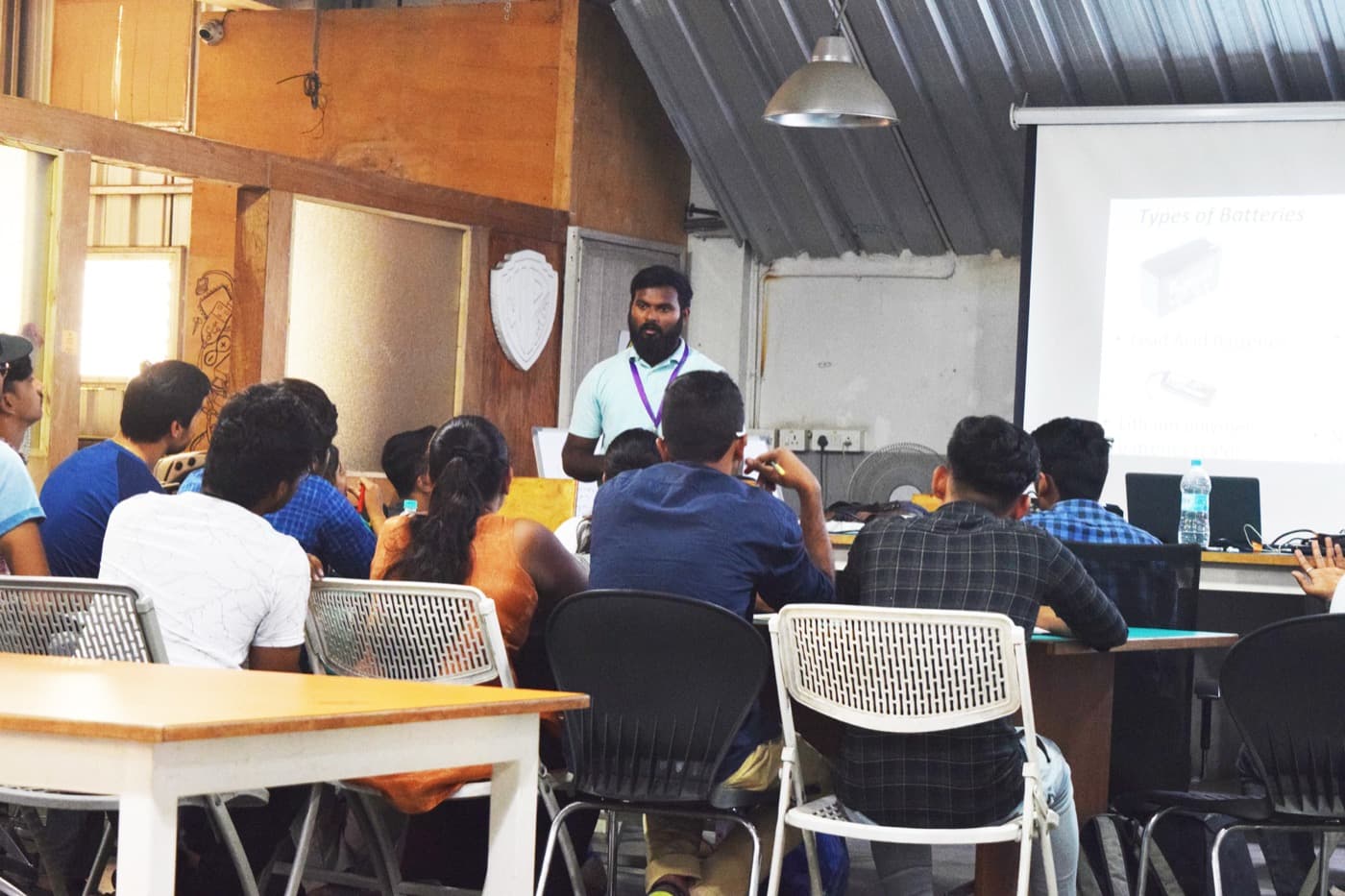
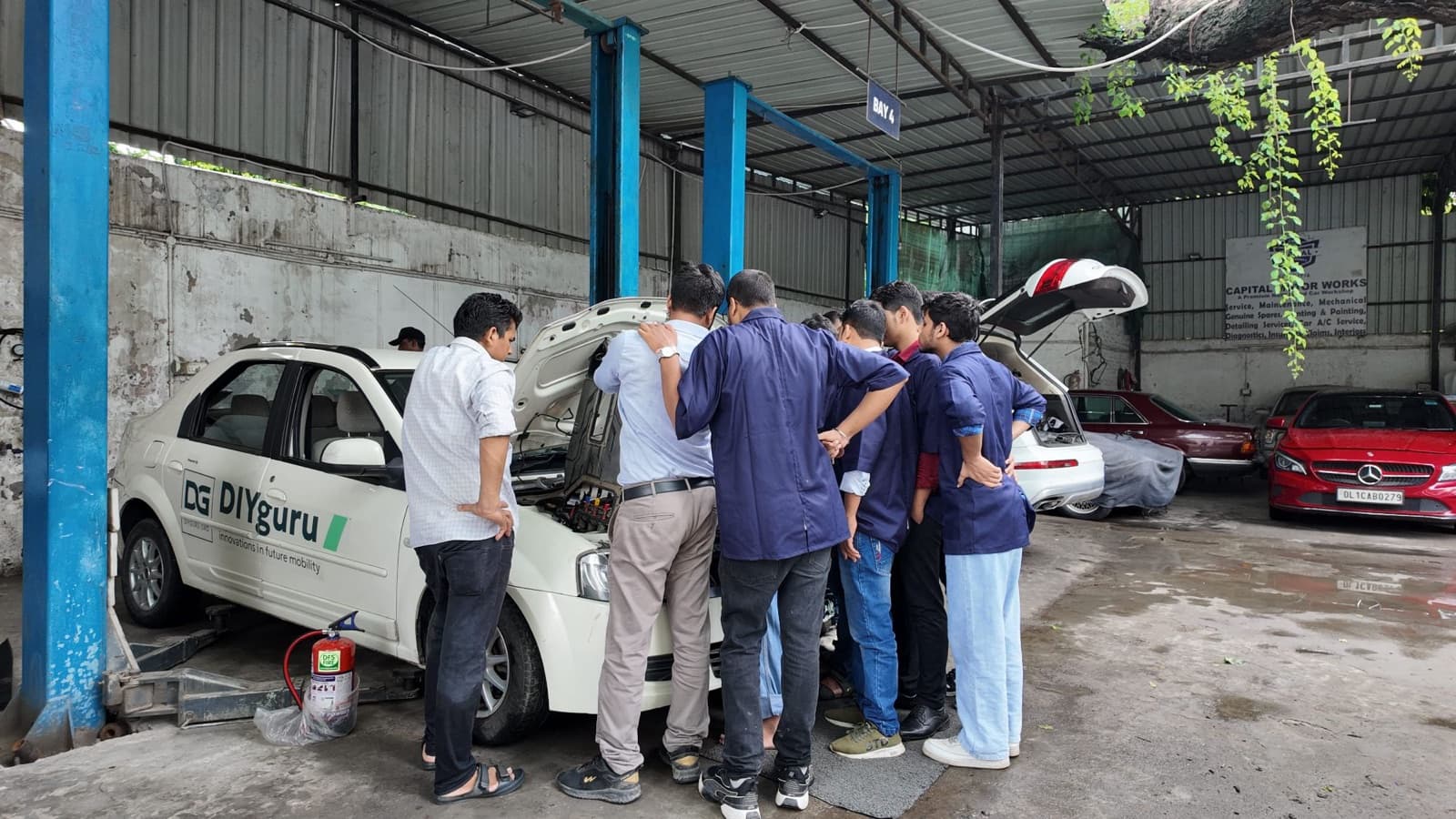
Most AUTOSAR jobs in India are in Bengaluru, Pune, Chennai, Hyderabad and Delhi NCR, where OEMs, Tier-1 suppliers and engineering service companies run their software centres. You do not have to move to train. DIYguru's AUTOSAR classes run live online, so you can join from any city, and the embedded kit ships to your door. Hands-on lab sessions run at DIYguru's training centres in New Delhi and Pune. See EV training locations for city pages.
Careers after an AUTOSAR course
Common job titles are AUTOSAR BSW engineer, AUTOSAR SWC / application developer, AUTOSAR integration engineer, MCAL developer, model-based design engineer (Simulink with AUTOSAR) and AUTOSAR test or validation engineer. Our guide to careers in AUTOSAR development explains each role. Live openings are on emobility.careers.
Best AUTOSAR course in India: how the options compare
There is no single best AUTOSAR course; there is a best one for your goal and budget. These are the main kinds of AUTOSAR courses available to Indian learners in 2026, with an example of each:
| Type | Example | Typical fee and length | What you get | What to check |
|---|---|---|---|---|
| Free specifications | autosar.org documents (R25-11) | Free, self-study | The official standard | Dense reading with no guidance or tools; best used alongside a course |
| Short MOOC | Global course platforms | A few hours; subscription | A first look at layers and ARXML | Usually no tools, no hardware and no mentor |
| Recorded certification course | DIYguru AUTOSAR for EVs | ₹10,000 + GST; 25+ hours | Full Classic architecture with an EV primer, trainer-reviewed project, verifiable certificate | Concept-level; add a kit or a programme for hands-on work |
| Model-based online course | Ed-tech AUTOSAR courses built on Simulink (for example Skill-Lync lists its 12-week, about 44-hour course at ₹40,000) | Varies by provider; about 3 months | Simulink modelling of AUTOSAR components, MIL / SIL | Whether BSW configuration and hardware are included |
| Live nanodegree | DIYguru ADAS & AUTOSAR Nanodegree | ₹49,999 or ₹65,000 (with IIT Jammu co-certification) + GST; 6 months | EV foundations, model-based design, ADAS and AUTOSAR with live classes, 1:1 mentoring and capstone projects; optional ARM Cortex kit | It covers ADAS too, so pure-BSW learners may want an extra configuration project |
| Classroom institute | Training institutes in Hyderabad, Bengaluru and Chennai | Usually on enquiry; about 4 weeks | Instructor-led BSW, OS, COM and diagnostics | Ask for the fee in writing, and which configuration tool you will actually run |
| Corporate training | Corporate trainers and DIYguru for business | Quoted per team; 24–40 hours | Classic and Adaptive for a team, on a company use case | Priced for companies, not individuals |
| PG programme with placement support | DIYguru PG in EV & Embedded Systems | On enquiry; 12 months | Embedded and EV foundation, ADAS / AUTOSAR specialisation, Career Support Cell | The time commitment: a year, part-time |
Competitor details are as published on their own pages on 28 November 2026. Fees change, so confirm on the provider's page before you pay.
How to choose an AUTOSAR course: 7 checks
- Does the syllabus cover BSW, RTE and methodology, not just "introduction to AUTOSAR"?
- Do you get to configure something in a real tool, or only watch slides?
- Is there hardware work on an automotive-grade or ARM Cortex-M microcontroller?
- Does it cover both Classic and Adaptive, at least conceptually?
- Is there a project you can show and explain in an interview?
- Can you ask a trainer questions, and how quickly do they reply?
- Is the certificate verifiable online, and from whom (university, AICTE, industry body)?
Frequently asked questions
What is the fee for an AUTOSAR course in India?
Self-paced AUTOSAR certification courses cost about ₹10,000 + GST at DIYguru. The six-month ADAS & AUTOSAR nanodegree has fee slabs from ₹49,999 + GST, with EMI and DIYguru Entrance Test (DET) scholarships of up to ₹50,000.
How long does it take to learn AUTOSAR?
You can learn the concepts in 25–40 hours. Becoming job-ready in BSW configuration or SWC development usually takes 3–6 months of practice with tools and hardware.
Can a fresher learn AUTOSAR?
Yes. Freshers with C programming and basic microcontroller knowledge can learn AUTOSAR. Start with the concepts, then build one project end to end.
Is AUTOSAR hard to learn?
The concepts are logical, but the vocabulary (SWC, RTE, BSW, MCAL, ARXML) and the tool workflows take time. A course that keeps showing how a signal flows from a sensor through the layers to a software component makes it much easier.
Do I need Vector DaVinci or EB tresos licences?
Not to start. Commercial tool licences are expensive. Good courses demonstrate the tools and give guided practice, and MATLAB / Simulink with the AUTOSAR Blockset covers component modelling.
Is there a free AUTOSAR course?
You can read AUTOSAR's own documents for free on autosar.org, and DIYguru shows free trial lessons on every course page. A structured, mentored path is paid.
Does the AUTOSAR course give a certificate?
Yes. The certification course gives a digitally signed certificate that can be verified online once you complete the lessons and project. The nanodegree carries ASDC and AICTE NEAT certification, with IIT Jammu co-certification on the ₹65,000 slab.
Should I learn ADAS or AUTOSAR first?
For software and embedded roles, learn AUTOSAR first, because ADAS features are deployed as AUTOSAR components. For perception, controls or ML roles, start with the ADAS course guide. The nanodegree covers both.
Related guides: Best AUTOSAR courses in India compared · AUTOSAR training · ADAS course · ADAS training · Embedded course · Embedded training · ADAS & AUTOSAR project ideas
Sources: AUTOSAR — Release Event R25-11; AUTOSAR CP Release Overview R25-11; Wikipedia — AUTOSAR; DIYguru course and programme pages (fees and durations as listed, November 2026). Updated 28 November 2026.