EV course after 12th, diploma or B.Tech: which one to choose
The right electric vehicle course depends less on your marks and more on the work you want to do: repairing and servicing EVs, or designing and building them. This guide maps each starting point, from 12th pass to working engineer, to the EV course that fits it.
Updated 15 November 2026 · eMobility Academy
After 12th, ITI or diploma: become an EV technician
If you enjoy hands-on work, the fastest route into the EV industry is as a technician: diagnosing, servicing and repairing electric two-, three- and four-wheelers at dealerships, fleets and service centres.
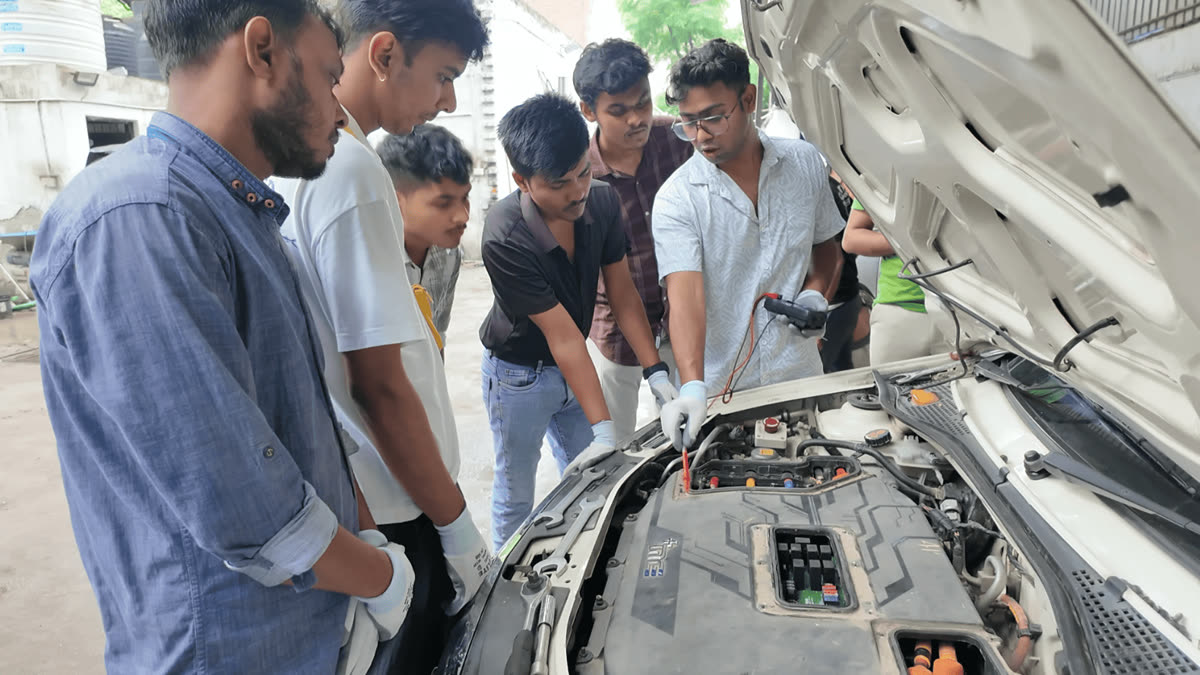
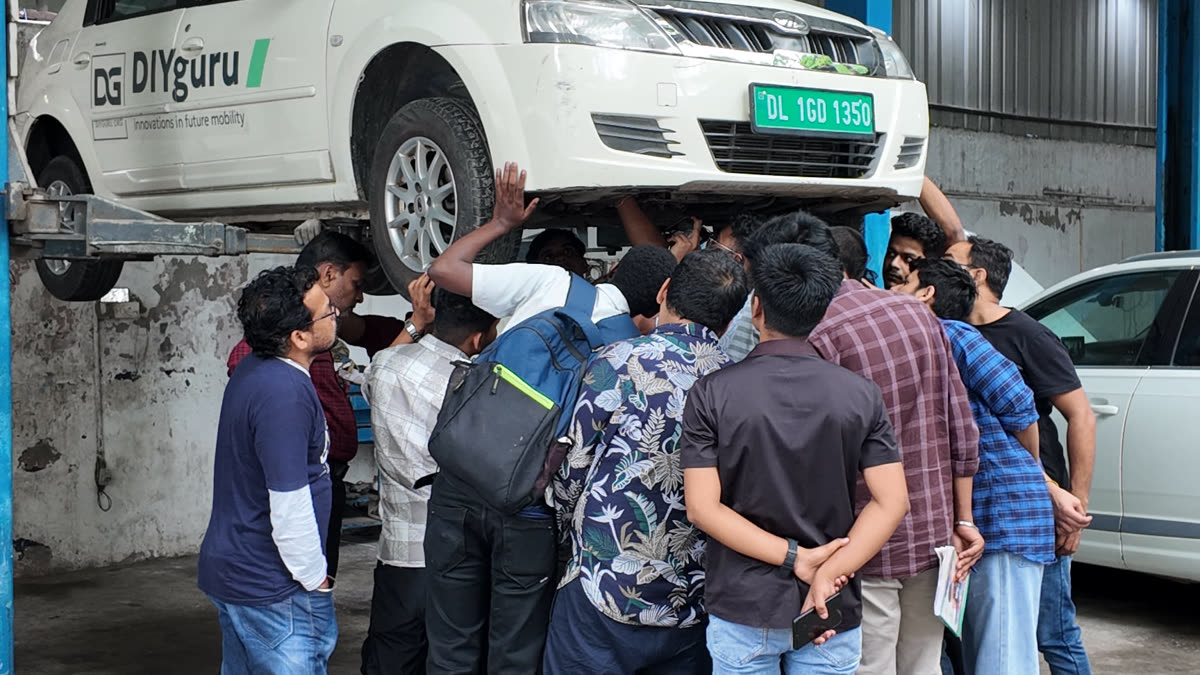
Our CEVT programme is built for this. It runs for 3 months: self-paced online courses, live classes with instructors and a 3-week practical workshop at our Delhi or Pune centre, covering EV safety, batteries and BMS, motors, controllers, charging and diagnostics.
Who: 12th pass, ITI, diploma and polytechnic learners, and working mechanics.
What you do afterwards: EV service and diagnostics, workshop and fleet maintenance.
During B.Tech or BE: add one EV specialisation
Engineering students get the most from a focused Professional Certification Programme in the area they want to work in, taken alongside a final-year EV project. Pick by branch:
Electrical and electronics: battery and powertrain, or motor drives and control.
Mechanical and automobile: EV automotive design and simulation.
Electronics, computer science and IT: EV embedded systems.
After B.Tech or BE: a Nanodegree or the PG programme
Graduates who want to move into an EV engineering role usually choose between a 6-month Advanced Nanodegree, which goes deep into one area (EV engineering and simulation, battery and BMS, automotive design, embedded systems or ADAS and AUTOSAR), and the 12-month Post Graduate programme, which combines EV engineering with embedded systems, hands-on workshops, projects and placement support.
Admission to the PG programme is through the DIYguru Entrance Test (DET): a 30-minute online test and an interview, with merit scholarships of up to ₹50,000. DET is open to final and pre-final year B.E./B.Tech students and to working professionals with a B.E./B.Tech, or a diploma plus 2 years of experience, in mechanical, electrical, electronics, mechatronics, automotive or robotics.
Working engineers and career changers
If you already work in automotive, electrical or software, a Nanodegree in your own discipline is usually the quickest way to move into EV work, because it builds on what you know. Engineers who want a full degree can choose the M.Tech in Electric Vehicle Technology, offered with ADYPU.
Quick guide
Your background
Suggested EV course
Typical duration
12th pass, ITI, diploma, mechanic
CEVT technician programme
3 months
B.Tech / BE student
Professional Certification Programme + project
3 months
B.Tech / BE graduate
Advanced Nanodegree
6 months
Graduate wanting a structured route into an EV job
CEVT is a three-month, live and hands-on Certified Electric Vehicle Technician programme that prepares ITI, Diploma and Polytechnic learners for careers in 2W and 4W EV…
A six-month, live and hands-on Advanced Nanodegree in EV engineering, automotive design, development and dynamic analysis for mechanical and automotive engineers…
A 12-month, hybrid Post Graduate Certificate Programme in EV & Embedded Technology, created by IIT Jammu in collaboration with I3C–IIT Jammu and DIYguru, that takes…
A two-year, research-based M.Tech in Electric Vehicle Technology awarded by Ajeenkya DY Patil University (ADYPU), Pune, and delivered with DIYguru under the UGC…
ADYPUUGC Recognised
24 MonthsOnline + Campus
View Details
Fees on request
Common questions
Can I do an EV course after 12th?
Yes. The CEVT technician programme accepts 12th pass learners and teaches EV safety, batteries, motors, controllers, charging and diagnostics, with a hands-on workshop.
Which EV course is best after a diploma?
Diploma holders who want hands-on work usually choose the CEVT programme. With 2 years of experience, a diploma holder can also apply for the PG programme through DET.
Can a non-electrical B.Tech student do an EV course?
Yes. Mechanical students suit the automotive design track and computer science and IT students the embedded systems track; each starts from the basics of how EVs work.
Is an EV course useful for a mechanical engineer?
Yes. EVs still need chassis, battery enclosures, thermal systems and vehicle dynamics; the automotive design Nanodegree teaches these for electric vehicles in SOLIDWORKS.

 Technician