emobility.academy
★ 4.7 from 7 student reviews · Curriculum reviewed by IIT Faculty · Continue learning
4.7 / 5 — 7 student reviews

EV इंजीनियरिंग मास्टरकोर्स भाग 2 : पावरट्रेन, BMS, चार्जिंग और सिस्टम स्टैंडर्ड

Part 2 of the EV Engineering Mastercourse goes beyond the fundamentals into charging systems, control units, CAN communication, BMS, standards and component selection. It covers AC vs DC charging and levels, HEV power flow, ECU hardware and software, the CAN bus, BMS architecture, Indian and global standards bodies, a
24 video lessons
6 modules
beginner
English
Recognised & Certified by
ASDC
AICTE NEAT

Course Curriculum

24 lessons across 6 modules

Part 2 of the EV Engineering Mastercourse goes beyond the fundamentals into charging systems, control units, CAN communication, BMS, standards and component selection. It covers AC vs DC charging and levels, HEV power fl

1
Module 1

मॉड्यूल 1: EV के मूल सिद्धांत और प्रमुख कंपोनेंट

3 lessons
  1. 1

    विषय 1: EV क्रांति: इलेक्ट्रिक क्यों अपनाएँ?

    1h 1m· free trial

  2. 2

    विषय 2: EV ड्राइवट्रेन आर्किटेक्चर (BEV, HEV, PHEV)

    59 min· free trial

  3. 3

    विषय 3: हाई-वोल्टेज और लो-वोल्टेज कंपोनेंट्स की पहचान

    48 min

2
Module 2

मॉड्यूल 2: चार्जिंग सिस्टम और एनर्जी फ़्लो

3 lessons
  1. 1

    विषय 1: ग्रिड से वाहन तक: चार्जिंग इंफ़्रास्ट्रक्चर

    26 min

  2. 2

    विषय 2: चार्जिंग की व्याख्या: AC बनाम DC और लेवल (L1, L2, L3)

    50 min

  3. 3

    विषय 3: हाइब्रिड पावर डायनामिक्स: HEV टोपोलॉजी और पावर फ़्लो को समझना

    31 min

3
Module 3

मॉड्यूल 3: EV का ब्रेन: कंट्रोल यूनिट और BMS

4 lessons
  1. 1

    विषय 1: वाहन कंट्रोल सिस्टम और वेरिएबल्स का परिचय

    41 min

  2. 2

    विषय 2: ECU का गहन अध्ययन: हार्डवेयर और सॉफ़्टवेयर

    52 min

  3. 3

    विषय 3: वाहन कम्युनिकेशन: CAN बस प्रोटोकॉल

    44 min

  4. 4

    विषय 4: BMS: कार्य, आर्किटेक्चर और प्रमुख पैरामीटर

    1h 8m

4
Module 4

मॉड्यूल 4: ग्लोबल स्टैंडर्ड और होमोलोगेशन

2 lessons
  1. 1

    विषय 1: EV सेफ़्टी, परफ़ॉर्मेंस और इंटरऑपरेबिलिटी मानक

    39 min

  2. 2

    विषय 2: प्रमुख मानक संस्थाएँ: ARAI, BIS, ICAT और वैश्विक नियामक

    52 min

5
Module 5

मॉड्यूल 5: पावरट्रेन साइज़िंग और कंपोनेंट चयन

5 lessons
  1. 1

    विषय 1: केस स्टडी: EV रेट्रोफ़िटिंग के लिए कंपोनेंट चयन

    32 min

  2. 2

    विषय 2: इष्टतम बैटरी साइज़िंग और केमिस्ट्री चयन

    54 min

  3. 3

    विषय 3: मोटर ड्राइव्स: सही ट्रैक्शन मोटर का चयन

    51 min

  4. 4

    विषय 4: पावर इलेक्ट्रॉनिक्स: DC-DC और AC-DC कन्वर्टर का चयन

    31 min

  5. 5

    विषय 5: पावरट्रेन कंट्रोल यूनिट और इन्वर्टर का चयन

    33 min

6
Module 6

मॉड्यूल 6: एडवांस्ड बैटरी मैनेजमेंट और मोटर ड्राइव

7 lessons
  1. 1

    विषय 1: बैटरी सेल मैन्युफैक्चरिंग और क्वालिटी कंट्रोल (QC)

    34 min

  2. 2

    विषय 2: बैटरी स्टेट एस्टिमेशन: स्टेट ऑफ़ हेल्थ (SoH) एल्गोरिदम भाग 1

    32 min

  3. 3

    विषय 3: एडवांस्ड SoH एस्टिमेशन तकनीकें: एल्गोरिदम भाग 2

    23 min

  4. 4

    विषय 4: बैटरी थर्मल मैनेजमेंट सिस्टम (BTMS) भाग 1

    29 min

  5. 5

    विषय 5: बैटरी थर्मल मैनेजमेंट सिस्टम (BTMS) भाग 2

    31 min

  6. 6

    विषय 6: एडवांस्ड इलेक्ट्रिक व्हीकल मोटर्स भाग 1

    34 min

  7. 7

    विषय 7: एडवांस्ड इलेक्ट्रिक व्हीकल मोटर्स भाग 2

    29 min

Earn a certificate

Add this credential to your resume — and watch employers ask about it

Every completing learner receives a joint certificate carrying ASDC (Government of India) and AICTE NEAT recognition. The certificate carries a public verification code recruiters can validate in seconds via emobility.careers.
  • Issued when you complete the lessons and required quizzes and assignments
  • Digitally signed, with a public verification link and QR code
  • Anyone — an employer or a college — can check it in seconds
  • Shows the course title and the skills it covers
Sample emobility.academy certificate

System Requirements

Hardware & software you'll need

What to have ready before you start this course.

Hardware

  • Laptop, tablet or smartphone with internet access to stream video lessons
  • Notebook and calculator for battery sizing and component selection

Software

  • Modern web browser to access the course player

Associated Skills

What you'll be able to put on your résumé

AC and DC chargingCharging levels L1 to L3HEV power flowECU hardware and softwareCAN busBMS parametersEV standards and homologationRetrofit component selectionBattery sizingTraction motor selectionSoH estimationBattery thermal management

DIY Projects Included

Hardware-grounded projects in your portfolio

Work you build while learning — submitted in the course and reviewed by a trainer, and yours to show afterwards.

🔧
Project 01

Retrofit component selection

Using the Module 5 case study approach, pick a battery, traction motor, converters and controller for converting a petrol scooter or small car to electric, and justify each choice.

🧠
Project 02

Trace a CAN message

Draw how a BMS reports SOC and temperature to the vehicle ECU over the CAN bus, labelling the nodes and the data each one sends and receives.

📋
Project 03

Standards checklist

Prepare a checklist of which standards body (ARAI, BIS, ICAT or a global regulator) covers safety, performance and interoperability tests for an EV you choose.

Course Benefits

What you'll get out of it

Two audiences. Two angles. Pick the one that maps to where you are today.

For Working Professionals

  • Retrofit method
    Learn a step-by-step way to select battery, motor, power electronics and control unit for a conversion.
  • Control and communication
    Understand ECUs and the CAN bus, which matter for diagnostics and integration work.
  • Standards awareness
    Know which Indian and global bodies govern EV safety, performance and interoperability.
  • Battery health topics
    Get an introduction to cell QC, SoH algorithms and thermal management.

For Students & Freshers

  • Next step after Part I
    Continues directly from the Mastercourse Part I fundamentals.
  • Practical case study
    The retrofitting case study shows how theory turns into component choices.
  • Wide coverage
    Charging, control, BMS, standards and motors in one course.
  • Technician-friendly
    Explains ECUs, CAN and BMS in a way that helps on the workshop floor.

What this course includes

Everything you get when you enrol

  • 06 Modules
  • 24 Lectures
  • 16.57 Hours of Video Content
  • Certificate of Completion

Who can take this course?

If any of these sound like you — you'll thrive here

  • Technicians and diploma holders who have the EV basics and want to understand charging, ECUs and the CAN bus
  • EV retrofitters who need a structured method for selecting battery, motor, converter and controller
  • Service engineers who want to understand BMS parameters and battery state estimation
  • Quality and compliance staff who need an overview of ARAI, BIS, ICAT and global standards
  • CEVT programme learners continuing after the fundamentals
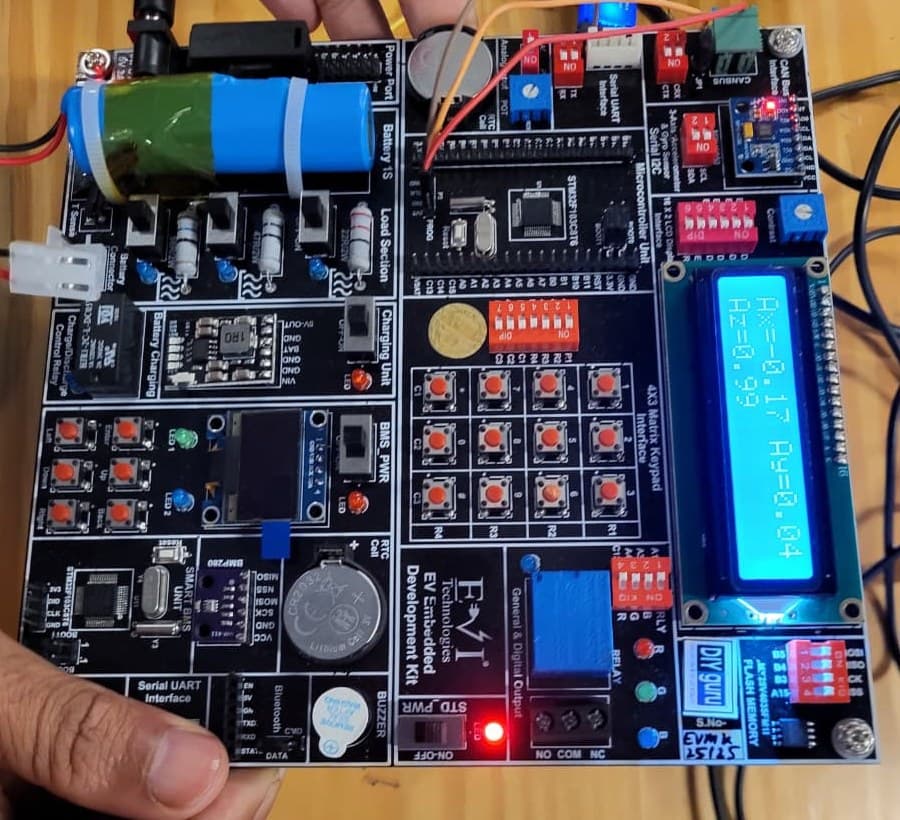
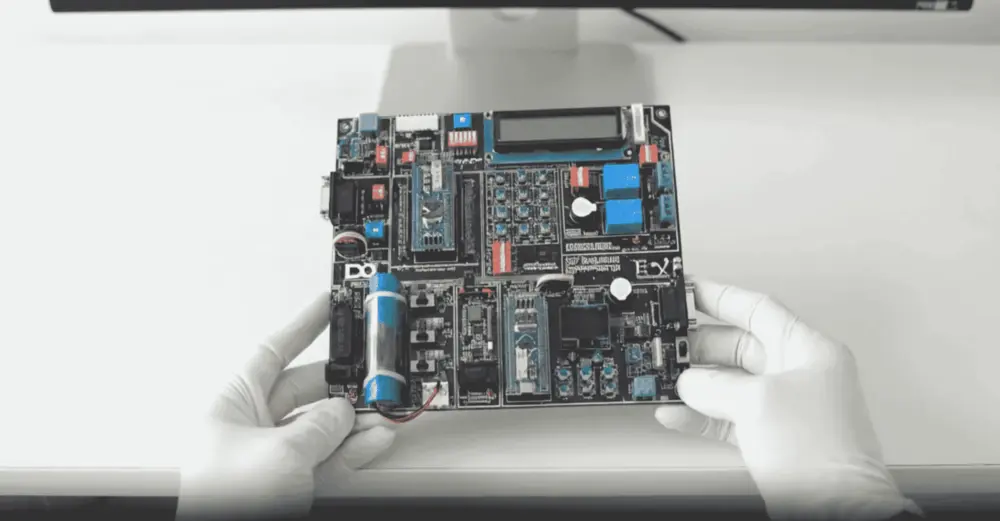
EV Embedded Development Kit board

Practise on real hardware

EV Embedded Development Kit

  • STM32 controller and Smart BMS unit
  • CAN, UART, I2C, SPI and Bluetooth
  • Sensors, LCD, OLED and motor control
  • 15+ guided experiments at home

₹10,000 + GST

See what's in the kit

Trainer Support

Stuck on a concept? Ask a trainer.

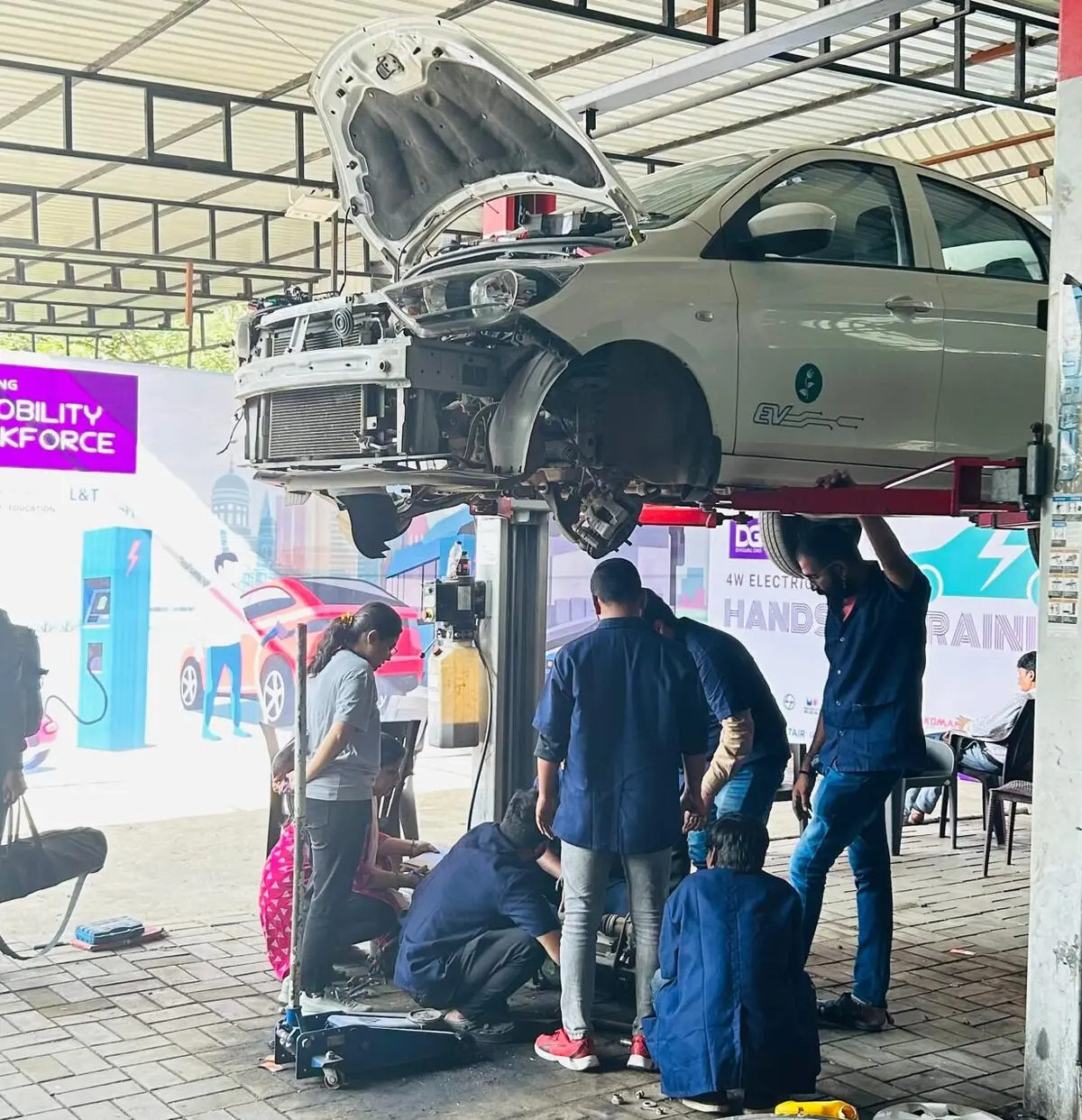
DIYguru trainer working with learners

Post questions about charging, ECUs, CAN, BMS or your component selection in the course Q&A on the portal and a trainer will answer there. CEVT programme learners can also bring doubts to live doubt-clearing sessions when scheduled.

  • Ask questions in the course Q&A, right next to the lesson
  • Trainers answer on the portal — you're notified when they reply
  • Assignments and projects you submit are reviewed by a trainer
  • Live doubt-clearing sessions when they're scheduled for the course

Bharat eMobility Recruitathon

Meet the EV industry in person

The Bharat eMobility Recruitathon brings our learners face to face with companies hiring across the EV industry. Watch the Delhi and Pune chapters.

Delhi chapterRecruitathon
Pune chapterRecruitathon

Reviews

4.7 ★ from 7 student reviews

  • ★★★★★

    very good

    NEPALA G. · Oct 2026

  • ★★★★★

    Very nice session

    Buddhi P. · Sept 2026

  • ★★★★★

    Super

    Siddharth V. · Aug 2026

  • ★★★★★

    yeh bahut hi achha corsh hai .or ise hindi me daving karna chahiye. thanqu.......i love DIYGGURU ..................

    Learner · Jun 2026

  • ★★★★★

    GOOD

    Suraj D. · Apr 2026

  • ★★★★★

    Very much informative content.

    Madhav J. · Jan 2026

FAQ

Frequently asked questions

Should I complete Part I first?
Yes, it is recommended. Part I covers EV fundamentals and core components, which Part 2 revisits briefly before going deeper.
Does it cover the CAN bus?
Yes. Module 3 covers vehicle control systems, ECU hardware and software, CAN bus communication and BMS architecture.
Which standards are discussed?
Module 4 covers EV safety, performance and interoperability standards and the roles of ARAI, BIS, ICAT and global regulators.
Is any software needed?
No. The lessons are recorded videos on the portal.
Will I get a certificate?
Yes. When you complete all lessons and the required quizzes and assignments, you receive a digitally signed certificate that anyone can check through its public verification link or QR code.
Is this part of a programme?
Yes. It is part of the CEVT – Certified EV Technician Programme.
How is the course delivered?
As recorded video lessons on the portal that you watch at your own pace, with quizzes, assignments and a project where the course includes them. Your progress is saved lesson by lesson.
What if I get stuck?
Ask in the course's Q&A on the portal — a trainer answers there. Live doubt-clearing sessions are added when they are scheduled for the course.
What certificate will I get?
A digitally signed certificate of completion once you finish the lessons and the required quizzes and assignments. Each certificate has a public verification link and QR code anyone can check.

Talk to a counsellor

Questions about EV इंजीनियरिंग मास्टरकोर्स भाग 2 : पावरट्रेन, BMS, चार्जिंग और सिस्टम स्टैंडर्ड?

Leave your details — a counsellor will call you about the syllabus, fees, EMI and certificates.

Technical Expertise You Will Gain

Where EV इंजीनियरिंग मास्टरकोर्स भाग 2 : पावरट्रेन, BMS, चार्जिंग और सिस्टम स्टैंडर्ड can take you

The roles these skills are used in, what you'll be able to do, and the parts of the industry that need it.

Key Job Roles

  • →EV technician (charging and diagnostics)
  • →EV retrofit technician or engineer
  • →BMS service technician
  • →EV quality and compliance assistant
  • →Junior EV integration engineer

Skill Sets

  • →Explain AC and DC charging and the differences between charging levels
  • →Describe ECU hardware and software and how the CAN bus links vehicle controllers
  • →Explain BMS functions, architecture and key parameters
  • →Identify the standards bodies and test areas for EV homologation in India
  • →Select battery, motor, converters and inverter for an EV retrofit
  • →Describe SoH estimation and battery thermal management approaches

Where These Skills Are Used

  • →EV service and diagnostics workshops
  • →EV retrofitting businesses
  • →Electric two-wheeler and three-wheeler makers
  • →Charging infrastructure
  • →Testing and certification support

Government-Certified · Industry-Endorsed · Learner-Approved

Globally recognised credentials

ASDC (Govt of India)

ASDC (Govt of India)

Automotive Skills Development Council — recognised by major OEMs worldwide.

AICTE NEAT

AICTE NEAT

National Educational Alliance for Technology — issued under AICTE's premium learning ecosystem.

Learner Stories

What our learners say

The hardware-first approach made all the difference. Came in from a generalist electronics background; the BMS and motor-drive modules gave me concrete vocabulary I could carry into Infineon interviews.

Souvik Hazra
Souvik Hazra
Senior Manager · Infineon Technologies

Industry-grade depth without the academic ivory tower. The MATLAB Simulink + capstone defence prepared me for exactly the kind of cross-functional EV problems we solve at Cummins.

Sharad Yeola
Sharad Yeola
Application Controls Lead · Cummins Inc.

Started with electronics, walked into a BMS role in Germany. The applied projects + mentor reviews are what carried me through — the certifications opened the door, the depth got me hired.

Jagatjit Barik
Jagatjit Barik
Sr. R&D Engineer (BMS xEV) · Mercedes-Benz

Ready to start EV इंजीनियरिंग मास्टरकोर्स भाग 2 : पावरट्रेन, BMS, चार्जिंग और सिस्टम स्टैंडर्ड?

Recorded lessons at your own pace · trainer doubt support · verifiable certificate on completion.
Accreditations

Programs Recognised by Govt. Bodies & Industries

ASDC
AICTE NEAT
SIMOPS Saudi
DSD Malaysia
UK Government
UACH
Tata Technologies
ADYPU
UDYOGA Karnataka
Ola Mobility Institute