emobility.academy
★ 4.0 from 5 student reviews · Curriculum reviewed by IIT Faculty · Continue learning
4.0 / 5 — 5 student reviews

Certification Course in Hydrogen Fuel Cell Technology for Electric Vehicles

Hydrogen energy and fuel cell electric vehicles: production, storage, fuel cell electrochemistry, FCEV architecture, safety, regulations and case studies. 9 modules, 41 video lessons, about 10 hours.


10+ hours
41 video lessons
9 modules
beginner
English
Recognised & Certified by
ASDC
AICTE NEAT

Course Curriculum

41 lessons across 9 modules

Hydrogen Fuel Cell Technology for Electric Vehicles is a comprehensive course designed to provide an in-depth understanding of hydrogen energy systems and their application in clean mobility. The program covers the compl

1
Module 1

Module 1: Fundamentals of Hydrogen Energy

5 lessons
  1. 1

    Topic 1.1: Introduction to Hydrogen – The Clean Energy Element

    5 min· free trial

  2. 2

    Topic 1.2: Important Characteristics of Hydrogen

    9 min· free trial

  3. 3

    Topic 1.3: Sources and Applications of Hydrogen Energy

    8 min

  4. 4

    Topic 1.4: Understanding Hydrogen Types and the Future of Clean Fuel

    10 min

  5. 5

    Topic 1.5: Hydrogen Production, Storage & Distribution

    11 min

2
Module 2

Module 2: Alternate Fuel Vehicles and Hydrogen Fuel Cell Fundamentals

3 lessons
  1. 1

    Topoc 2.1: Alternate Fuel Vehicles (AFVs) Market Trends, Impacts & Public Adoption

    8 min

  2. 2

    Topic 2.2: Working Principle of Hydrogen Fuel Cell Electric Vehicles (FCEVs)

    17 min

  3. 3

    Topic 2.3: Construction and Chemical Reactions in Hydrogen Fuel Cells

    12 min

3
Module 3

Module 3: Architecture and Components of Fuel Cell Electric Vehicles

2 lessons
  1. 1

    Topic 3.1: Architecture and Working of a Fuel Cell Electric Vehicle (FCEV)

    17 min

  2. 2

    Topic 3.2: Fuel Cell Electric Vehicle Components and Fuel Cell Types

    11 min

4
Module 4

Module 4: Comparative Analysis of Hydrogen and Hydrocarbon Fuels

5 lessons
  1. 1

    Topic 4.1: Comparative Analysis Hydrogen vs Hydrocarbon Fuels Part 1

    5 min

  2. 2

    Topic 4.2: Comparative Analysis Hydrogen vs Hydrocarbon Fuels Part 2

    19 min

  3. 3

    Topic 4.3: Comparative Analysis Hydrogen vs Hydrocarbon Fuels Part 2

    6 min

  4. 4

    Topic 4.4: Comparative Analysis Hydrogen vs Hydrocarbon Fuels Part 4

    13 min

  5. 5

    Topic 4.5: Comparative Analysis Hydrogen vs Hydrocarbon Fuels Part 5

    10 min

5
Module 5

Module 5: Working Principles and Electrochemistry of Hydrogen Fuel Cells

6 lessons
  1. 1

    Topic 5.1: Working Principle of Hydrogen Fuel Cell for FCEVs

    9 min

  2. 2

    Topic 5.2: How Hydrogen Fuel Cell Works

    8 min

  3. 3

    Topic 5.3: Electrochemical Reactions in Hydrogen Fuel Cells Explained

    18 min

  4. 4

    Topic 5.4: Design & Working of Flow Field Plates in PEM Fuel Cells

    17 min

  5. 5

    Topic 5.5: Classification of Fuel Cells

    10 min

  6. 6

    Topic 5.6 Fuel Cell EV Powertrain Configurations

    15 min

6
Module 6

Module 6: Hydrogen Fuel Cell Variants, Safety, and Innovations

6 lessons
  1. 1

    Topic 6.1 Comparison of Fuel Cell Types _ PEM, AFC, PAFC, MCFC & SOFC-VEED.mp4

    10 min

  2. 2

    Topic 6.2: Types of hydrogen fuel cells: DMFC, PEMFC, PAFC

    18 min

  3. 3

    Topic 6.3: Types of hydrogen fuel cells: SOFC, MCFC & Regenerative Fuel Cells

    20 min

  4. 4

    Topic 6.4: Safety Precautions for Hydrogen Fuel

    21 min

  5. 5

    Topic 6.5: Safe Handling and Personal Protective Measures for Hydrogen

    14 min

  6. 6

    Topic 6.6: Hydrogen Fuel Cells: Storage & Distribution Challenges and Cutting-Edge Innovations

    25 min

7
Module 7

Module 7: Hydrogen Combustion, Fuel Cell Designing & Hybridization Techniques

7 lessons
  1. 1

    Topic 7.1: Hydrogen in Combustion Engines: ICE Working & Hydrogen ICE Explained

    24 min

  2. 2

    Topic 7.2: Hydrogen Combustion Reactions, NOx Emissions & HICE

    30 min

  3. 3

    Topic 7.3: Design and Construction of a Hydrogen Fuel Cell

    25 min

  4. 4

    Topic 7.4: Hydrogen Fuel Cell vs Battery Electric Vehicle: Key Differences

    9 min

  5. 5

    Topic 7.5: Hybridization Techniques in Fuel Cell Electric Vehicle

    25 min

  6. 6

    Topic 7.6: Auxiliary Power Generation Using Hydrogen

    13 min

  7. 7

    Topic 7.7: Fuel Stack Module Design and Construction

    9 min

8
Module 8

Module 8: Safety, Regulations, and Maintenance of Hydrogen Vehicles

4 lessons
  1. 1

    Topic 8.1: Safety Protocols and Maintenance of Hydrogen Fuel Cell Vehicles

    22 min

  2. 2

    Topic 8.2: Regulations & Guidelines for Hydrogen Vehicles

    6 min

  3. 3

    Topic 8.3: Fuel Cell Engine Safety System

    9 min

  4. 4

    Topic 8.4: Practices in Hydrogen Fueling Infrastructure

    12 min

9
Module 9

Module 9: Case Studies, Trends, and Future Outlook

3 lessons
  1. 1

    Topic 9.1: Case Studies of Fuel Cell Vehicle Deployment

    10 min

  2. 2

    Topic 9.2: Emerging Trends & Economic Viability of Fuel Cell Technology

    15 min

  3. 3

    Topic 9.3: Integration of Hydrogen Fuel Cells with Renewable Energy & Policy Insights

    12 min

Earn a certificate

Add this credential to your resume — and watch employers ask about it

Every completing learner receives a joint certificate carrying ASDC (Government of India) and AICTE NEAT recognition. The certificate carries a public verification code recruiters can validate in seconds via emobility.careers.
  • Issued when you complete the lessons and required quizzes and assignments
  • Digitally signed, with a public verification link and QR code
  • Anyone — an employer or a college — can check it in seconds
  • Shows the course title and the skills it covers
Sample emobility.academy certificate

System Requirements

Hardware & software you'll need

What to have ready before you start this course.

Hardware

  • Laptop, tablet or smartphone with internet access to stream video lessons

Software

  • Modern web browser to access the course player

Associated Skills

What you'll be able to put on your résumé

Fuel cell electrochemistryPEMFC & SOFC typesStack components (MEA, bipolar plates)Polarisation curvesElectrolysis (alkaline, PEM, SOE)Hydrogen storage methodsFCEV architectureFuel cell vs battery EVHydrogen refuelling stationsHydrogen safetyGreen hydrogen policy (India)

DIY Projects Included

Hardware-grounded projects in your portfolio

Work you build while learning — submitted in the course and reviewed by a trainer, and yours to show afterwards.

⚗️
Project 01

Trace an FCEV's energy path

Draw a block diagram of a fuel cell vehicle from hydrogen tank to fuel cell stack, battery buffer, inverter and motor, and label what each block does.

⚖️
Project 02

Compare FCEV and BEV for a bus route

On paper, compare a fuel cell bus and a battery bus for a long intercity route on refuelling or charging time, onboard energy storage and infrastructure needs.

🧪
Project 03

Hydrogen pathway case study

Write a short note comparing grey, blue and green hydrogen production routes and what each means for the overall emissions of a fuel cell vehicle.

Course Benefits

What you'll get out of it

Two audiences. Two angles. Pick the one that maps to where you are today.

For Working Professionals

  • Broader powertrain view
    Understand fuel cell vehicles so you can compare them fairly with battery EVs in your work.
  • Hydrogen basics
    Get clarity on production, storage and refuelling, which matter for any hydrogen mobility project.
  • Fits charging and energy roles
    Useful if you work on energy infrastructure and need to understand hydrogen alongside charging.

For Students & Freshers

  • Emerging-technology exposure
    Learn the fundamentals of a technology that features in clean-energy and mobility discussions.
  • Project topics
    Gives ideas for seminar or project work on fuel cell vehicles and hydrogen infrastructure.
  • Complements EV learning
    Pairs well with battery and charging courses for a complete view of zero-emission vehicles.

What this course includes

Everything you get when you enrol

  • -9 Modules
  • -41 Video Lessons
  • -10 Hours of Video Content
  • -Certificate of Completion
  • -Lifetime Access
  • -Lecture slides, PDF notes and additional reading material

Who can take this course?

If any of these sound like you — you'll thrive here

  • Mechanical, chemical and electrical engineering students curious about hydrogen mobility
  • EV professionals who want to understand how fuel cell vehicles differ from battery-electric vehicles
  • Energy-sector professionals exploring green hydrogen applications in transport
  • Learners in charging and energy programmes who want the hydrogen side of the picture
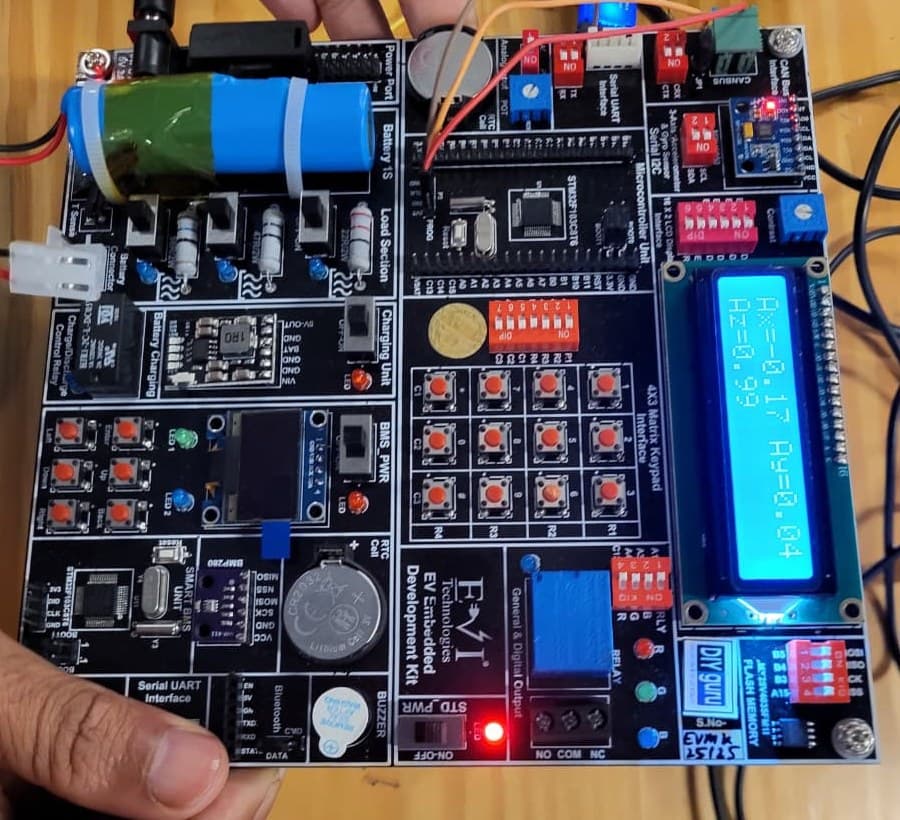
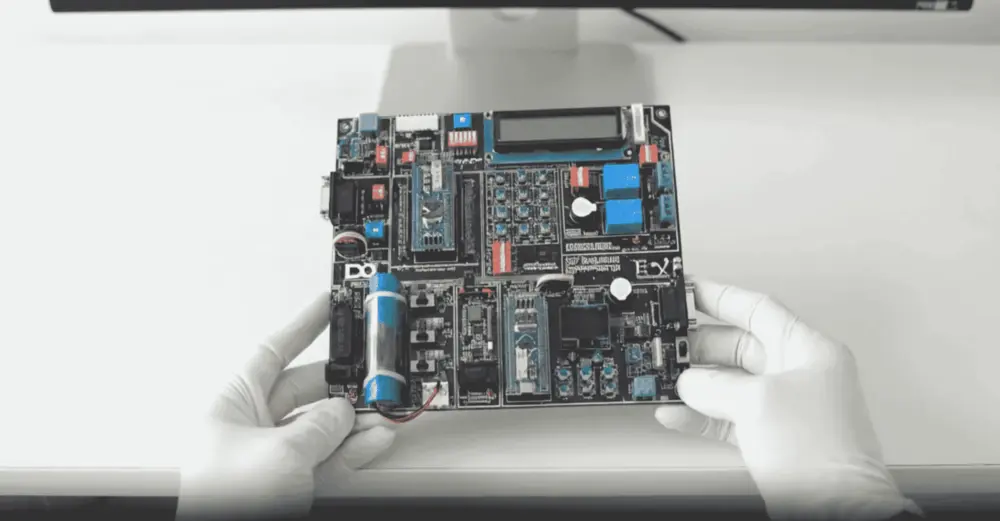
EV Embedded Development Kit board

Practise on real hardware

EV Embedded Development Kit

  • STM32 controller and Smart BMS unit
  • CAN, UART, I2C, SPI and Bluetooth
  • Sensors, LCD, OLED and motor control
  • 15+ guided experiments at home

₹10,000 + GST

See what's in the kit

Trainer Support

Stuck on a concept? Ask a trainer.

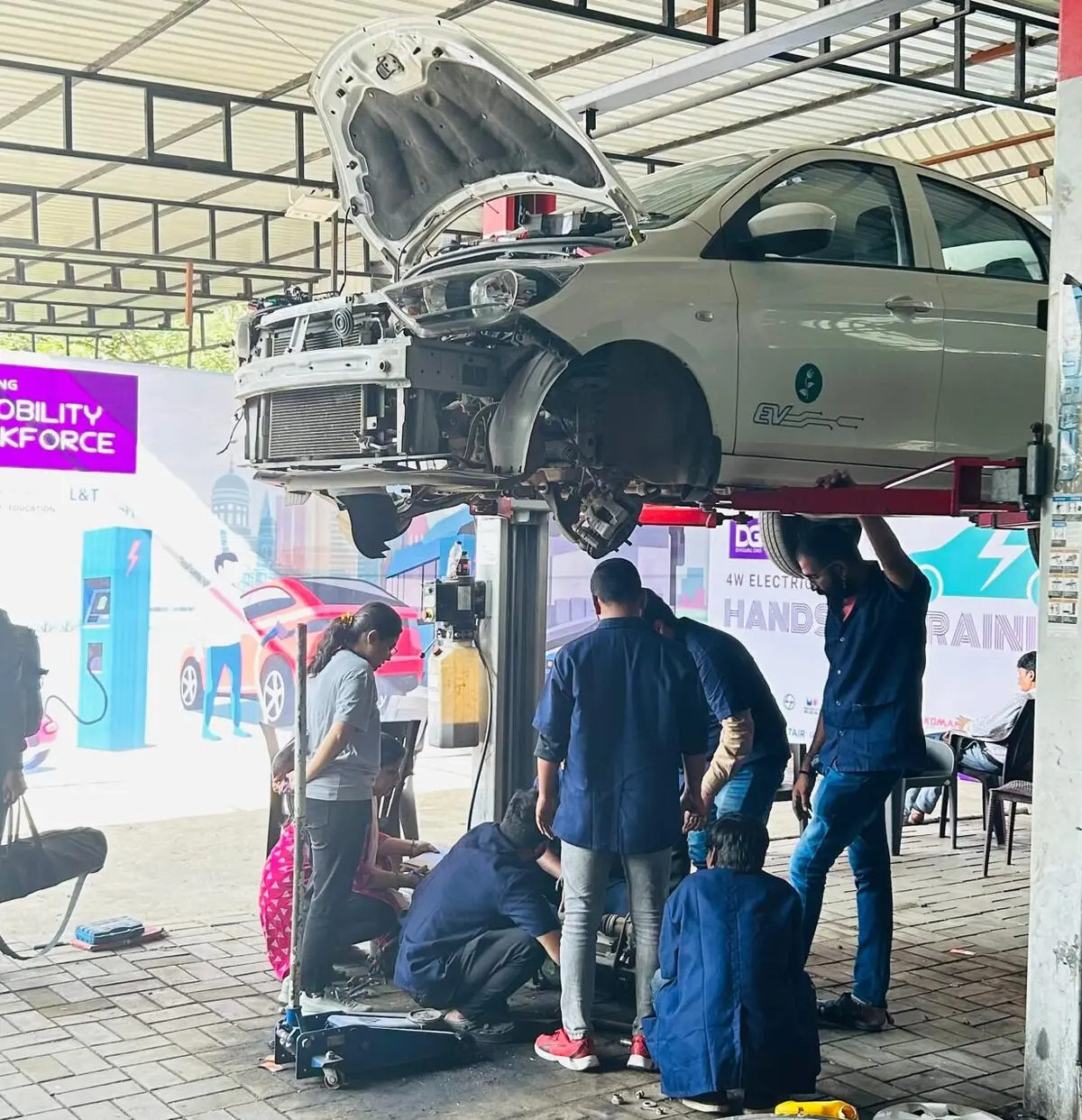
DIYguru trainer working with learners

Post your questions about fuel cell operation, FCEV architecture or hydrogen storage in the course Q&A on the portal and a trainer will answer there. Programme students can also raise them in live doubt-clearing sessions when scheduled.

  • Ask questions in the course Q&A, right next to the lesson
  • Trainers answer on the portal — you're notified when they reply
  • Assignments and projects you submit are reviewed by a trainer
  • Live doubt-clearing sessions when they're scheduled for the course

Bharat eMobility Recruitathon

Meet the EV industry in person

The Bharat eMobility Recruitathon brings our learners face to face with companies hiring across the EV industry. Watch the Delhi and Pune chapters.

Delhi chapterRecruitathon
Pune chapterRecruitathon

Reviews

4.0 ★ from 5 student reviews

  • ★★★★★

    hydrogen. Need to add more on hydrogen storage tank manufacturing and testings also deep drive on fuel cell

    Kishor J. · Sept 2023

    Reviewed on courses.diyguru.org

  • ★★★★★

    A Comprehensive Study of Transitioning to a Hydrogen and EV-Based Economy. It is good topic to understand the current state, challenges & solutions

    Purshi · Jul 2023

    Reviewed on courses.diyguru.org

  • ★★★★★

    Nachiket Deshpande. Course of Informative. May be more practical design calculations can be explained in Online Tutorials rather than just theory explanations. Also certain critical aspects of US, Europe and China Regulations for Hydrogen Fuel cell vehicles and charging infrastructure could have been covered in depth.

    Nachiket D. · Mar 2025

    Reviewed on courses.diyguru.org

  • ★★★★★

    Good Basic Knowledge about Hydrogen Fuel Cell Technology

    Vraj P. · Oct 2026

  • ★★★★★

    good. nice information

    Abhilashpatil · Aug 2023

    Reviewed on courses.diyguru.org

FAQ

Frequently asked questions

Do I need a chemistry background?
No special background is needed beyond school-level science. Basic awareness of how electric vehicles work will help you compare fuel cell and battery vehicles.
Is any software needed?
No. The course is delivered as recorded video lessons on the portal, so a browser and internet connection are enough.
How is this different from a battery EV course?
It focuses on vehicles that generate electricity on board from hydrogen, rather than storing all their energy in a battery, and on the hydrogen supply chain that supports them.
Will I get a certificate?
Yes. When you complete all lessons and the required quizzes and assignments, you receive a digitally signed certificate that anyone can check through its public verification link or QR code.
Which programmes include this course?
It is part of the Professional Certification Programme in EV Charging & Hydrogen and the PG Certificate Programme in EV & Embedded Systems.
How is the course delivered?
As recorded video lessons on the portal that you watch at your own pace, with quizzes, assignments and a project where the course includes them. Your progress is saved lesson by lesson.
What if I get stuck?
Ask in the course's Q&A on the portal — a trainer answers there. Live doubt-clearing sessions are added when they are scheduled for the course.
What certificate will I get?
A digitally signed certificate of completion once you finish the lessons and the required quizzes and assignments. Each certificate has a public verification link and QR code anyone can check.

Talk to a counsellor

Questions about Certification Course in Hydrogen Fuel Cell Technology for Electric Vehicles?

Leave your details — a counsellor will call you about the syllabus, fees, EMI and certificates.

Technical Expertise You Will Gain

Where Certification Course in Hydrogen Fuel Cell Technology for Electric Vehicles can take you

The roles these skills are used in, what you'll be able to do, and the parts of the industry that need it.

Key Job Roles

  • →Graduate engineer trainee in hydrogen mobility
  • →Fuel cell systems trainee
  • →Clean energy research associate
  • →Alternative powertrain analyst

Skill Sets

  • →Explain how a fuel cell converts hydrogen into electricity
  • →Describe the main components of a fuel cell electric vehicle
  • →Compare fuel cell and battery-electric vehicles for different use cases
  • →Outline hydrogen production, storage and refuelling options and their safety considerations

Where These Skills Are Used

  • →Hydrogen and fuel cell technology developers
  • →Commercial vehicle and bus manufacturers
  • →Clean energy and green hydrogen projects
  • →Automotive research and development

Government-Certified · Industry-Endorsed · Learner-Approved

Globally recognised credentials

ASDC (Govt of India)

ASDC (Govt of India)

Automotive Skills Development Council — recognised by major OEMs worldwide.

AICTE NEAT

AICTE NEAT

National Educational Alliance for Technology — issued under AICTE's premium learning ecosystem.

Learner Stories

What our learners say

The hardware-first approach made all the difference. Came in from a generalist electronics background; the BMS and motor-drive modules gave me concrete vocabulary I could carry into Infineon interviews.

Souvik Hazra
Souvik Hazra
Senior Manager · Infineon Technologies

Industry-grade depth without the academic ivory tower. The MATLAB Simulink + capstone defence prepared me for exactly the kind of cross-functional EV problems we solve at Cummins.

Sharad Yeola
Sharad Yeola
Application Controls Lead · Cummins Inc.

Started with electronics, walked into a BMS role in Germany. The applied projects + mentor reviews are what carried me through — the certifications opened the door, the depth got me hired.

Jagatjit Barik
Jagatjit Barik
Sr. R&D Engineer (BMS xEV) · Mercedes-Benz

Ready to start Certification Course in Hydrogen Fuel Cell Technology for Electric Vehicles?

Recorded lessons at your own pace · trainer doubt support · verifiable certificate on completion.


Accreditations

Programs Recognised by Govt. Bodies & Industries

ASDC
AICTE NEAT
SIMOPS Saudi
DSD Malaysia
UK Government
UACH
Tata Technologies
ADYPU
UDYOGA Karnataka
Ola Mobility Institute