🧮
Project 01
Build a Li-ion cell model in Simulink
Following Module 8, create SOC-OCV, resistance, capacitance and temperature blocks and combine them into a terminal-voltage model of a single cell.
The “Certification Course in Advanced BMS and Modeling & Simulation for EVs” course provides an in-depth understanding of Battery Management Systems (BMS) with a special focus on cell balancing, thermal management, communication protocols, and advanced software and hardware configurations. Learners will explore practic

Course Curriculum
The “Certification Course in Advanced BMS and Modeling & Simulation for EVs” course provides an in-depth understanding of Battery Management Systems (BMS) with a special focus on cell balancing, thermal management, commu
Sign up at eMobility.careers to get exclusive EV job Opportunities!
text
Topic 1: Introduction to Cell Balancing - Key Concepts, Topologies, and Its Importance for EV Batteries
15 min· free trial
Topic 2: Significance of Cell Balancing Technology in EV Battery Systems
14 min· free trial
Topic 3: How Battery Balancing Works - Causes of SOC Imbalance & Active vs. Passive Methods
14 min
Topic 4: Active Cell Balancing Techniques Part 1- Direct Transformer Based & Switch Matrix Plus Transformer Approaches
19 min
Topic 5: Active Cell Balancing Techniques Part 2 - Buck-Boost, Comparisons, & Closed-Loop Control Switch
19 min
Topic 1: Battery Cooling Systems Part 1- Benefits and Air & Liquid Cooling Methods
23 min
Topic 2: Battery Cooling Systems Part 2- PCM, Active & Passive Liquid Cooling, and Contact Methods
15 min
Topic 3: Battery Liquid Cooling System - A Superior Thermal Management Solution for EVs
22 min
Topic 1: Understanding SOC & SOH - Key Parameters in BMS
16 min
Topic 2: Exploring BMS Functions & Communication Protocols in BMS - TTL Overview
19 min
Topic 3: Understanding RS232 Communication Protocol
8 min
Topic 4: Understanding RS485 and CAN Communication Protocols
17 min
Topic 5: Understanding CAN Bus and UART Protocol & UART Implementation Architecture in BMS
11 min
Topic 6: Understanding RS485 Implementation Architecture in Inverter BMS and TCP & Isolated SPI Protocols
22 min
Topic 1: Introduction to Wired & Wireless BMS Communication
3 min
Topic 2: Understanding the Basic Wired BMS Architecture, Its Components, & Communication Mechanism
5 min
Topic 3: Exploring the Advanced Wired BMS Architecture, Its Components, & Communication Mechanism
15 min
Topic 4: Comprehensive Overview of Wireless BMS Communication, Architecture, & Protocols
10 min
Topic 1: Understanding BMS Hardware Topology - Centralized & Decentralized (Primary-Secondary) System
21 min
Topic 2: BMS Hardware Interconnections Explained and Design Considerations
16 min
Topic 3: Designing a BMS System: AFE, MCU, & Fuel Gauge Components
18 min
Topic 4: Understanding Internal & External Cell Balancing in BMS & Other Key BMS Components
16 min
Topic 1: BMS Cell Balancer and Introduction to BMS Software System
15 min
Topic 2: Exploring Key BMS Software Algorithms – From State Estimation, Charge-Discharge to Fault Diagnosis
18 min
Topic 1: The Role of Machine Learning in Advanced Battery Life Cycle
13 min
Topic 2: Exploring IoT & Cloud Computing Algorithms in BMS
23 min
Topic 3: Machine Learning Approaches in BMS & Introduction to Digital Twin Concept
17 min
Topic 1: Cell Modeling Part 1- Creating SOC & OCV Estimation Models
13 min
Topic 2: Cell Modeling Part 2- Creating Resistance & Power (R & P), Capacitance (C), and Temperature Estimation Models
17 min
Topic 3: Cell Modeling Part 3- Creating Terminal Voltage Estimation Model & Complete Battery Cell Simulation
18 min
Topic 1: SOC Estimation Using Columb Counting Method
10 min
Topic 2: SOC Estimation Using Kalman Filter Algorithm Part 1
11 min
Topic 3: SOC Estimation Using Kalman Filter Algorithm Part 2
20 min
Topic 1: BMS Discharge Modeling - Part 1
21 min
Topic 2: BMS Discharge Modelling - Part 2
16 min
Project: Modeling and State of Charge Estimation of a Li-ion Battery Cell using MATLAB and Simulink
assignment
Congratulations on Successfully Completing the Course!
text
Earn a certificate
Every completing learner receives a joint certificate carrying ASDC (Government of India) and AICTE NEAT recognition. The certificate carries a public verification code recruiters can validate in seconds via emobility.careers.
System Requirements
What to have ready before you start this course.
Associated Skills
DIY Projects Included
Work you build while learning — submitted in the course and reviewed by a trainer, and yours to show afterwards.
Following Module 8, create SOC-OCV, resistance, capacitance and temperature blocks and combine them into a terminal-voltage model of a single cell.
Run both SOC estimators from Module 9 on the same current profile, add sensor noise, and note how each one drifts or corrects over time.
Complete the course project on modelling a Li-ion cell and estimating its state of charge in MATLAB and Simulink, and submit your model and results for trainer review.
Course Benefits
Two audiences. Two angles. Pick the one that maps to where you are today.
What this course includes
Who can take this course?
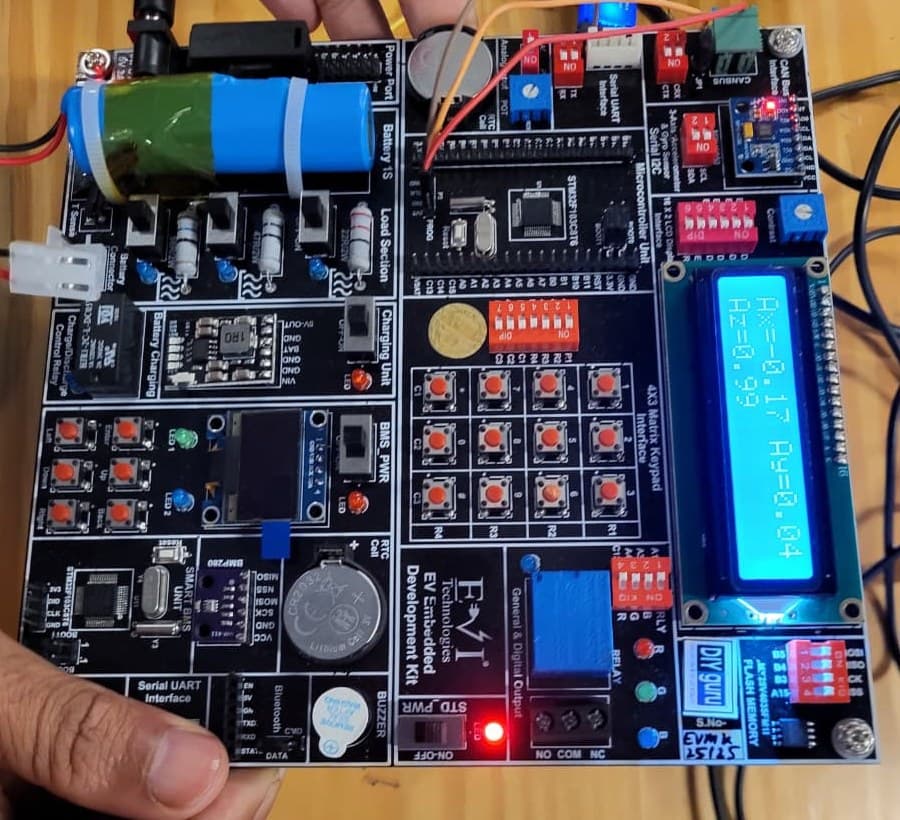
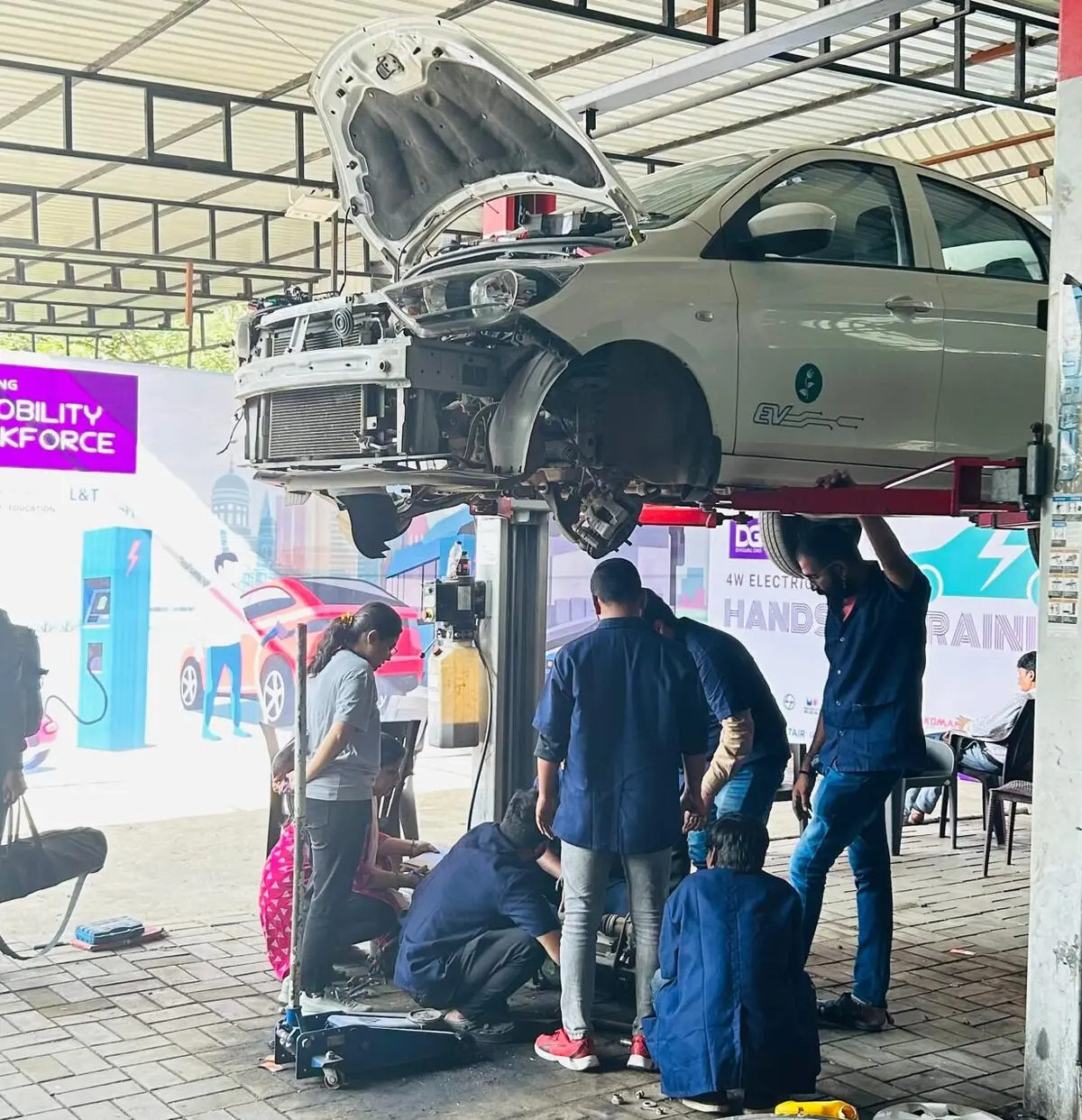
Practise on real hardware
₹10,000 + GST
See what's in the kitTrainer Support
Post questions about balancing circuits, protocol architecture or your Simulink and Kalman filter models in the course Q&A on the portal; trainers answer there and review the submitted project. Programme students can also raise modelling doubts in the live doubt-clearing sessions when scheduled.
Bharat eMobility Recruitathon
The Bharat eMobility Recruitathon brings our learners face to face with companies hiring across the EV industry. Watch the Delhi and Pune chapters.
FAQ
Talk to a counsellor
Leave your details — a counsellor will call you about the syllabus, fees, EMI and certificates.
Technical Expertise You Will Gain
The roles these skills are used in, what you'll be able to do, and the parts of the industry that need it.
Government-Certified · Industry-Endorsed · Learner-Approved
Automotive Skills Development Council — recognised by major OEMs worldwide.
National Educational Alliance for Technology — issued under AICTE's premium learning ecosystem.
Learner Stories
The hardware-first approach made all the difference. Came in from a generalist electronics background; the BMS and motor-drive modules gave me concrete vocabulary I could carry into Infineon interviews.

Industry-grade depth without the academic ivory tower. The MATLAB Simulink + capstone defence prepared me for exactly the kind of cross-functional EV problems we solve at Cummins.

Started with electronics, walked into a BMS role in Germany. The applied projects + mentor reviews are what carried me through — the certifications opened the door, the depth got me hired.

Recorded lessons at your own pace · trainer doubt support · verifiable certificate on completion.