🌡️
Project 01
Battery module thermal study
Set up a steady-state and transient thermal model of a battery module, apply heat generation and convection, and report peak cell temperature.
The Certification Course in Advanced ANSYS for EV Engineering is designed to help you master essential simulation techniques for electric vehicle applications. Learners will explore comprehensive heat transfer analyses—including conduction, convection, and radiation—and apply these skills to battery thermal management.
Course Curriculum
The Certification Course in Advanced ANSYS for EV Engineering is designed to help you master essential simulation techniques for electric vehicle applications. Learners will explore comprehensive heat transfer analyses—i
Sign up at eMobility.careers to get exclusive EV job Opportunities!
text
Topic 1: Heat Transfer Analysis - Overview
8 min· free trial
Topic 2: Understanding Heat Transfer Basics - Conduction, Convection, and Radiation
16 min· free trial
Topic 3: Heat Transfer Simulation with ANSYS
22 min
Topic 4: Steady State Convection Heat Transfer Analysis with ANSYS
17 min
Topic 5: Steady State Conduction Heat Transfer Analysis with ANSYS - Part 1
17 min
Topic 6: Steady State Conduction Heat Transfer Analysis with ANSYS - Part 2
22 min
Topic 7: Transient Conduction Heat transfer Analysis with ANSYS
27 min
Topic 8: Radiation Heat Transfer Analysis with ANSYS Part 1
15 min
Topic 9: Radiation Heat Transfer Analysis with ANSYS Part 2
11 min
Topic 10: Battery Thermal Simulation in ANSYS - Part 1
24 min
Topic 11: Battery Thermal Simulation in ANSYS - Part 2
37 min
Topic 12: Post-Processing, Results Interpretation, and Validation in ANSYS
15 min
Topic 1: Exploring the Fundamentals of Modal Analysis
24 min
Topic 2: Setting Up a Model for Modal Analysis in ANSYS - Geometry Creation to Defining Materials Properties
9 min
Topic 3: Meshing the Geometry for Modal Analysis
16 min
Topic 4: Setting Up Boundary Conditions & Constraints for Modal Analysis
11 min
Topic 5: Solving for Natural Frequencies & Mode Shapes in Modal Analysis
9 min
Topic 6: Post-Processing & Interpreting Modal Analysis Results
7 min
Topic 7: Case Study - Modal Analysis of a Mounting Plate
23 min
Topic 1: Exploring CFD - Definition, Importance & Applications
15 min
Topic 2: Introduction to Fluid Dynamics
32 min
Topic 3: Understanding Fluid Properties - Density, Pressure, Viscosity, Surface Tension & Temperature
24 min
Topic 4: Fluid Flow Classifications
25 min
Topic 5: CFD Workflow Explained
49 min
Topic 6: Performing CFD Analysis in ANSYS Fluent - Part 1
33 min
Topic 7: Performing CFD Analysis in ANSYS Fluent - Part 2
26 min
Topic 1: Structural Analysis: Lower Control Arm - Part 1 Introduction
17 min
Topic 2: Structural Analysis: Lower Control Arm - Part 2 Geometry Creation
19 min
Topic 3: Structural Analysis: Lower Control Arm - Part 3 Meshing & Boundary Conditions
10 min
Topic 4: Structural Analysis: Lower Control Arm - Part 4 Post Processing & Result Interpretation
12 min
Topic 5: Vibration Analysis: Battery Pack - Part 1 Theoretical Overview
36 min
Topic 6: Vibration Analysis: Battery Pack - Part 2 Types of Vibration Testing
27 min
Topic 7: Vibration Analysis: Battery Pack - Part 3 Geometry Creation & Simulation Setup
29 min
Topic 8: Vibration Analysis: Battery Pack - Part 4 Post Processing & Results Interpretation
20 min
Topic 9: Drop Test Analysis: Battery Pack - Part 1 Introduction & Theory
23 min
Topic 10: Drop Test Analysis: Battery Pack - Part 2 Implicit & Explicit Analysis
14 min
Topic 11: Drop Test Analysis: Battery Pack - Part 3 Simulation Set Up & Results
18 min
Topic 12: Thermal Analysis: EV Motor - Part 1 Overview & Geometry Setup
47 min
Topic 13: Thermal Analysis: EV Motor - Part 2 Simulation Set Up & Results
28 min
Projects: Final Projects for ANSYS Certification
assignment
Congratulations on Successfully Completing the Course!
text
Earn a certificate
Every completing learner receives a joint certificate carrying ASDC (Government of India) and AICTE NEAT recognition. The certificate carries a public verification code recruiters can validate in seconds via emobility.careers.
System Requirements
What to have ready before you start this course.
Associated Skills
DIY Projects Included
Work you build while learning — submitted in the course and reviewed by a trainer, and yours to show afterwards.
Set up a steady-state and transient thermal model of a battery module, apply heat generation and convection, and report peak cell temperature.
Run a modal analysis of a pack enclosure, find its first natural frequencies, then apply the vibration-test setup from Module 4 and review stresses.
Model a simple cooling channel or duct in ANSYS Fluent and compare pressure drop and velocity for two inlet speeds.
Course Benefits
Two audiences. Two angles. Pick the one that maps to where you are today.
What this course includes
Who can take this course?
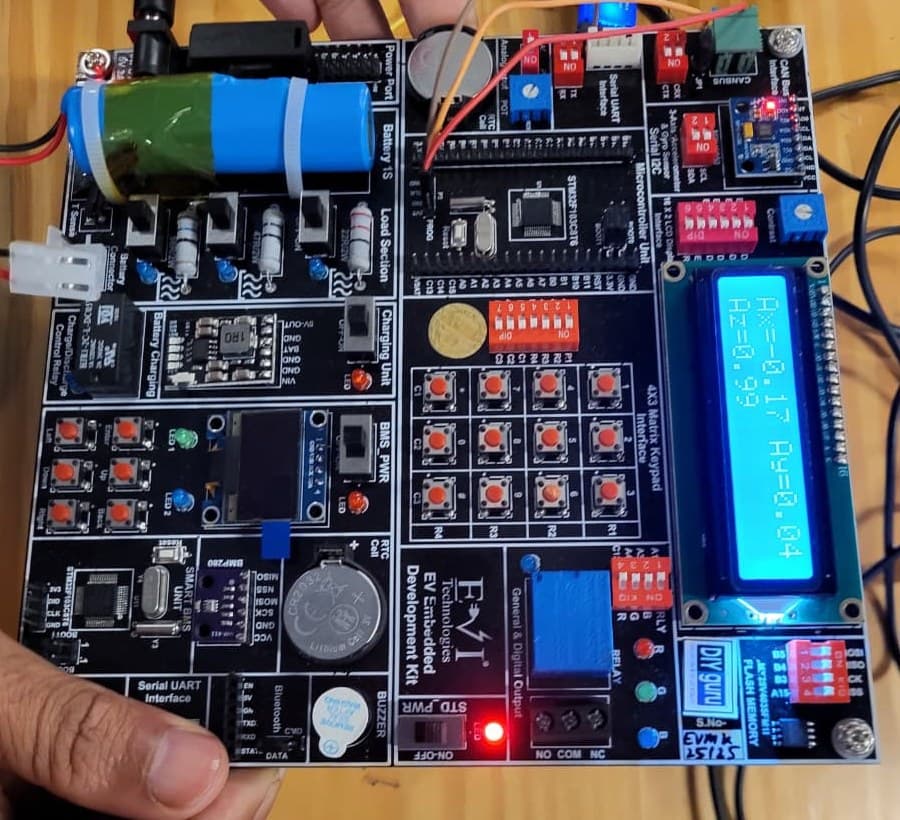
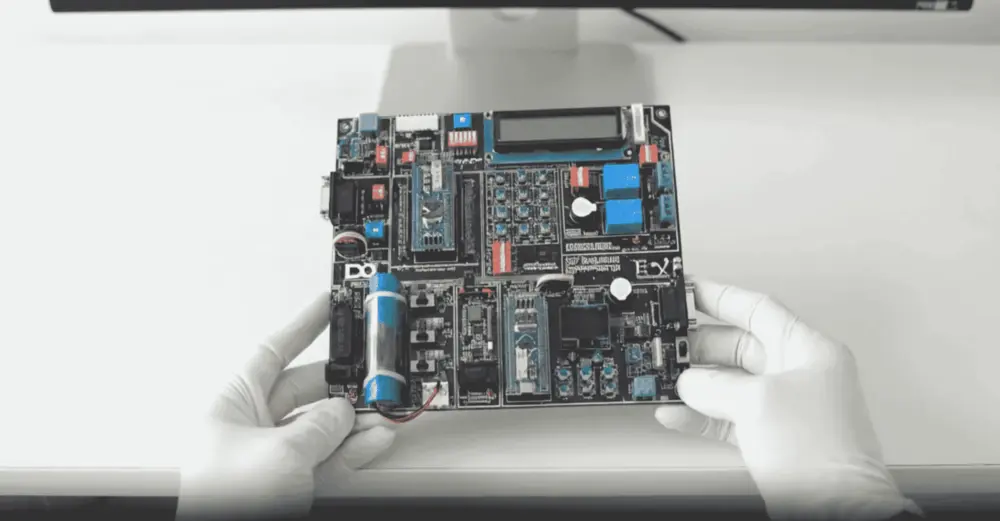
Practise on real hardware
₹10,000 + GST
See what's in the kitTrainer Support
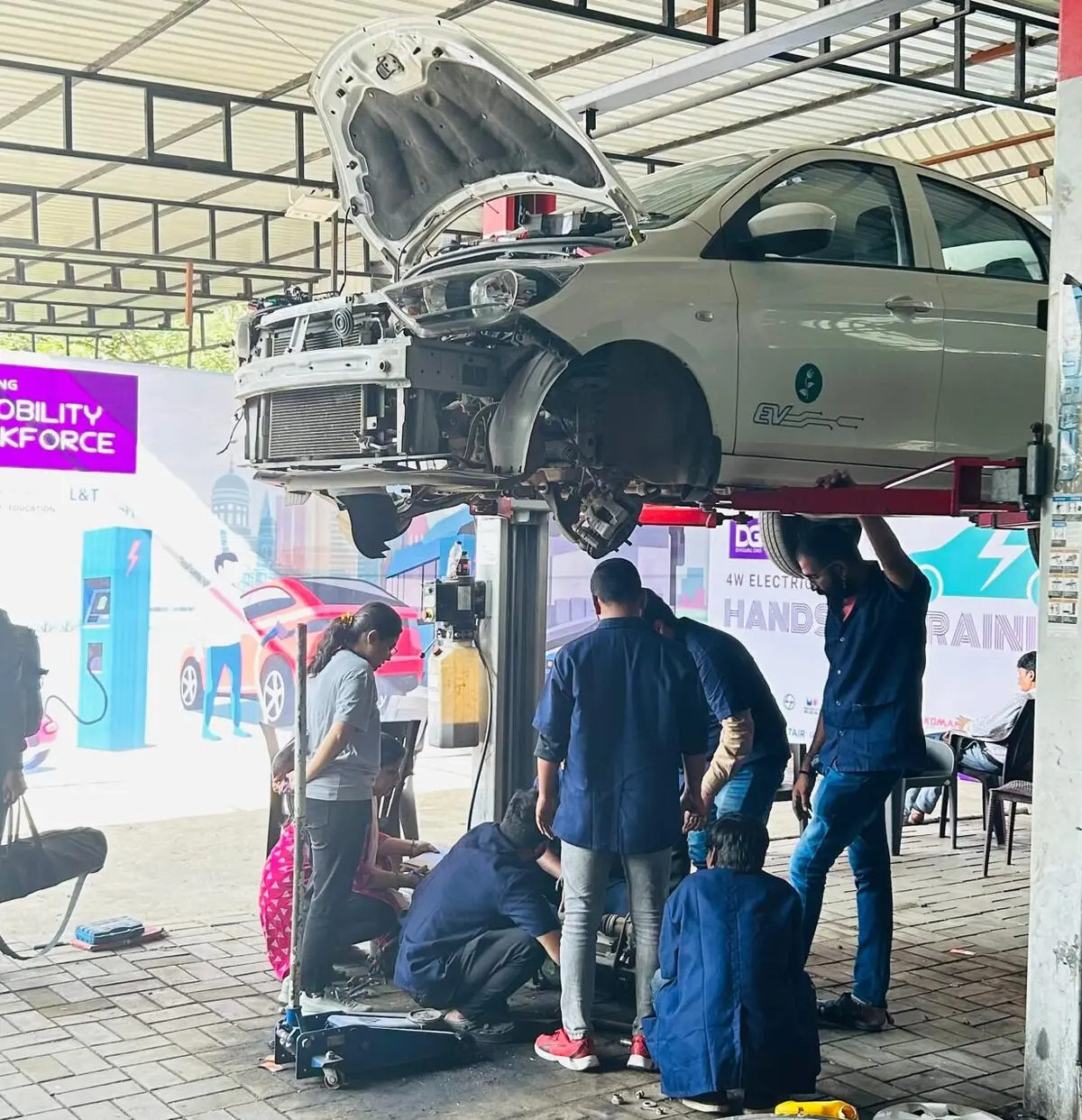
Post doubts in the course Q&A, for example on thermal boundary conditions, mesh settings for modal analysis or Fluent convergence, and a trainer will respond; sharing screenshots of your setup helps. Programme students also get scheduled live classes and doubt-clearing sessions.
Bharat eMobility Recruitathon
The Bharat eMobility Recruitathon brings our learners face to face with companies hiring across the EV industry. Watch the Delhi and Pune chapters.
FAQ
Talk to a counsellor
Leave your details — a counsellor will call you about the syllabus, fees, EMI and certificates.
Technical Expertise You Will Gain
The roles these skills are used in, what you'll be able to do, and the parts of the industry that need it.
Government-Certified · Industry-Endorsed · Learner-Approved
Automotive Skills Development Council — recognised by major OEMs worldwide.
National Educational Alliance for Technology — issued under AICTE's premium learning ecosystem.
Learner Stories
The hardware-first approach made all the difference. Came in from a generalist electronics background; the BMS and motor-drive modules gave me concrete vocabulary I could carry into Infineon interviews.

Industry-grade depth without the academic ivory tower. The MATLAB Simulink + capstone defence prepared me for exactly the kind of cross-functional EV problems we solve at Cummins.

Started with electronics, walked into a BMS role in Germany. The applied projects + mentor reviews are what carried me through — the certifications opened the door, the depth got me hired.

Recorded lessons at your own pace · trainer doubt support · verifiable certificate on completion.