emobility.academy
Curriculum reviewed by IIT Faculty · Continue learning

EV के लिए एडवांस्ड BMS और मॉडलिंग एवं सिमुलेशन में सर्टिफ़िकेशन कोर्स

“EV के लिए एडवांस्ड BMS और मॉडलिंग एवं सिमुलेशन में सर्टिफ़िकेशन कोर्स” बैटरी मैनेजमेंट सिस्टम (BMS) की गहन समझ देता है, जिसमें सेल बैलेंसिंग, थर्मल मैनेजमेंट, कम्युनिकेशन प्रोटोकॉल और एडवांस्ड सॉफ्टवेयर व हार्डवेयर कॉन्फ़िगरेशन पर विशेष ध्यान दिया गया है। शिक्षार्थी बैटरी की सुरक्षा, परफ़ॉर्मेंस और एफ़िशिएंसी को ऑप्टि

9.5+ hours
35 video lessons
12 modules
beginner
English
Recognised & Certified by
ASDC
AICTE NEAT

Course Curriculum

38 lessons across 12 modules

“EV के लिए एडवांस्ड BMS और मॉडलिंग एवं सिमुलेशन में सर्टिफ़िकेशन कोर्स” बैटरी मैनेजमेंट सिस्टम (BMS) की गहन समझ देता है, जिसमें सेल बैलेंसिंग, थर्मल मैनेजमेंट, कम्युनिकेशन प्रोटोकॉल और एडवांस्ड सॉफ्टवेयर व हार्डवेयर कॉन्

1
Module 1

कोर्स में आपका स्वागत है!

1 lesson
  1. 1

    eMobility.careers पर साइन अप करें और पाएं EV जॉब के विशेष अवसर!

    text

2
Module 2

मॉड्यूल 1: EV बैटरी सिस्टम में सेल बैलेंसिंग: विधियाँ, टोपोलॉजी और तकनीकें

5 lessons
  1. 1

    विषय 1: Cell Balancing का परिचय - मुख्य अवधारणाएं, Topologies और EV Batteries के लिए इसका महत्व

    15 min· free trial

  2. 2

    विषय 2: EV बैटरी सिस्टम्स में सेल बैलेंसिंग तकनीक का महत्व

    14 min· free trial

  3. 3

    विषय 3: Battery Balancing कैसे काम करती है - SOC Imbalance के कारण और Active बनाम Passive विधियां

    14 min

  4. 4

    विषय 4: Active Cell Balancing तकनीकें भाग 1 - Direct Transformer Based और Switch Matrix Plus Transformer दृष्टिकोण

    19 min

  5. 5

    विषय 5: Active Cell Balancing तकनीकें भाग 2 - Buck-Boost, तुलना और Closed-Loop Control Switch

    19 min

3
Module 3

मॉड्यूल 2: बैटरी कूलिंग सिस्टम: लाभ, कूलिंग की विधियाँ और एडवांस्ड लिक्विड सॉल्यूशन

3 lessons
  1. 1

    विषय 1: Battery Cooling Systems भाग 1 - लाभ और Air व Liquid Cooling विधियां

    23 min

  2. 2

    विषय 2: Battery Cooling Systems भाग 2 - PCM, Active और Passive Liquid Cooling तथा Contact विधियां

    15 min

  3. 3

    विषय 3: Battery Liquid Cooling System - EVs के लिए एक बेहतर Thermal Management समाधान

    22 min

4
Module 4

मॉड्यूल 3: BMS कम्युनिकेशन प्रोटोकॉल की संपूर्ण गाइड

6 lessons
  1. 1

    विषय 1: SOC और SOH को समझना - BMS के मुख्य पैरामीटर

    16 min

  2. 2

    विषय 2: BMS Functions और BMS में Communication Protocols की पड़ताल - TTL अवलोकन

    19 min

  3. 3

    विषय 3: RS232 Communication Protocol को समझना

    8 min

  4. 4

    विषय 4: RS485 और CAN Communication Protocols को समझना

    17 min

  5. 5

    विषय 5: CAN बस और UART प्रोटोकॉल की समझ तथा BMS में UART इम्प्लीमेंटेशन आर्किटेक्चर

    11 min

  6. 6

    विषय 6: Inverter BMS में RS485 Implementation Architecture और TCP व Isolated SPI Protocols को समझना

    22 min

5
Module 5

मॉड्यूल 4: वायर्ड और वायरलेस BMS कम्युनिकेशन सिस्टम - आर्किटेक्चर, कंपोनेंट और प्रोटोकॉल

4 lessons
  1. 1

    विषय 1: Wired और Wireless BMS Communication का परिचय

    3 min

  2. 2

    विषय 2: बेसिक Wired BMS Architecture, उसके कंपोनेंट्स और Communication Mechanism को समझना

    5 min

  3. 3

    विषय 3: एडवांस्ड Wired BMS Architecture, उसके कंपोनेंट्स और Communication Mechanism की पड़ताल

    15 min

  4. 4

    विषय 4: Wireless BMS Communication, Architecture और Protocols का व्यापक अवलोकन

    10 min

6
Module 6

मॉड्यूल 5: BMS हार्डवेयर कॉन्फ़िगरेशन और कंपोनेंट

4 lessons
  1. 1

    विषय 1: BMS Hardware Topology को समझना - Centralized और Decentralized (Primary-Secondary) System

    21 min

  2. 2

    विषय 2: BMS Hardware Interconnections की व्याख्या और डिज़ाइन संबंधी विचार

    16 min

  3. 3

    विषय 3: BMS System डिज़ाइन करना: AFE, MCU और Fuel Gauge कंपोनेंट्स

    18 min

  4. 4

    विषय 4: BMS में Internal और External Cell Balancing तथा अन्य मुख्य BMS कंपोनेंट्स को समझना

    16 min

7
Module 7

मॉड्यूल 6: BMS सॉफ्टवेयर सिस्टम और प्रमुख एल्गोरिदम

2 lessons
  1. 1

    विषय 1: BMS Cell Balancer और BMS Software System का परिचय

    15 min

  2. 2

    विषय 2: मुख्य BMS Software Algorithms की पड़ताल – State Estimation, Charge-Discharge से Fault Diagnosis तक

    18 min

8
Module 8

मॉड्यूल 7: ML, IoT और क्लाउड कंप्यूटिंग के साथ एडवांस्ड बैटरी एनालिटिक्स और एनर्जी मैनेजमेंट

3 lessons
  1. 1

    विषय 1: एडवांस्ड Battery Life Cycle में Machine Learning की भूमिका

    13 min

  2. 2

    विषय 2: BMS में IoT और Cloud Computing Algorithms की पड़ताल

    23 min

  3. 3

    विषय 3: BMS में मशीन लर्निंग दृष्टिकोण और डिजिटल ट्विन अवधारणा का परिचय

    17 min

9
Module 9

मॉड्यूल 8: Li-Ion सेल के लिए MATLAB/Simulink से एडवांस्ड सेल मॉडलिंग

3 lessons
  1. 1

    विषय 1: सेल मॉडलिंग भाग 1- SOC और OCV एस्टिमेशन मॉडल बनाना

    13 min

  2. 2

    विषय 2: Cell Modeling भाग 2 - Resistance & Power (R & P), Capacitance (C) और Temperature Estimation Models बनाना

    17 min

  3. 3

    विषय 3: Cell Modeling भाग 3 - Terminal Voltage Estimation Model और संपूर्ण Battery Cell Simulation बनाना

    18 min

10
Module 10

मॉड्यूल 9: MATLAB में कूलॉम्ब काउंटिंग और कलमन फ़िल्टर एल्गोरिदम से SOC अनुमान

3 lessons
  1. 1

    विषय 1: Columb Counting Method से SOC Estimation

    10 min

  2. 2

    विषय 2: Kalman Filter Algorithm से SOC Estimation भाग 1

    11 min

  3. 3

    विषय 3: Kalman Filter Algorithm से SOC Estimation भाग 2

    20 min

11
Module 11

मॉड्यूल 10: MATLAB से बैटरी मैनेजमेंट सिस्टम (BMS) की मॉडलिंग

2 lessons
  1. 1

    विषय 1: BMS Discharge Modeling - भाग 1

    21 min

  2. 2

    विषय 2: BMS Discharge Modelling - भाग 2

    16 min

12
Module 12

DIY प्रोजेक्ट:

2 lessons
  1. 1

    प्रोजेक्ट: MATLAB और Simulink का उपयोग करके Li-ion बैटरी सेल की मॉडलिंग और स्टेट ऑफ़ चार्ज एस्टिमेशन

    assignment

  2. 2

    कोर्स सफलतापूर्वक पूरा करने पर बधाई!

    text

Earn a certificate

Add this credential to your resume — and watch employers ask about it

Every completing learner receives a joint certificate carrying ASDC (Government of India) and AICTE NEAT recognition. The certificate carries a public verification code recruiters can validate in seconds via emobility.careers.
  • Issued when you complete the lessons and required quizzes and assignments
  • Digitally signed, with a public verification link and QR code
  • Anyone — an employer or a college — can check it in seconds
  • Shows the course title and the skills it covers
Sample emobility.academy certificate

System Requirements

Hardware & software you'll need

What to have ready before you start this course.

Hardware

  • Laptop or desktop with at least 8 GB RAM (16 GB recommended) to run MATLAB/Simulink smoothly
  • Multi-core processor and around 20 GB free disk space for MATLAB and toolboxes

Software

  • MATLAB and Simulink (student or trial licence)
  • Simscape / Simscape Electrical toolbox if available in your licence, for battery blocks

Associated Skills

What you'll be able to put on your résumé

Active cell balancingPassive cell balancingLiquid and PCM coolingSOC and SOHCAN and RS485UART and isolated SPIWireless BMSCentralised vs distributed BMSAFE, MCU and fuel gaugeLi-ion cell modellingCoulomb countingKalman filter SOC

DIY Projects Included

Hardware-grounded projects in your portfolio

Work you build while learning — submitted in the course and reviewed by a trainer, and yours to show afterwards.

🧮
Project 01

Build a Li-ion cell model in Simulink

Following Module 8, create SOC-OCV, resistance, capacitance and temperature blocks and combine them into a terminal-voltage model of a single cell.

🎯
Project 02

Compare Coulomb counting with a Kalman filter

Run both SOC estimators from Module 9 on the same current profile, add sensor noise, and note how each one drifts or corrects over time.

📊
Project 03

Capstone: SOC estimation of a Li-ion cell

Complete the course project on modelling a Li-ion cell and estimating its state of charge in MATLAB and Simulink, and submit your model and results for trainer review.

Course Benefits

What you'll get out of it

Two audiences. Two angles. Pick the one that maps to where you are today.

For Working Professionals

  • Algorithm-level understanding
    See how SOC estimation, charge-discharge control and fault diagnosis are structured inside BMS software.
  • Protocol clarity
    Understand when a pack uses UART, RS485, CAN or isolated SPI and how each fits into the BMS architecture.
  • Hardware design choices
    Compare centralised and primary-secondary BMS topologies and the role of AFE, MCU and fuel gauge ICs.
  • Modelling you can reuse
    Build Simulink cell and SOC models that can be adapted for your own pack studies.

For Students & Freshers

  • Hands-on MATLAB work
    Three modules of guided Simulink modelling give you real files to show in project reviews and interviews.
  • Kalman filter in practice
    Learn a widely used estimation method through a battery problem rather than abstract maths.
  • Research directions
    Get introduced to ML, IoT, cloud and digital-twin approaches to battery life-cycle analytics.
  • Project for your portfolio
    The SOC estimation project is a focused, demonstrable piece of work.

What this course includes

Everything you get when you enrol

  • 10 Modules.
  • 35 Lectures.
  • 9.447 hours of Video Content.
  • 1 Project Assignment.
  • Certification of Completion.

Who can take this course?

If any of these sound like you — you'll thrive here

  • Electrical, electronics and instrumentation students who want to build cell models and SOC estimators in MATLAB/Simulink
  • Embedded and firmware engineers moving into BMS who need to understand balancing, protocols and state-estimation algorithms
  • Battery pack engineers who want to understand BMS hardware topologies and communication architecture
  • Testing and validation engineers who work with CAN or RS485 data from battery packs
  • M.Tech or research scholars looking at battery analytics, machine learning or digital twins
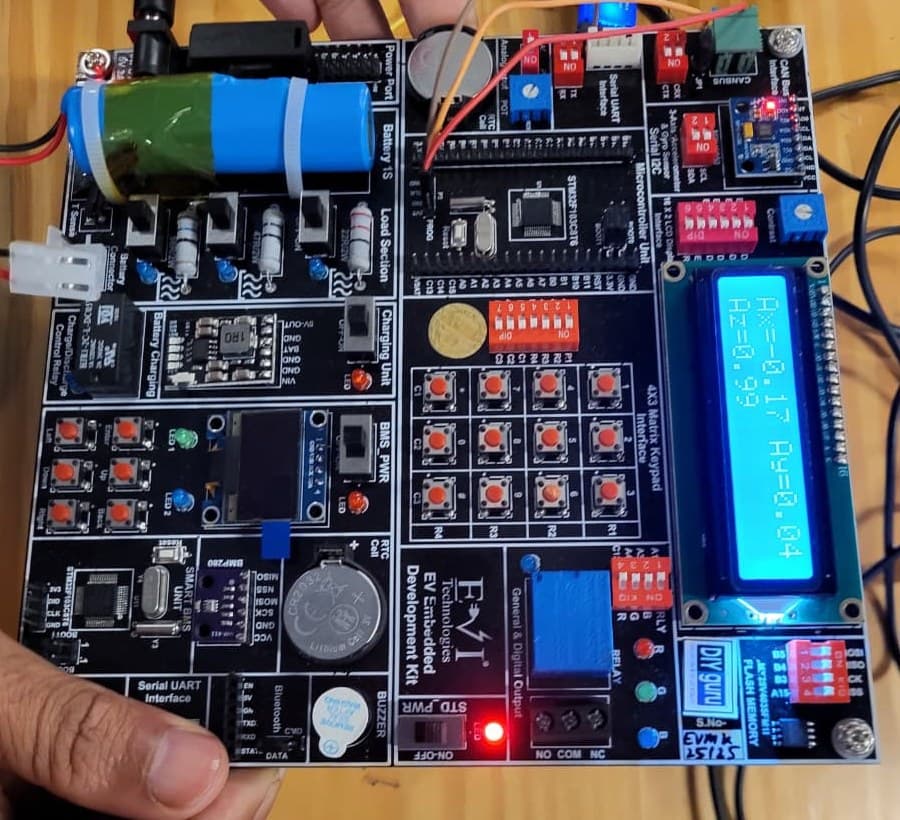
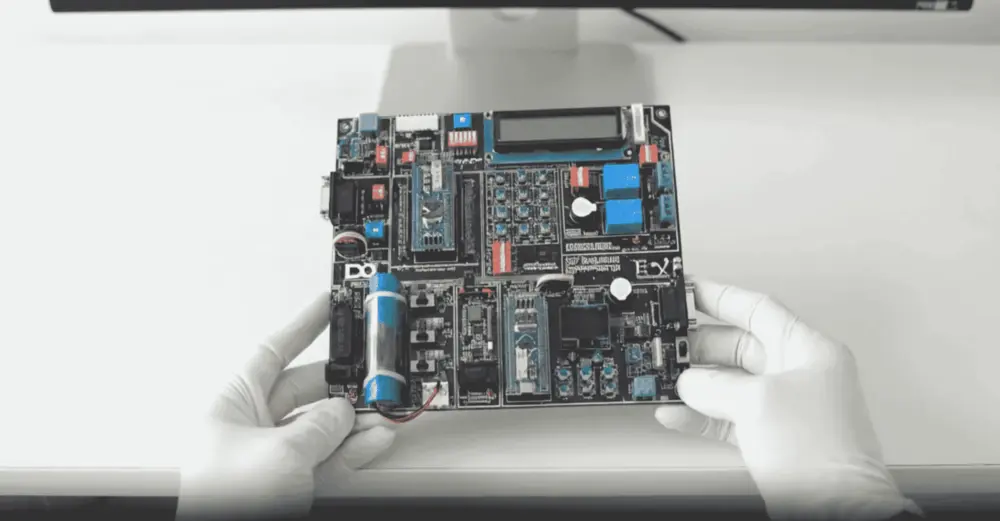
EV Embedded Development Kit board

Practise on real hardware

EV Embedded Development Kit

  • STM32 controller and Smart BMS unit
  • CAN, UART, I2C, SPI and Bluetooth
  • Sensors, LCD, OLED and motor control
  • 15+ guided experiments at home

₹10,000 + GST

See what's in the kit

Trainer Support

Stuck on a concept? Ask a trainer.

DIYguru trainer working with learners

Post questions about balancing circuits, protocol architecture or your Simulink and Kalman filter models in the course Q&A on the portal; trainers answer there and review the submitted project. Programme students can also raise modelling doubts in the live doubt-clearing sessions when scheduled.

  • Ask questions in the course Q&A, right next to the lesson
  • Trainers answer on the portal — you're notified when they reply
  • Assignments and projects you submit are reviewed by a trainer
  • Live doubt-clearing sessions when they're scheduled for the course

Bharat eMobility Recruitathon

Meet the EV industry in person

The Bharat eMobility Recruitathon brings our learners face to face with companies hiring across the EV industry. Watch the Delhi and Pune chapters.

Delhi chapterRecruitathon
Pune chapterRecruitathon

FAQ

Frequently asked questions

Do I need MATLAB experience?
Basic familiarity helps. The modelling modules walk you through building each block, but you should be comfortable opening Simulink, placing blocks and running a simulation.
Which software do I need?
MATLAB and Simulink, on a student or trial licence. A Simscape toolbox is useful for battery blocks if your licence includes it.
Which communication protocols are covered?
TTL, UART, RS232, RS485, CAN, TCP and isolated SPI, along with how they are implemented in BMS and inverter-BMS architectures, plus wired and wireless BMS communication.
How is the project assessed?
You submit the SOC estimation project from the lesson in the course player, and trainers review it.
Will I get a certificate?
Yes. When you complete all lessons and the required quizzes and assignments, you receive a digitally signed certificate that anyone can check through its public verification link or QR code.
Which programmes include this course?
It is part of the Advanced Nanodegree in Battery & BMS, the Professional Certification Programme in Battery & Powertrain, and the PG Certificate Programme in EV & Embedded Systems.
How is the course delivered?
As recorded video lessons on the portal that you watch at your own pace, with quizzes, assignments and a project where the course includes them. Your progress is saved lesson by lesson.
What if I get stuck?
Ask in the course's Q&A on the portal — a trainer answers there. Live doubt-clearing sessions are added when they are scheduled for the course.
What certificate will I get?
A digitally signed certificate of completion once you finish the lessons and the required quizzes and assignments. Each certificate has a public verification link and QR code anyone can check.

Talk to a counsellor

Questions about EV के लिए एडवांस्ड BMS और मॉडलिंग एवं सिमुलेशन में सर्टिफ़िकेशन कोर्स?

Leave your details — a counsellor will call you about the syllabus, fees, EMI and certificates.

Technical Expertise You Will Gain

Where EV के लिए एडवांस्ड BMS और मॉडलिंग एवं सिमुलेशन में सर्टिफ़िकेशन कोर्स can take you

The roles these skills are used in, what you'll be able to do, and the parts of the industry that need it.

Key Job Roles

  • →BMS engineer (entry level)
  • →Battery modelling and simulation engineer
  • →BMS firmware or algorithm trainee
  • →Battery validation and test engineer
  • →Battery analytics associate

Skill Sets

  • →Compare active and passive cell balancing methods and pick one for a pack
  • →Explain BMS communication over UART, RS232, RS485, CAN and isolated SPI
  • →Differentiate wired and wireless BMS architectures
  • →Build an equivalent-circuit Li-ion cell model in Simulink
  • →Estimate SOC using Coulomb counting and a Kalman filter in MATLAB
  • →Choose a liquid, air or PCM cooling approach for a battery pack

Where These Skills Are Used

  • →BMS hardware and firmware developers
  • →Battery pack manufacturers
  • →Electric vehicle manufacturers
  • →Energy storage system integrators
  • →Battery analytics and telematics providers

Government-Certified · Industry-Endorsed · Learner-Approved

Globally recognised credentials

ASDC (Govt of India)

ASDC (Govt of India)

Automotive Skills Development Council — recognised by major OEMs worldwide.

AICTE NEAT

AICTE NEAT

National Educational Alliance for Technology — issued under AICTE's premium learning ecosystem.

Learner Stories

What our learners say

The hardware-first approach made all the difference. Came in from a generalist electronics background; the BMS and motor-drive modules gave me concrete vocabulary I could carry into Infineon interviews.

Souvik Hazra
Souvik Hazra
Senior Manager · Infineon Technologies

Industry-grade depth without the academic ivory tower. The MATLAB Simulink + capstone defence prepared me for exactly the kind of cross-functional EV problems we solve at Cummins.

Sharad Yeola
Sharad Yeola
Application Controls Lead · Cummins Inc.

Started with electronics, walked into a BMS role in Germany. The applied projects + mentor reviews are what carried me through — the certifications opened the door, the depth got me hired.

Jagatjit Barik
Jagatjit Barik
Sr. R&D Engineer (BMS xEV) · Mercedes-Benz

Ready to start EV के लिए एडवांस्ड BMS और मॉडलिंग एवं सिमुलेशन में सर्टिफ़िकेशन कोर्स?

Recorded lessons at your own pace · trainer doubt support · verifiable certificate on completion.


Accreditations

Programs Recognised by Govt. Bodies & Industries

ASDC
AICTE NEAT
SIMOPS Saudi
DSD Malaysia
UK Government
UACH
Tata Technologies
ADYPU
UDYOGA Karnataka
Ola Mobility Institute