emobility.academy
★ 4.6 from 43 student reviews · Curriculum reviewed by IIT Faculty · Continue learning
4.6 / 5 — 43 student reviews

इलेक्ट्रिक व्हीकल टेक्नोलॉजी और बिज़नेस मैनेजमेंट में सर्टिफ़िकेट

A broad, non-software course on how EVs are designed, certified and sold in India: EV types and design procedure, homologation and AIS standards (AIS 038, 048, 156, 102, 123), FAME, charging standards, retrofitting, traction motors and battery chemistries with state policy. It suits people who need a working picture of
53 video lessons
6 modules
beginner
English
Recognised & Certified by
ASDC
AICTE NEAT

Course Curriculum

54 lessons across 6 modules

A broad, non-software course on how EVs are designed, certified and sold in India: EV types and design procedure, homologation and AIS standards (AIS 038, 048, 156, 102, 123), FAME, charging standards, retrofitting, trac

1
Module 1

कोर्स में आपका स्वागत है!

1 lesson
  1. 1

    eMobility.careers पर साइन अप करें और पाएं EV जॉब के विशेष अवसर!

    text

2
Module 2

मॉड्यूल 1: EV टेक्नोलॉजी, डिज़ाइन प्रक्रियाओं और इंडस्ट्री इनसाइट्स का परिचय

8 lessons
  1. 1

    विषय 1: मॉड्यूल का अवलोकन

    8 min· free trial

  2. 2

    विषय 2: इलेक्ट्रिक व्हीकल क्या है

    4 min· free trial

  3. 3

    विषय 3: EV और ऑटोमोटिव उद्योग के प्रमुख पड़ाव

    4 min

  4. 4

    विषय 4: EV के प्रकारों को समझना – BEV, HEV, PHEV और FCEV

    7 min

  5. 5

    विषय 5: EV डिज़ाइन प्रक्रिया (भाग 1) – एस्थेटिक डिज़ाइन

    12 min

  6. 6

    विषय 6: EV डिज़ाइन प्रक्रिया (भाग 2) – पावरट्रेन डिज़ाइन

    6 min

  7. 7

    विषय 7: EV डिज़ाइन प्रक्रिया (भाग 3) – सबसिस्टम्स, चार्जिंग और वैलिडेशन

    9 min

  8. 8

    विषय 8: ICE से EV में बदलाव – प्रोपल्शन सिस्टम के अंतर और मैन्युफैक्चरिंग में परिवर्तन

    3 min

3
Module 3

मॉड्यूल 2: EV होमोलोगेशन, सेफ्टी स्टैंडर्ड और चार्जिंग सिस्टम का संपूर्ण अवलोकन

25 lessons
  1. 1

    विषय 1: होमोलोगेशन का परिचय

    5 min

  2. 2

    विषय 2: होमोलोगेशन मानकों के अंतर्गत वाहन श्रेणियाँ

    11 min

  3. 3

    विषय 3: कानून, नियम और निर्देशों की परिभाषा

    6 min

  4. 4

    विषय 4: EV होमोलोगेशन में मानक और दस्तावेज़

    7 min

  5. 5

    विषय 5: कंप्लायंस और होमोलोगेशन को समझना

    14 min

  6. 6

    विषय 6: होमोलोगेशन की तैयारी भाग 1 – प्री-कंप्लायंस और R&D टेस्टिंग

    5 min

  7. 7

    विषय 7: होमोलोगेशन की तैयारी भाग 2 – फ़ंक्शनल सेफ़्टी, EMI और EMC टेस्टिंग

    7 min

  8. 8

    विषय 8: होमोलोगेशन प्रक्रिया – चरण और वर्कफ़्लो का अवलोकन

    8 min

  9. 9

    विषय 9: EV के लिए क्लोज़र पॉइंट्स और AIS मानकों का अवलोकन (2W कंपोनेंट सहित)

    13 min

  10. 10

    विषय 10: EV होमोलोगेशन में बजटिंग और आम चुनौतियाँ

    8 min

  11. 11

    विषय 11: EV होमोलोगेशन प्रक्रिया

    2 min

  12. 12

    विषय 12: AIS 038 और AIS 156 – अवलोकन और नवीनतम संशोधन

    15 min

  13. 13

    विषय 13: AIS 038 Rev 1 और AIS 048 को समझना – शुरुआती EV सेफ़्टी मानक

    14 min

  14. 14

    विषय 14: AIS 038 Rev 2 और EV में थर्मल रनअवे

    10 min

  15. 15

    विषय 15: AIS 156 बनाम AIS 038, IPX7 और थर्मल प्रोपेगेशन टेस्ट

    11 min

  16. 16

    विषय 16: AIS 156 के तहत बैटरी सेफ़्टी टेस्टिंग में बदलाव – पैक, सेल और BMS स्तर

    10 min

  17. 17

    विषय 17: FAME India योजना का परिचय

    5 min

  18. 18

    विषय 18: FAME India योजना – चरण I और II

    10 min

  19. 19

    विषय 19: CMVR होमोलोगेशन – AIS EV मानक और GTR 20 सेफ़्टी का अवलोकन

    13 min

  20. 20

    विषय 20: CMVR होमोलोगेशन – HEVs के लिए AIS 102 और AIS 123 रेट्रोफ़िट मानक

    5 min

  21. 21

    विषय 21: EV चार्जिंग – AC/DC प्रकार, कॉन्फ़िगरेशन और चार्जिंग विधियाँ

    6 min

  22. 22

    विषय 22: EV चार्जिंग – बैटरी स्वैपिंग और EV चार्जिंग मानक

    4 min

  23. 23

    विषय 23: EV चार्जिंग – CHAdeMO और CCS चार्जिंग मानक, EV चार्जिंग कम्युनिकेशन फ़्लो सहित

    11 min

  24. 24

    विषय 24: EV सबसिस्टम डेवलपमेंट के प्रमुख फ़ोकस क्षेत्र – पावरट्रेन, चेसिस और कंपोनेंट्स

    6 min

  25. 25

    विषय 25: EV चार्जर टेस्टिंग, AC/DC चार्जिंग स्टेशन प्रोटोटाइप और BMS फ़ीचर्स का अवलोकन

    3 min

4
Module 4

मॉड्यूल 3: भारत में EV रेट्रोफिटिंग: कानूनी पहलू, कंपोनेंट और लाभ

4 lessons
  1. 1

    विषय 1: EV रेट्रोफ़िटिंग का परिचय और भारत में इसकी वैधता

    4 min

  2. 2

    विषय 2: भारत में EV रेट्रोफ़िटिंग के प्रमुख पहलू

    6 min

  3. 3

    विषय 3: EV रेट्रोफ़िटिंग – प्रमुख कंपोनेंट्स, यह कैसे काम करती है और वर्तमान स्थिति

    14 min

  4. 4

    विषय 4: EV रेट्रोफ़िटिंग के लाभ

    5 min

5
Module 5

मॉड्यूल 4: EV मोटर टेक्नोलॉजी – प्रकार, कार्य सिद्धांत और उभरते ट्रेंड

8 lessons
  1. 1

    विषय 1: DC मोटर – कार्य सिद्धांत और कंपोनेंट्स

    13 min

  2. 2

    विषय 2: थ्री फ़ेज़ इंडक्शन मोटर – भाग 1

    8 min

  3. 3

    विषय 3: थ्री फ़ेज़ इंडक्शन मोटर – भाग 2

    8 min

  4. 4

    विषय 4: थ्री फ़ेज़ इंडक्शन मोटर – भाग 3

    3 min

  5. 5

    विषय 5: इलेक्ट्रिक वाहनों में ट्रैक्शन मोटर्स के प्रकार

    8 min

  6. 6

    विषय 6: विकसित होती EV मोटर तकनीकें – इंडक्शन से PM-ACIM सिस्टम तक

    6 min

  7. 7

    विषय 7: विकसित होती EV मोटर तकनीकें – PM से WRSM और उभरते विकल्प तक

    12 min

  8. 8

    विषय 8: रेयर अर्थ मैग्नेट, OEM रणनीतियाँ और EV ट्रैक्शन मोटर्स में तकनीकी रुझान

    14 min

6
Module 6

मॉड्यूल 5: EV बैटरी टेक्नोलॉजी, केमिस्ट्री और भारत का पॉलिसी परिदृश्य

8 lessons
  1. 1

    विषय 1: EV बैटरी केमिस्ट्रीज़ का अवलोकन

    6 min

  2. 2

    विषय 2: EV में बैटरी सेल तकनीकें – फ़ॉर्मेट, कॉस्ट स्ट्रक्चर और Tesla केस स्टडी

    7 min

  3. 3

    विषय 3: इलेक्ट्रोकेमिकल सीरीज़ और लिथियम-आयन सेल्स में Li-Ion ट्रांसफ़र मैकेनिज़्म

    10 min

  4. 4

    विषय 4: प्रैक्टिकल लिथियम-आयन सेल डिज़ाइन और LFP बनाम NMC बैटरी की तुलना

    5 min

  5. 5

    विषय 5: लिथियम-आयन बैटरी केमिस्ट्रीज़ का अवलोकन और भारत की EV नीति की समयरेखा

    9 min

  6. 6

    विषय 6: भारत के EV उद्योग के प्रमुख राष्ट्रीय खिलाड़ी और उनकी मुख्य पहलें

    9 min

  7. 7

    विषय 7: भारत के राज्यों की EV नीतियों में बैटरी-केंद्रित पहलें

    8 min

  8. 8

    विषय 8: लिथियम-आयन बैटरी केमिस्ट्रीज़ की सेल-स्तरीय परफ़ॉर्मेंस विशेषताएँ

    6 min

Earn a certificate

Add this credential to your resume — and watch employers ask about it

Every completing learner receives a joint certificate carrying ASDC (Government of India) and AICTE NEAT recognition. The certificate carries a public verification code recruiters can validate in seconds via emobility.careers.
  • Issued when you complete the lessons and required quizzes and assignments
  • Digitally signed, with a public verification link and QR code
  • Anyone — an employer or a college — can check it in seconds
  • Shows the course title and the skills it covers
Sample emobility.academy certificate

System Requirements

Hardware & software you'll need

What to have ready before you start this course.

Hardware

  • Any laptop, tablet or smartphone with a stable internet connection to watch the video lessons
  • Notebook or spreadsheet for summarising standards and policy points

Software

  • None — this is a theory course; a browser to access the portal is enough

Associated Skills

What you'll be able to put on your résumé

EV types (BEV/HEV/PHEV/FCEV)EV design procedureVehicle homologation processAIS 038 and AIS 156CMVR compliance basicsFAME India schemeEV charging standardsEV retrofitting rulesTraction motor typesLi-ion chemistries (LFP/NMC)State EV policies

DIY Projects Included

Hardware-grounded projects in your portfolio

Work you build while learning — submitted in the course and reviewed by a trainer, and yours to show afterwards.

📋
Project 01

Homologation readiness checklist

Using Module 2, list the pre-compliance tests, standards and documents an electric two-wheeler would need before type approval, with budget risks noted.

🔌
Project 02

Charging standard comparison sheet

Compare AC/DC charging, CCS, CHAdeMO and battery swapping on connector, power level and suitable vehicle segment.

🔋
Project 03

LFP vs NMC decision note

Write a one-page note recommending a cell chemistry for a city delivery vehicle, using the cell performance and cost points from Module 5.

Course Benefits

What you'll get out of it

Two audiences. Two angles. Pick the one that maps to where you are today.

For Working Professionals

  • Speak the regulatory language
    Understand AIS standards, CMVR homologation steps and what AIS 156 changed for battery safety.
  • Make better product and sourcing calls
    Compare motor types and battery chemistries at a level useful for business decisions.
  • Assess retrofit and charging opportunities
    Learn the legal position and components of EV retrofitting in India and the main charging options.
  • Plan for compliance costs
    See the typical budgeting and challenges in EV homologation.

For Students & Freshers

  • A clear map of the EV industry
    Connect design, testing, policy and market topics in one course.
  • Standards knowledge few freshers have
    Learn AIS 038, 048, 156 and related standards early.
  • Pick your specialisation
    Overviews of motors, batteries and charging help you decide what to study next.
  • No software needed
    Start learning with just a browser.

What this course includes

Everything you get when you enrol

  • 5 Modules
  • 53 Topics
  • 7.44 hours of Video Content
  • 1 Certificate of Completion

Who can take this course?

If any of these sound like you — you'll thrive here

  • Business, sales and operations staff joining EV OEMs, dealerships or fleet operators
  • Entrepreneurs evaluating EV manufacturing, retrofitting or charging businesses in India
  • Engineering graduates who want an overview of homologation and AIS standards before specialising
  • ICE automotive professionals who want to understand what changes in EV propulsion and manufacturing
  • Policy, consulting and compliance professionals tracking FAME and state EV policies
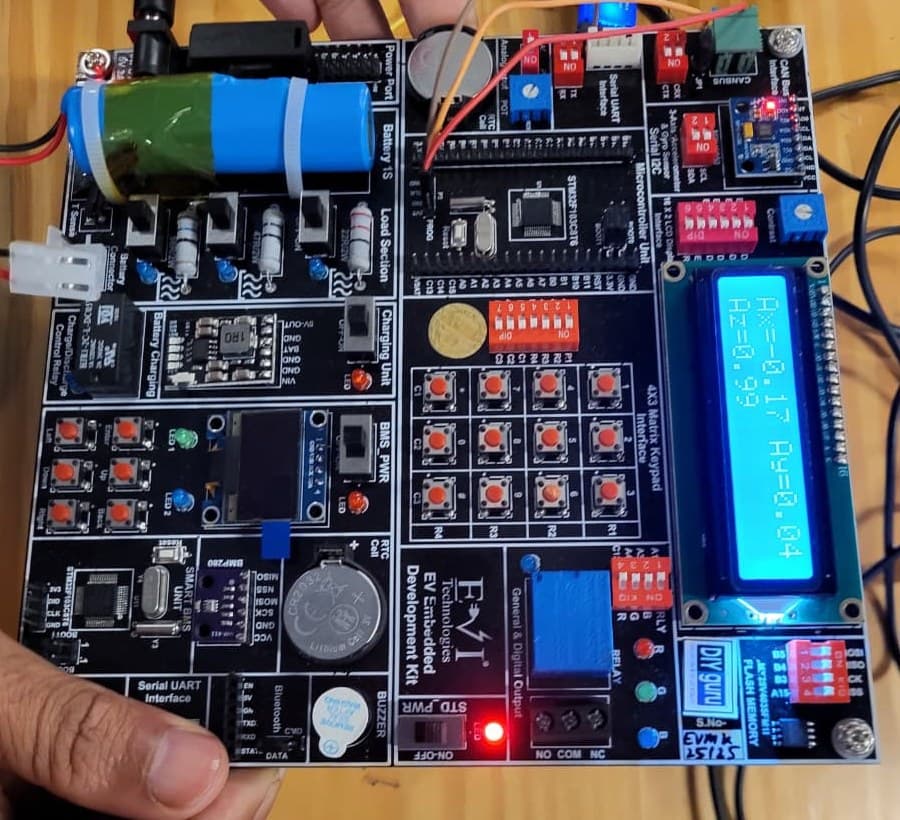
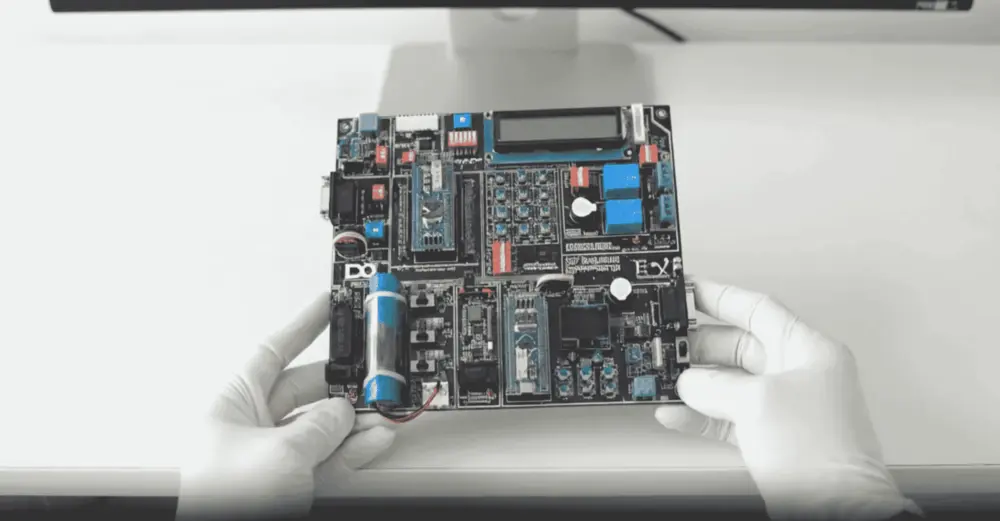
EV Embedded Development Kit board

Practise on real hardware

EV Embedded Development Kit

  • STM32 controller and Smart BMS unit
  • CAN, UART, I2C, SPI and Bluetooth
  • Sensors, LCD, OLED and motor control
  • 15+ guided experiments at home

₹10,000 + GST

See what's in the kit

Trainer Support

Stuck on a concept? Ask a trainer.

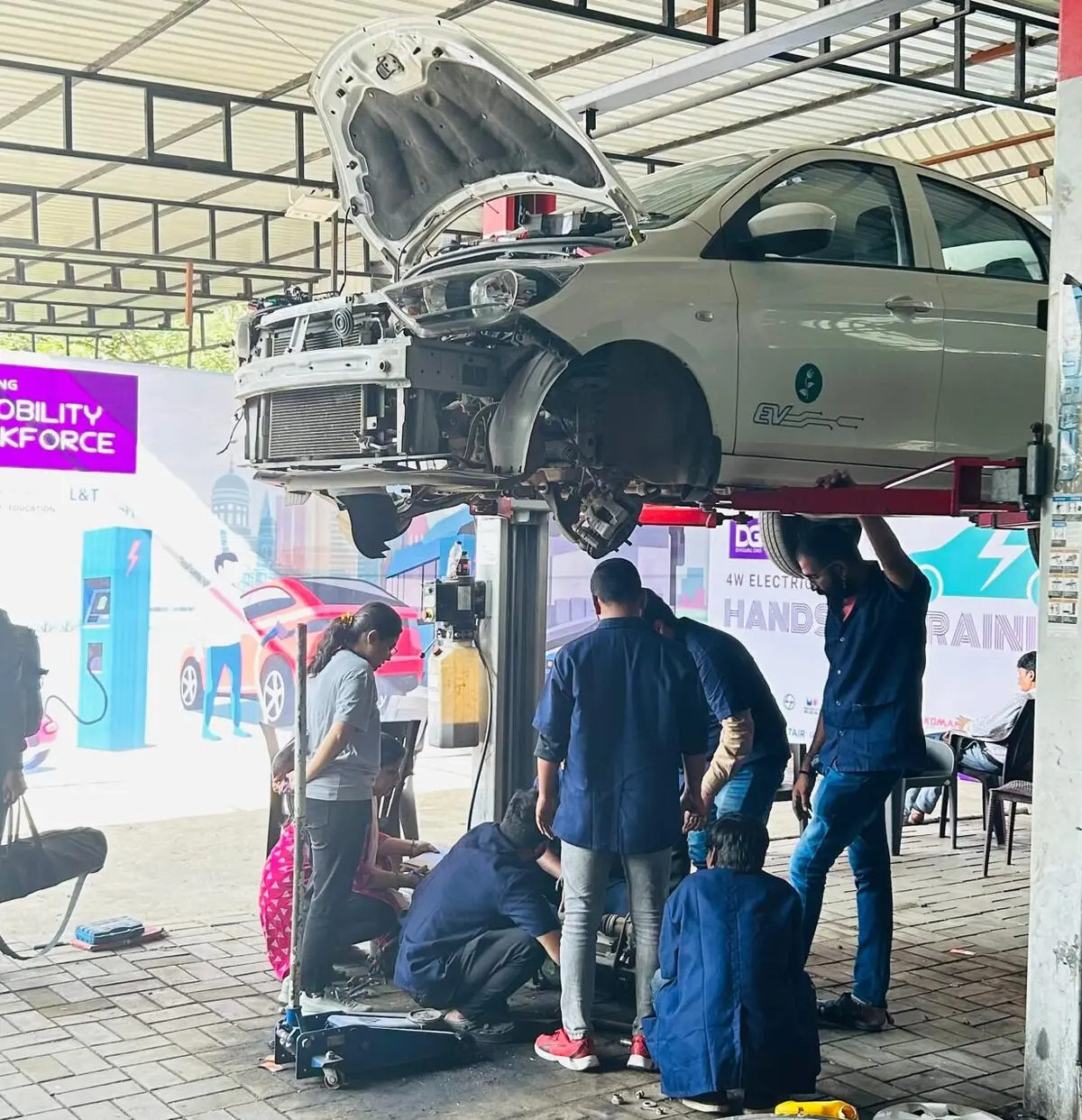
DIYguru trainer working with learners

Ask questions in the course Q&A, for example about how AIS 156 battery tests differ from AIS 038 or how a retrofit kit is approved, and a trainer will respond. CEVT programme students also get the programme's scheduled live classes and doubt-clearing sessions.

  • Ask questions in the course Q&A, right next to the lesson
  • Trainers answer on the portal — you're notified when they reply
  • Assignments and projects you submit are reviewed by a trainer
  • Live doubt-clearing sessions when they're scheduled for the course

Bharat eMobility Recruitathon

Meet the EV industry in person

The Bharat eMobility Recruitathon brings our learners face to face with companies hiring across the EV industry. Watch the Delhi and Pune chapters.

Delhi chapterRecruitathon
Pune chapterRecruitathon

Reviews

4.6 ★ from 43 student reviews

  • ★★★★★

    Good

    Suraj G. · Oct 2026

  • ★★★★★

    I don't no this diyguru site

    Aman · Sept 2026

  • ★★★★★

    Nice study

    Buddhi P. · Sept 2026

  • ★★★★★

    CVET. Very informative

    Navneet V. · Aug 2025

    Reviewed on courses.diyguru.org

  • ★★★★★

    Great Learning Experience. This course provided a solid foundation in electric mobility. The content was clear, well-structured, and practical. Highly recommended for EV enthusiasts and professionals!

    Rupak A. · Jul 2025

    Reviewed on courses.diyguru.org

  • ★★★★★

    EV testing & EV Battery Market. We have gone thru with the EV marketing in all the source and got to know about it.

    Venkatesh · Jul 2025

    Reviewed on courses.diyguru.org

FAQ

Frequently asked questions

Do I need an engineering background?
No. The course is beginner level and explains concepts in plain terms, though technical sections on motors and battery chemistry are easier if you know basic physics.
Does this course teach design software?
No. It is theory-based and covers technology, standards, policy and business context. No software is needed.
Which standards are covered?
Homologation basics and CMVR, AIS 038 (Rev 1 and Rev 2), AIS 048, AIS 156, AIS 102 for hybrids, AIS 123 for retrofits, GTR 20, and charging standards such as CCS and CHAdeMO.
Is it part of a programme?
Yes. It is also a building block of the CEVT – Certified EV Technician Programme.
How do I learn?
Through recorded, self-paced video lessons on the portal, with questions handled in the course Q&A.
Will I get a certificate?
On completing all lessons and any required quizzes or assignments, you receive a digitally signed certificate that anyone can verify through its public verification link or QR code.
How is the course delivered?
As recorded video lessons on the portal that you watch at your own pace, with quizzes, assignments and a project where the course includes them. Your progress is saved lesson by lesson.
What if I get stuck?
Ask in the course's Q&A on the portal — a trainer answers there. Live doubt-clearing sessions are added when they are scheduled for the course.
What certificate will I get?
A digitally signed certificate of completion once you finish the lessons and the required quizzes and assignments. Each certificate has a public verification link and QR code anyone can check.

Talk to a counsellor

Questions about इलेक्ट्रिक व्हीकल टेक्नोलॉजी और बिज़नेस मैनेजमेंट में सर्टिफ़िकेट?

Leave your details — a counsellor will call you about the syllabus, fees, EMI and certificates.

Technical Expertise You Will Gain

Where इलेक्ट्रिक व्हीकल टेक्नोलॉजी और बिज़नेस मैनेजमेंट में सर्टिफ़िकेट can take you

The roles these skills are used in, what you'll be able to do, and the parts of the industry that need it.

Key Job Roles

  • →EV business development executive
  • →Homologation / compliance coordinator (trainee)
  • →EV product associate
  • →EV dealership or fleet operations executive
  • →EV policy or market research analyst

Skill Sets

  • →Explain EV types, the EV design procedure and ICE-to-EV differences
  • →Outline the Indian homologation workflow and the main AIS standards for EVs
  • →Summarise FAME phases and battery-related state EV policy measures
  • →Compare EV charging methods, standards and battery swapping
  • →Describe traction motor types and Li-ion cell chemistries at a decision-making level

Where These Skills Are Used

  • →EV OEMs (two-, three- and four-wheelers)
  • →Testing, certification and homologation services
  • →Charging infrastructure
  • →EV retrofitting
  • →Fleet and e-mobility services
  • →Automotive consulting and policy

Government-Certified · Industry-Endorsed · Learner-Approved

Globally recognised credentials

ASDC (Govt of India)

ASDC (Govt of India)

Automotive Skills Development Council — recognised by major OEMs worldwide.

AICTE NEAT

AICTE NEAT

National Educational Alliance for Technology — issued under AICTE's premium learning ecosystem.

Learner Stories

What our learners say

The hardware-first approach made all the difference. Came in from a generalist electronics background; the BMS and motor-drive modules gave me concrete vocabulary I could carry into Infineon interviews.

Souvik Hazra
Souvik Hazra
Senior Manager · Infineon Technologies

Industry-grade depth without the academic ivory tower. The MATLAB Simulink + capstone defence prepared me for exactly the kind of cross-functional EV problems we solve at Cummins.

Sharad Yeola
Sharad Yeola
Application Controls Lead · Cummins Inc.

Started with electronics, walked into a BMS role in Germany. The applied projects + mentor reviews are what carried me through — the certifications opened the door, the depth got me hired.

Jagatjit Barik
Jagatjit Barik
Sr. R&D Engineer (BMS xEV) · Mercedes-Benz

Ready to start इलेक्ट्रिक व्हीकल टेक्नोलॉजी और बिज़नेस मैनेजमेंट में सर्टिफ़िकेट?

Recorded lessons at your own pace · trainer doubt support · verifiable certificate on completion.
Accreditations

Programs Recognised by Govt. Bodies & Industries

ASDC
AICTE NEAT
SIMOPS Saudi
DSD Malaysia
UK Government
UACH
Tata Technologies
ADYPU
UDYOGA Karnataka
Ola Mobility Institute