emobility.academy
Curriculum reviewed by IIT Faculty · Continue learning

EV के लिए बेसिक कंट्रोल सिस्टम: डिज़ाइन और इम्प्लीमेंटेशन के लिए MATLAB

This course builds the classical control foundation you need before tuning any EV motor, charger or battery loop. Using MATLAB, it covers transfer-function, ZPK and state-space models, step and frequency response, Bode and Nyquist plots, second-order and dead-time behaviour, feedback performance and steady-state error,


42 video lessons
9 modules
beginner
English
Recognised & Certified by
ASDC
AICTE NEAT

Course Curriculum

43 lessons across 9 modules

This course builds the classical control foundation you need before tuning any EV motor, charger or battery loop. Using MATLAB, it covers transfer-function, ZPK and state-space models, step and frequency response, Bode a

1
Module 1

कोर्स में आपका स्वागत है!

1 lesson
  1. 1

    eMobility.careers पर साइन अप करें और पाएं EV जॉब के विशेष अवसर!

    text

2
Module 2

मॉड्यूल 1: MATLAB से लीनियर कंट्रोल सिस्टम के मूल सिद्धांत और मॉडलिंग

3 lessons
  1. 1

    विषय 1: कंट्रोल सिस्टम्स का परिचय और MATLAB का अवलोकन

    13 min· free trial

  2. 2

    विषय 2: कंट्रोल सिस्टम कॉन्फ़िगरेशन: ओपन-लूप, क्लोज़्ड-लूप और फ़ीडबैक मॉडलिंग

    15 min· free trial

  3. 3

    विषय 3: कंट्रोल सिस्टम्स के लिए MATLAB – ट्रांसफ़र फ़ंक्शन मॉडलिंग और स्टेप रिस्पॉन्स एनालिसिस

    13 min

3
Module 3

मॉड्यूल 2: MATLAB से LTI सिस्टम मॉडलिंग और विश्लेषण

4 lessons
  1. 1

    विषय 1: LTI सिस्टम्स का टाइम-डोमेन एनालिसिस: स्टेप रिस्पॉन्स, ओवरशूट और DC गेन

    14 min

  2. 2

    विषय 2: LTI सिस्टम रिप्रेज़ेंटेशन: ट्रांसफ़र फ़ंक्शन, ZPK और स्टेट-स्पेस

    15 min

  3. 3

    विषय 3: LTI मॉडल हैंडलिंग - हायरार्की और प्रॉपर्टीज़

    15 min

  4. 4

    विषय 4: LTI सिस्टम्स का टाइम और फ़्रीक्वेंसी-डोमेन एनालिसिस

    12 min

4
Module 4

मॉड्यूल 3A: फ़्रीक्वेंसी रिस्पॉन्स और सिस्टम रिप्रेज़ेंटेशन के मूल सिद्धांत

4 lessons
  1. 1

    विषय 1: फ़्रीक्वेंसी रिस्पॉन्स एनालिसिस – Bode प्लॉट, Nyquist डायग्राम और गेन–फ़ेज़ मार्जिन

    15 min

  2. 2

    विषय 2: MATLAB LTI Viewer – GUI-आधारित रिस्पॉन्स एनालिसिस और विज़ुअलाइज़ेशन

    14 min

  3. 3

    विषय 3: LTI Viewer से पोल्स, ज़ीरोज़ और सिस्टम ऑर्डर का प्रभाव

    15 min

  4. 4

    विषय 4: कंटीन्यूअस सिस्टम्स का टाइम और फ़्रीक्वेंसी डोमेन रिप्रेज़ेंटेशन (MATLAB)

    12 min

5
Module 5

मॉड्यूल 3B: कंट्रोल सिस्टम का लाप्लास और फ़्रीक्वेंसी डोमेन विश्लेषण

4 lessons
  1. 1

    विषय 1: Laplace-डोमेन एनालिसिस – इनवर्स Laplace और पार्शियल फ़्रैक्शन एक्सपेंशन

    16 min

  2. 2

    विषय 2: MATLAB से LTI सिस्टम्स का फ़्रीक्वेंसी फ़ंक्शन एनालिसिस

    15 min

  3. 3

    विषय 3: MATLAB में Bode प्लॉट एनालिसिस – स्केलिंग, फ़्रीक्वेंसी रेंज और विज़ुअलाइज़ेशन

    15 min

  4. 4

    विषय 4: Nyquist प्लॉट की व्याख्या और ब्लॉक डायग्राम एल्जेब्रा

    21 min

6
Module 6

मॉड्यूल 4: कंट्रोल सिस्टम का डायनामिक रिस्पॉन्स विश्लेषण

6 lessons
  1. 1

    विषय 1: लीनियर कंट्रोल सिस्टम्स के एलिमेंट्स - P, I और फ़र्स्ट-ऑर्डर लैग

    15 min

  2. 2

    विषय 2: 1st, 2nd और हायर-ऑर्डर लैग सिस्टम्स - स्टेप, Bode और Nyquist एनालिसिस

    14 min

  3. 3

    विषय 3: सेकंड-ऑर्डर ऑसिलेटरी सिस्टम्स - डैम्पिंग रेशियो, नेचुरल फ़्रीक्वेंसी और टाइम रिस्पॉन्स

    14 min

  4. 4

    विषय 4: सेकंड-ऑर्डर रिस्पॉन्स और स्टेबिलिटी पर डैम्पिंग रेशियो का प्रभाव

    15 min

  5. 5

    विषय 5: टाइम और फ़्रीक्वेंसी रिस्पॉन्स पर ज़ीरोज़ और डेड टाइम का प्रभाव

    13 min

  6. 6

    विषय 6: Padé अप्रॉक्सिमेशन से डेड-टाइम सिस्टम्स की मॉडलिंग और एनालिसिस (MATLAB)

    17 min

7
Module 7

मॉड्यूल 5: फ़ीडबैक कंट्रोल सिस्टम - परफ़ॉर्मेंस और रोबस्टनेस विश्लेषण

7 lessons
  1. 1

    विषय 1: नेगेटिव फ़ीडबैक – स्टेबिलिटी, रोबस्टनेस और परफ़ॉर्मेंस

    13 min

  2. 2

    विषय 2: MATLAB से फ़ीडबैक सिस्टम्स का परफ़ॉर्मेंस एनालिसिस

    16 min

  3. 3

    विषय 3: नेगेटिव फ़ीडबैक की विशेषताएँ – परफ़ॉर्मेंस सुधार और लीनियराइज़ेशन

    14 min

  4. 4

    विषय 4: फ़ीडबैक सिस्टम्स में रेफ़रेंस ट्रैकिंग और डिस्टर्बेंस रिजेक्शन

    15 min

  5. 5

    विषय 5: स्टैटिक रिस्पॉन्स – सिस्टम टाइप, इंटीग्रेटर्स और स्टेडी-स्टेट एरर

    14 min

  6. 6

    विषय 6: ओपन-लूप और क्लोज़्ड-लूप सिस्टम्स के बीच फ़्रीक्वेंसी-डोमेन संबंध

    18 min

  7. 7

    विषय 7: स्टेप रिस्पॉन्स ओवरशूट और फ़्रीक्वेंसी-डोमेन एम्प्लीफ़िकेशन के बीच संबंध

    9 min

8
Module 8

मॉड्यूल 6: कंट्रोल सिस्टम का क्लासिकल स्टेबिलिटी विश्लेषण (s-डोमेन विधियाँ)

7 lessons
  1. 1

    विषय 1: लीनियर कंट्रोल सिस्टम्स की स्टेबिलिटी - परिभाषाएँ, BIBO स्टेबिलिटी और पोल लोकेशन्स

    9 min

  2. 2

    विषय 2: स्टेप रिस्पॉन्स और पोल–ज़ीरो मैप्स से क्लोज़्ड-लूप स्टेबिलिटी एनालिसिस

    9 min

  3. 3

    विषय 3: Routh–Hurwitz क्राइटेरियन से स्टेबिलिटी एनालिसिस

    11 min

  4. 4

    विषय 4: Routh–Hurwitz क्राइटेरियन से लूप गेन की स्टेबिलिटी रेंज

    10 min

  5. 5

    विषय 5: फ़ीडबैक सिस्टम्स का रूट लोकस एनालिसिस - स्टेबिलिटी बाउंड्रीज़ और गेन सिलेक्शन

    10 min

  6. 6

    विषय 6: रूट लोकस और क्लोज़्ड-लूप स्टेबिलिटी पर पोल्स व ज़ीरोज़ का प्रभाव

    8 min

  7. 7

    विषय 7: रूट लोकस से राइट-हाफ़-प्लेन पोल वाले सिस्टम्स का स्टेबिलाइज़ेशन

    9 min

9
Module 9

मॉड्यूल 7: फ़्रीक्वेंसी-डोमेन स्टेबिलिटी और रोबस्टनेस विश्लेषण

7 lessons
  1. 1

    विषय 1: Nyquist स्टेबिलिटी क्राइटेरियन - मूल सिद्धांत और क्लोज़्ड-लूप स्टेबिलिटी की स्थितियाँ

    12 min

  2. 2

    विषय 2: सरलीकृत Nyquist क्राइटेरियन से क्लोज़्ड-लूप स्टेबिलिटी (MATLAB)

    6 min

  3. 3

    विषय 3: ओपन-लूप अनस्टेबल पोल्स वाले सिस्टम्स का Nyquist स्टेबिलिटी एनालिसिस

    15 min

  4. 4

    विषय 4: MATLAB से गेन मार्जिन और फ़ेज़ मार्जिन की गणना

    13 min

  5. 5

    विषय 5: फ़्रीक्वेंसी-डोमेन स्टेबिलिटी मार्जिन - गेन, फ़ेज़ और डिले मार्जिन (MATLAB)

    15 min

  6. 6

    विषय 6: मॉड्यूलस मार्जिन और सेंसिटिविटी से फ़्रीक्वेंसी-डोमेन रोबस्ट स्टेबिलिटी एनालिसिस

    13 min

  7. 7

    विषय 7: ट्रांसफ़र फ़ंक्शन मैट्रिक्स से इंटरनल स्टेबिलिटी एनालिसिस

    10 min

Earn a certificate

Add this credential to your resume — and watch employers ask about it

Every completing learner receives a joint certificate carrying ASDC (Government of India) and AICTE NEAT recognition. The certificate carries a public verification code recruiters can validate in seconds via emobility.careers.
  • Issued when you complete the lessons and required quizzes and assignments
  • Digitally signed, with a public verification link and QR code
  • Anyone — an employer or a college — can check it in seconds
  • Shows the course title and the skills it covers
Sample emobility.academy certificate

System Requirements

Hardware & software you'll need

What to have ready before you start this course.

Hardware

  • Laptop or desktop with 8 GB RAM minimum (16 GB recommended)
  • Any recent dual- or quad-core processor and about 20 GB free disk space for MATLAB
  • Stable internet connection for streaming lessons

Software

  • MATLAB (student/trial licence)
  • Control System Toolbox for tf, zpk, ss, step, bode, nyquist, rlocus, margin and the LTI Viewer (student/trial licence)

Associated Skills

What you'll be able to put on your résumé

Transfer function modellingState-space representationStep response analysisBode plot analysisNyquist stability criterionRoot locus designRouth–Hurwitz criterionGain and phase marginsSteady-state error analysisDead-time and Padé approximationLTI ViewerDisturbance rejection

DIY Projects Included

Hardware-grounded projects in your portfolio

Work you build while learning — submitted in the course and reviewed by a trainer, and yours to show afterwards.

📈
Project 01

Second-order response explorer

Write a MATLAB script that sweeps damping ratio and natural frequency, then plots step and Bode responses to show how overshoot, settling time and resonance peak change.

🎯
Project 02

Loop-gain stability study

For a simple motor-speed or plant transfer function, find the stable gain range with Routh–Hurwitz, confirm it on the root locus, and check gain and phase margins in MATLAB.

⏱️
Project 03

Effect of sensor delay on a feedback loop

Add dead time to a feedback system using Padé approximation and compare the delay margin, Nyquist plot and step response with and without the delay.

Course Benefits

What you'll get out of it

Two audiences. Two angles. Pick the one that maps to where you are today.

For Working Professionals

  • Read loop behaviour from plots
    Use Bode, Nyquist and step responses to judge whether a motor or converter control loop has enough margin.
  • Pick gains with a method
    Use root locus and Routh–Hurwitz ranges instead of tuning gains only by trial and error.
  • Account for delays
    Understand how sensor and computation delay erode phase and delay margin, a common cause of oscillation in digital controllers.

For Students & Freshers

  • Theory you can check
    Every concept, from partial fractions to the Nyquist criterion, is worked through in MATLAB so you can verify textbook answers.
  • Strong base for exams and interviews
    Stability, margins, system type and steady-state error come up regularly in core-engineering exams and technical interviews.
  • Prepares you for controller design
    The analysis skills here are what the Advanced Control Systems course builds on for designing and implementing controllers.

What this course includes

Everything you get when you enrol

  • 7 Modules.
  • 42 Lectures.
  • 9.6 hours of Video Content.
  • Certification of Completion.

Who can take this course?

If any of these sound like you — you'll thrive here

  • Electrical, electronics, instrumentation and mechatronics students taking or revising a control systems paper
  • Graduates who want hands-on MATLAB practice with Bode, Nyquist and root-locus analysis
  • Embedded and firmware engineers who write control loops for motor controllers or chargers and want the theory behind them
  • GATE or university-exam aspirants who want to check their control-systems answers numerically in MATLAB
  • Learners planning to take Advanced Control Systems for EV next
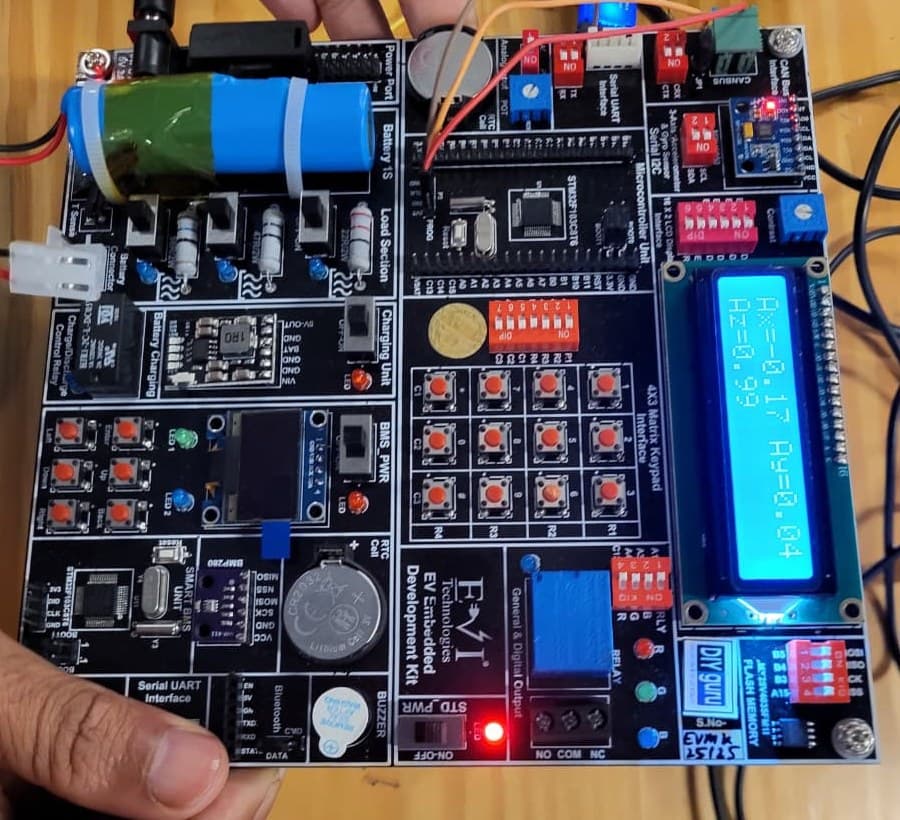
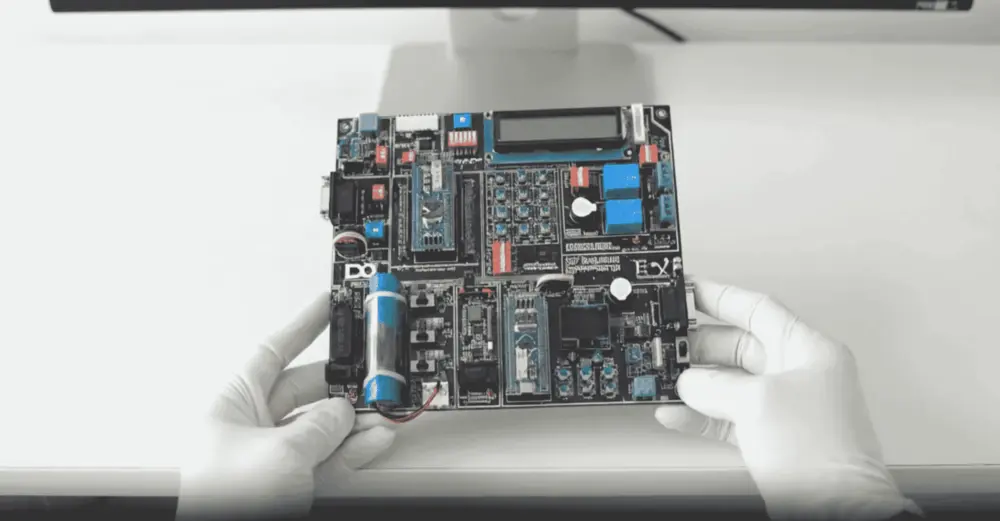
EV Embedded Development Kit board

Practise on real hardware

EV Embedded Development Kit

  • STM32 controller and Smart BMS unit
  • CAN, UART, I2C, SPI and Bluetooth
  • Sensors, LCD, OLED and motor control
  • 15+ guided experiments at home

₹10,000 + GST

See what's in the kit

Trainer Support

Stuck on a concept? Ask a trainer.

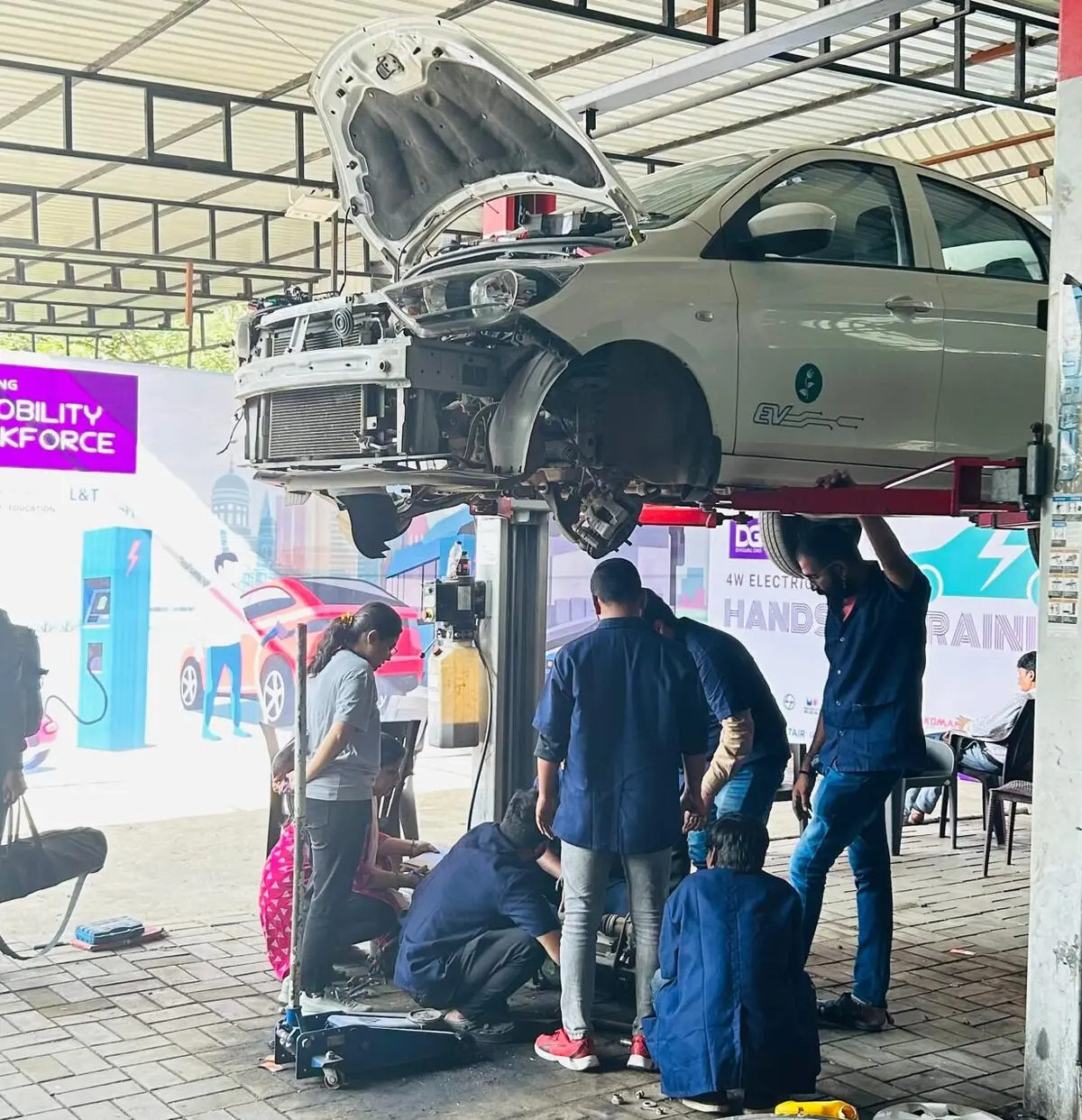
DIYguru trainer working with learners

Ask in the course Q&A on the portal when a Bode or Nyquist plot does not match your hand calculation, or when a root locus or Routh table is confusing. Trainers answer there, and live doubt-clearing sessions are held when scheduled.

  • Ask questions in the course Q&A, right next to the lesson
  • Trainers answer on the portal — you're notified when they reply
  • Assignments and projects you submit are reviewed by a trainer
  • Live doubt-clearing sessions when they're scheduled for the course

Bharat eMobility Recruitathon

Meet the EV industry in person

The Bharat eMobility Recruitathon brings our learners face to face with companies hiring across the EV industry. Watch the Delhi and Pune chapters.

Delhi chapterRecruitathon
Pune chapterRecruitathon

FAQ

Frequently asked questions

What background do I need?
Basic engineering mathematics (differential equations and Laplace transforms) is enough. Module 1 introduces control systems and the MATLAB functions used, so prior MATLAB experience is helpful but not required.
Does this course cover controller design such as PID tuning?
Its focus is modelling and analysis: responses, feedback performance and stability. It introduces P, I and lag elements and gain selection with root locus. Systematic controller design and implementation is the subject of the follow-on course, Advanced Control Systems for EV: MATLAB for Design & Implementation.
Which software is used?
MATLAB with the Control System Toolbox, which requires a licence (student or trial). The course uses functions such as tf, zpk, ss, step, bode, nyquist, rlocus and margin, as well as the LTI Viewer.
How is this related to EVs?
Every EV motor drive, charger and battery thermal system runs feedback loops. This course teaches the analysis tools used to check those loops for stability, speed of response and robustness to delay and disturbances.
Is it part of a programme?
Yes. It is part of the PG Certificate Programme in EV & Embedded Systems, together with Advanced Control Systems for EV. It can also be taken on its own.
Will I get a certificate?
On completing all lessons and the required quizzes/assignments, you receive a digitally signed certificate that anyone can verify through its public verification link or QR code.
How is the course delivered?
As recorded video lessons on the portal that you watch at your own pace, with quizzes, assignments and a project where the course includes them. Your progress is saved lesson by lesson.
What if I get stuck?
Ask in the course's Q&A on the portal — a trainer answers there. Live doubt-clearing sessions are added when they are scheduled for the course.
What certificate will I get?
A digitally signed certificate of completion once you finish the lessons and the required quizzes and assignments. Each certificate has a public verification link and QR code anyone can check.

Talk to a counsellor

Questions about EV के लिए बेसिक कंट्रोल सिस्टम: डिज़ाइन और इम्प्लीमेंटेशन के लिए MATLAB?

Leave your details — a counsellor will call you about the syllabus, fees, EMI and certificates.

Technical Expertise You Will Gain

Where EV के लिए बेसिक कंट्रोल सिस्टम: डिज़ाइन और इम्प्लीमेंटेशन के लिए MATLAB can take you

The roles these skills are used in, what you'll be able to do, and the parts of the industry that need it.

Key Job Roles

  • →Control Systems Engineer – Trainee
  • →Graduate Engineer – Model-Based Design
  • →Motor Control Firmware Engineer – Entry Level
  • →Simulation and Analysis Engineer – Trainee

Skill Sets

  • →Represent linear systems as transfer function, ZPK and state-space models in MATLAB
  • →Analyse time- and frequency-domain responses, including overshoot, DC gain, Bode and Nyquist plots
  • →Assess closed-loop stability with pole–zero maps, Routh–Hurwitz and root locus
  • →Compute gain, phase, delay and modulus margins and interpret robustness
  • →Evaluate reference tracking, disturbance rejection and steady-state error by system type

Where These Skills Are Used

  • →EV motor controller and drive development
  • →Battery charger and power converter control
  • →Automotive embedded systems
  • →Industrial automation and drives
  • →Engineering simulation services

Government-Certified · Industry-Endorsed · Learner-Approved

Globally recognised credentials

ASDC (Govt of India)

ASDC (Govt of India)

Automotive Skills Development Council — recognised by major OEMs worldwide.

AICTE NEAT

AICTE NEAT

National Educational Alliance for Technology — issued under AICTE's premium learning ecosystem.

Learner Stories

What our learners say

The hardware-first approach made all the difference. Came in from a generalist electronics background; the BMS and motor-drive modules gave me concrete vocabulary I could carry into Infineon interviews.

Souvik Hazra
Souvik Hazra
Senior Manager · Infineon Technologies

Industry-grade depth without the academic ivory tower. The MATLAB Simulink + capstone defence prepared me for exactly the kind of cross-functional EV problems we solve at Cummins.

Sharad Yeola
Sharad Yeola
Application Controls Lead · Cummins Inc.

Started with electronics, walked into a BMS role in Germany. The applied projects + mentor reviews are what carried me through — the certifications opened the door, the depth got me hired.

Jagatjit Barik
Jagatjit Barik
Sr. R&D Engineer (BMS xEV) · Mercedes-Benz

Ready to start EV के लिए बेसिक कंट्रोल सिस्टम: डिज़ाइन और इम्प्लीमेंटेशन के लिए MATLAB?

Recorded lessons at your own pace · trainer doubt support · verifiable certificate on completion.


Accreditations

Programs Recognised by Govt. Bodies & Industries

ASDC
AICTE NEAT
SIMOPS Saudi
DSD Malaysia
UK Government
UACH
Tata Technologies
ADYPU
UDYOGA Karnataka
Ola Mobility Institute