
Fundamentals of Automobile Engineering Certification Course
Learn how a car works, right from the basics. This maker's course takes you through the automobile part by part: we pick a car and study its working by analysing each part closely.

Course Curriculum
80 lessons across 12 modules
Overview India became the fourth largest auto market in 2018 with sales increasing 8.3 per cent year-on-year to 3.99 million units. It was the seventh-largest manufacturer of commercial vehicles in 2018. India is also a
1Module 1Your Current Standing
13 lessons
Your Current Standing
- 1
FAE1.1 Course Introduction
3 min· free trial
- 2
FAE1.2 Make in India Diary - Auto Industry Overview
7 min· free trial
- 3
FAE1.3 - Make in India : Daimler
2 min
- 4
FAE1.4 : Make In India - BMW
3 min
- 5
FAE1.5 : Make In India - Ashok Leyland
17 min
- 6
FAE1.6 The Government Policies of Make in India : Next 5 Yrs.
7 min
- 7
FAE1.7 India's Auto Components Sector
1 min
- 8
FAE1.8 Meet a Maker: Mercedes-Benz
1 min
- 9
FAE1.9 Make in India - Scania
1 min
- 10
FAE1.10 Make in India - Volvo
1 min
- 11
FAE1.11 Make in India - ZF
2 min
- 12
FAE1.12 Hero Moto Corp
2 min
- 13
Check your Automobile Knowledge
quiz
2Module 2Getting Started
3 lessons
Getting Started
- 1
FAE2.1 History of Automobiles
28 min
- 2
FAE2.2 : Automobile Industries In India
30 min
- 3
FAE2.3 : Automotive Industry In India
23 min
3Module 3Chassis / Rollcage
1 lesson
Chassis / Rollcage
- 1
FAE3.1 Importance and Development of Chassis
10 min
4Module 4Tyres & Wheels
5 lessons
Tyres & Wheels
- 1
FAE4.1 : Intro to Wheels & Tyres
2 min
- 2
FAE4.2 Wheels Explained
4 min
- 3
FAE4.3 Tyre Nomenclature & How to Read Your Tyres
text
- 4
Quiz 1
quiz
- 5
Assignment: Assignment Week:1 Module
text
5Module 5Engines
15 lessons
Engines
- 1
HMW1.1 - How Do Car Engines Work?
1 min
- 2
EE1.1 Car Engines
text
- 3
LNE2.9 - Petrol (Gasoline) Engine vs Diesel Engine
text
- 4
EE1.2. Gasoline Vs. Diesel Explained
text
- 5
LNE2.12 - Diesel Engine, How it works ?
text
- 6
EE1.3. Two Strokes Engine Explained
text
- 7
EE1.4. Engines Layouts - Explained (V6, 16, V8, W12)
text
- 8
EE1.5. Rotary Engines
text
- 9
EE1.6. Horsepower Vs. Torque
text
- 10
EE1.7. Compression Ratio
text
- 11
EE10.8 F1 Engines Explained
text
- 12
EE1.8. Octane Rating Explained
text
- 13
Engine - Innovation
3 min
- 14
Diesel Engines : Innovation
2 min
- 15
QUIZ 2
quiz
6Module 6Clutches
4 lessons
Clutches
- 1
FAE6.1 How Clutches Works?
text
- 2
EE3.2 : Clutches
text
- 3
EE3.3 Multi-Plate Clutches
text
- 4
Assignment: Assignment Week:2 Module
text
7Module 7Transmission
6 lessons
Transmission
- 1
LNE2.4 - Automatic vs Manual Transmission
text
- 2
LNE2.8 - Automatic Transmission, How it works ?
text
- 3
LNE2.6 - Manual Transmission, How it works ?
text
- 4
E4.5 : Continuously Variable Transmission
text
- 5
Videos : Steering Explained
37 min
- 6
Quiz 3
quiz
8Module 8Revision to Basic Concepts
10 lessons
Revision to Basic Concepts
- 1
AACC1 - Car Engines
text
- 2
AACC2 : Camshaft & Valve
text
- 3
AACC3: Turbocharger & Supercharger
text
- 4
AACC4 : Car Electrics
text
- 5
AACC5 : Car Electronics
text
- 6
AACC6: Steering & Suspension
text
- 7
AACC7 : Car Differential
text
- 8
AACC8: Brakes
8 min
- 9
AACC9 : Car Engine Lubrication
text
- 10
AACC10 : Engine Cooling System
text
9Module 9Suspension
3 lessons
Suspension
- 1
Why is suspension necessary in automobiles?
text
- 2
AACC : How Suspension Works ?
text
- 3
Quiz 4(Revision+Suspension)
quiz
10Module 10Study Materials
1 lesson
Study Materials
- 1
AACC : Study Materials
text
11Module 11Certification
2 lessons
Certification
- 1
Assignment: Assignment
text
- 2
Files Part-1
text
12Module 12Advanced Concept
17 lessons
Advanced Concept
- 1
Automotive Fundamental Lecture
15 min
- 2
Chassis Frame and Body
12 min
- 3
Front Engine-Rear Wheel Drive and its Advantage and Disadvantage
13 min
- 4
Rear engine and rear wheel drive
9 min
- 5
Steering System and Function of Steering System
17 min
- 6
Types of Steering System
15 min
- 7
Wheel Alignment
13 min
- 8
An Introduction to Suspension Parameter part 1
10 min
- 9
An Introduction to Suspension Parameter part 2
6 min
- 10
Suspension Design case study
13 min
- 11
Beginning the design Process
14 min
- 12
Jaking force, Roll center significance, Roll movement and Axis side view
12 min
- 13
Anti-Features part 1
12 min
- 14
Anti-Features part 2
12 min
- 15
Suspension and its Analytics
7 min
- 16
Test Quiz
quiz
- 17
Assignment: Assignment Week:3 Module
text
Earn a certificate
Add this credential to your resume — and watch employers ask about it
Every completing learner receives a joint certificate carrying ASDC (Government of India) and AICTE NEAT recognition. The certificate carries a public verification code recruiters can validate in seconds via emobility.careers.
- Issued when you complete the lessons and required quizzes and assignments
- Digitally signed, with a public verification link and QR code
- Anyone — an employer or a college — can check it in seconds
- Shows the course title and the skills it covers
System Requirements
Hardware & software you'll need
What to have ready before you start this course.
Hardware
- A laptop or desktop with a current browser
- A stable internet connection for streaming lessons
Software
- No special software — lessons play in your browser
Who can take this course?
If any of these sound like you — you'll thrive here
- Engineering students (B.E. / B.Tech / Diploma) who want a focused EV skill
- Working professionals moving into electric-vehicle roles
- Anyone comfortable with the course's prerequisites who prefers to learn at their own pace
Practise on real hardware
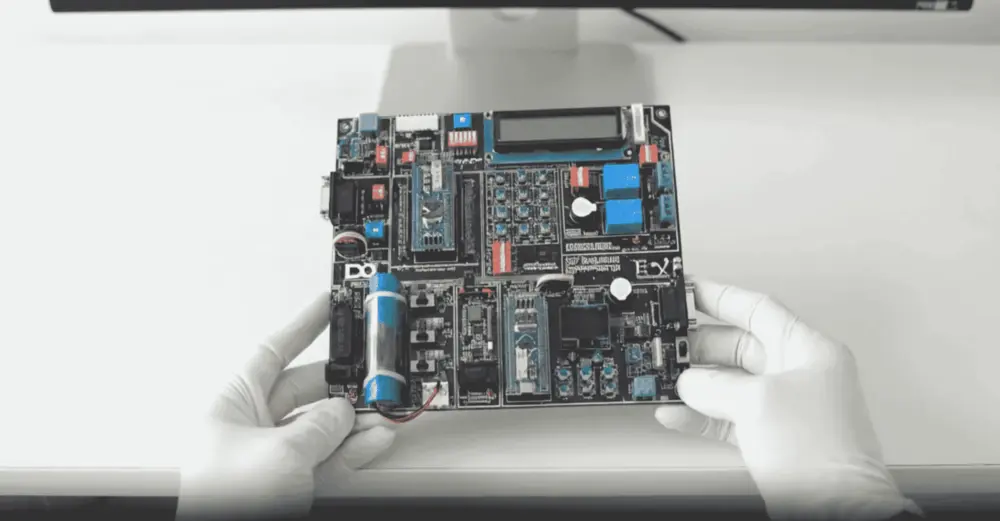
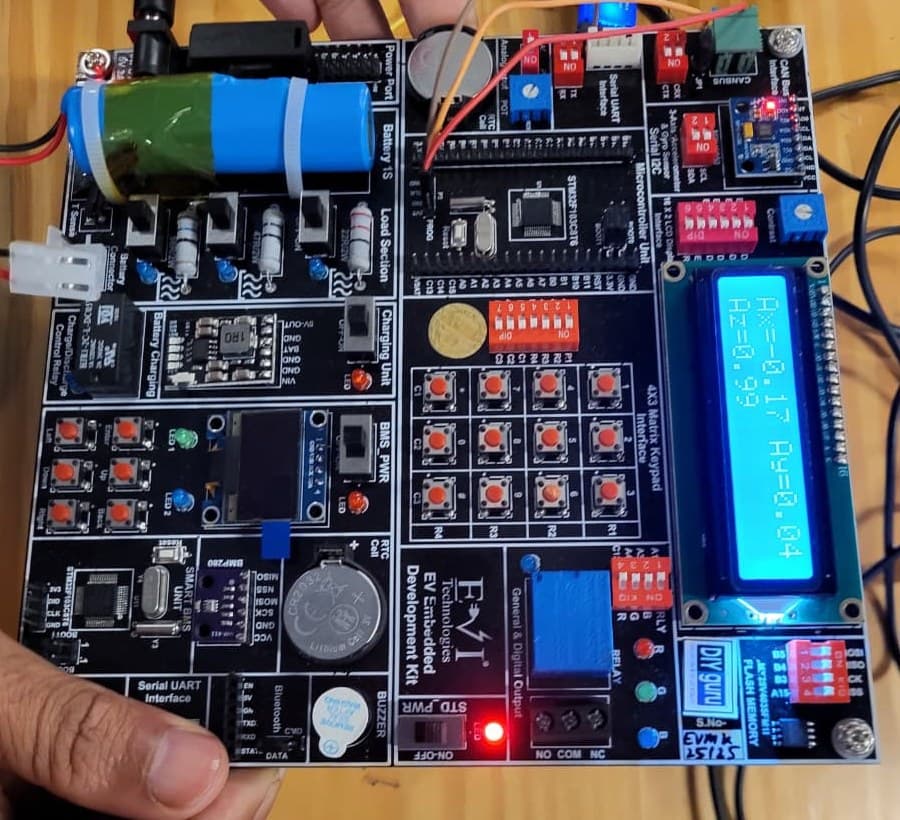
EV Embedded Development Kit
- STM32 controller and Smart BMS unit
- CAN, UART, I2C, SPI and Bluetooth
- Sensors, LCD, OLED and motor control
- 15+ guided experiments at home
₹10,000 + GST
See what's in the kitTrainer Support
Stuck on a concept? Ask a trainer.
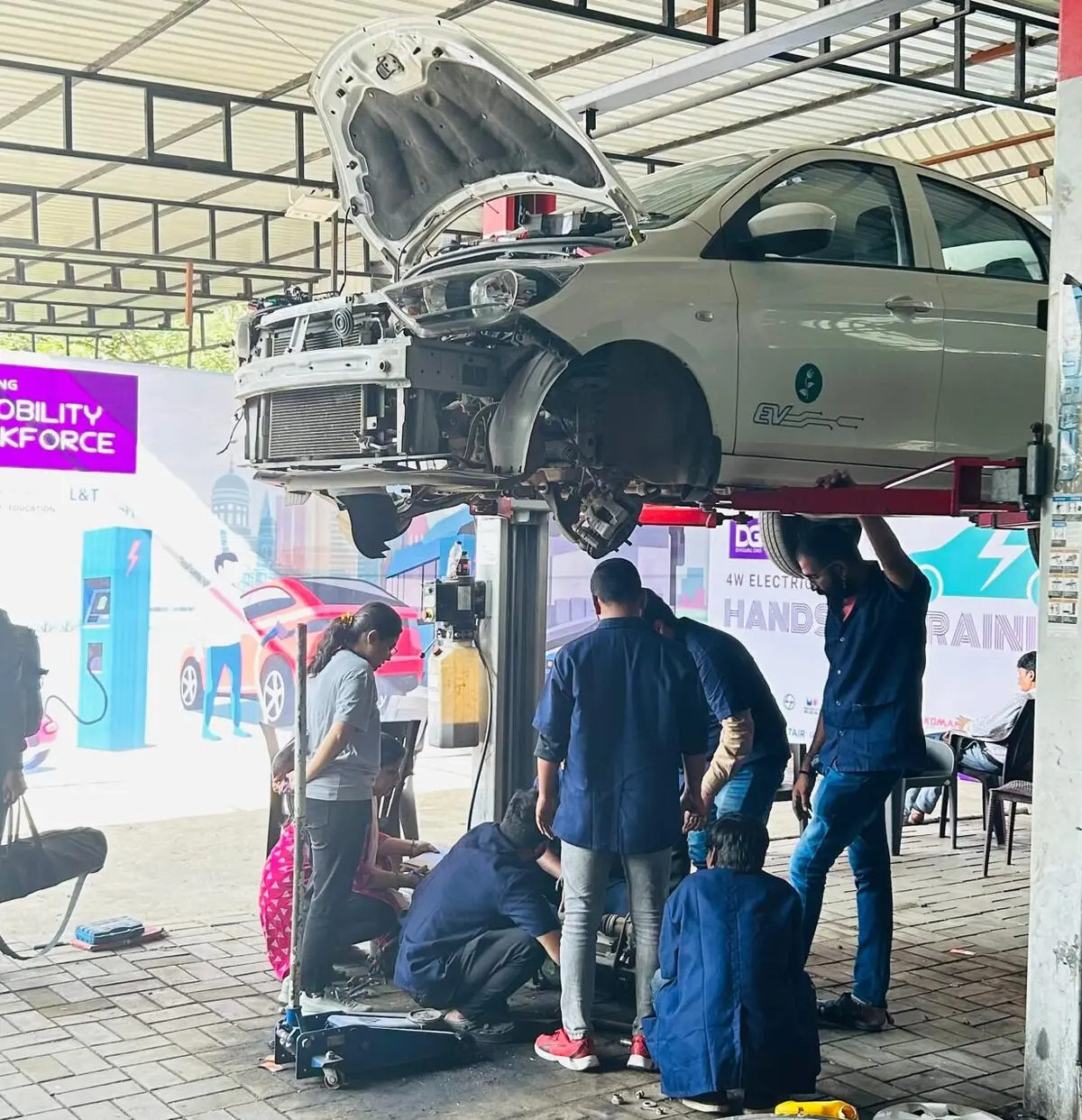
Doubts are answered by trainers in the course Q&A on the portal; assignments and projects you submit are reviewed by them.
- Ask questions in the course Q&A, right next to the lesson
- Trainers answer on the portal — you're notified when they reply
- Assignments and projects you submit are reviewed by a trainer
- Live doubt-clearing sessions when they're scheduled for the course
Bharat eMobility Recruitathon
Meet the EV industry in person
The Bharat eMobility Recruitathon brings our learners face to face with companies hiring across the EV industry. Watch the Delhi and Pune chapters.
FAQ
Frequently asked questions
How is the course delivered?
What if I get stuck?
What certificate will I get?
Talk to a counsellor
Questions about Fundamentals of Automobile Engineering Certification Course?
Leave your details — a counsellor will call you about the syllabus, fees, EMI and certificates.
Government-Certified · Industry-Endorsed · Learner-Approved
Globally recognised credentials
ASDC (Govt of India)
Automotive Skills Development Council — recognised by major OEMs worldwide.
AICTE NEAT
National Educational Alliance for Technology — issued under AICTE's premium learning ecosystem.
Learner Stories
What our learners say
The hardware-first approach made all the difference. Came in from a generalist electronics background; the BMS and motor-drive modules gave me concrete vocabulary I could carry into Infineon interviews.

Industry-grade depth without the academic ivory tower. The MATLAB Simulink + capstone defence prepared me for exactly the kind of cross-functional EV problems we solve at Cummins.

Started with electronics, walked into a BMS role in Germany. The applied projects + mentor reviews are what carried me through — the certifications opened the door, the depth got me hired.

Ready to start Fundamentals of Automobile Engineering Certification Course?
Recorded lessons at your own pace · trainer doubt support · verifiable certificate on completion.
Programs Recognised by Govt. Bodies & Industries