📈
Project 01
Quarter-car ride model
Write the quarter-car equations from Module 4 and, in a spreadsheet or Python, see how changing spring rate and damping ratio changes body motion over a bump.
The Certification Course in Fundamentals of Vehicle Dynamics provides a deep and practical understanding of how a vehicle moves, steers, and reacts under various driving conditions. Designed to bridge theoretical physics with real-world automotive behavior, this course introduces you to the forces, motion principles, s


Course Curriculum
The Certification Course in Fundamentals of Vehicle Dynamics provides a deep and practical understanding of how a vehicle moves, steers, and reacts under various driving conditions. Designed to bridge theoretical physics
Topic 1: Introduction to Vehicle Dynamics
17 min· free trial
Topic 2: A Bit of Physics – The Science Behind Motion
24 min· free trial
Topic 3: Fundamentals of Linear Algebra
22 min
Topic 4: Vector Algebra and 3D Geometry
30 min
Topic 1: Powertrain System – The Heart of Vehicle Motion
11 min
Topic 2: Suspension System – Stability and Ride Comfort
25 min
Topic 3: Steering System – Control and Direction Mechanism
8 min
Topic 1: Understanding Forces Acting on a Vehicle
25 min
Topic 2: Linear Forces and Motion Principles
16 min
Topic 3: Weight & Weight Distribution in Vehicle Design
20 min
Topic 4: Loads and Load Distribution Fundamentals
27 min
Topic 1: Understanding the Vehicle as a Dynamic System
24 min
Topic 2: Introduction to the Quarter Car Model
32 min
Topic 3: Kinematics of the Quarter Car Model
18 min
Topic 4: Longitudinal Dynamics – Vehicle Motion and Stability
20 min
Topic 5: Lateral Dynamics – Cornering and Stability Analysis
10 min
Topic 6: Unpredictable Steering – Factors Affecting Handling Response
25 min
Topic 1: Suspension System Types – Dependent & Independent with Basic Components
14 min
Topic 2: Suspension Components – Wheel Assembly, Bushings, Bearings, Anti-Roll & Sway Bars
8 min
Topic 3: MacPherson Strut – Design and Operation
9 min
Topic 4: Double Wishbone – Structure and Dynamics
13 min
Topic 5: Trailing Arm & Semi-Trailing Arm – Functionality
15 min
Topic 6: Three-Link Trailing Arm – Design and Vehicle Use
9 min
Topic 1: Caster Angle – Definition and Importance
15 min
Topic 2: Camber Angle – Vehicle Stability and Tire Contact
12 min
Topic 3: Toe Angle and Vehicle Stability
7 min
Topic 4: Kingpin Inclination
15 min
Topic 5: Pneumatic Trail and Mechanical Trail
11 min
Topic 6: Roll Center and Roll Rate
12 min
Topic 7: Suspension Geometry – Overall View
13 min
Topic 8: Bump and Droop Considerations
12 min
Topic 9: Four-Bar Mechanism and Instant Center
14 min
Topic 10: Roll Center Design and Geometry
14 min
Topic 11: Roll Moment and Roll Moment Calculation
11 min
Topic 12: Jacking Force and Roll Center Relationship
13 min
Topic 13: Ride Rate
18 min
Topic 14: Overview of Suspension Behaviour
9 min
Topic 15: Anti-Dive and Anti-Squat
11 min
Topic 16: Need for Anti-Dive and Anti-Squat
12 min
Topic 17: Damping Ratio and Damping Constant
12 min
Topic 18: Lateral Slip Angle and Cornering Forces
5 min
Quiz
quiz
Earn a certificate
Every completing learner receives a joint certificate carrying ASDC (Government of India) and AICTE NEAT recognition. The certificate carries a public verification code recruiters can validate in seconds via emobility.careers.
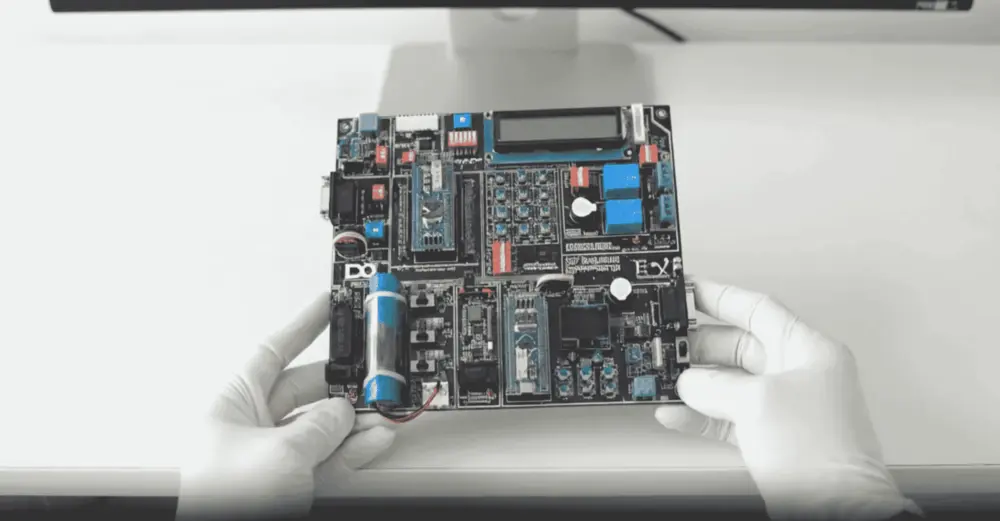
System Requirements
What to have ready before you start this course.
Associated Skills
DIY Projects Included
Work you build while learning — submitted in the course and reviewed by a trainer, and yours to show afterwards.
Write the quarter-car equations from Module 4 and, in a spreadsheet or Python, see how changing spring rate and damping ratio changes body motion over a bump.
Sketch a double-wishbone front suspension, find the instant centres and roll centre, and calculate roll moment for a given lateral acceleration.
For a car or student-team vehicle, list caster, camber, toe and kingpin inclination values and explain the handling effect of each.
Course Benefits
Two audiences. Two angles. Pick the one that maps to where you are today.
What this course includes
Who can take this course?
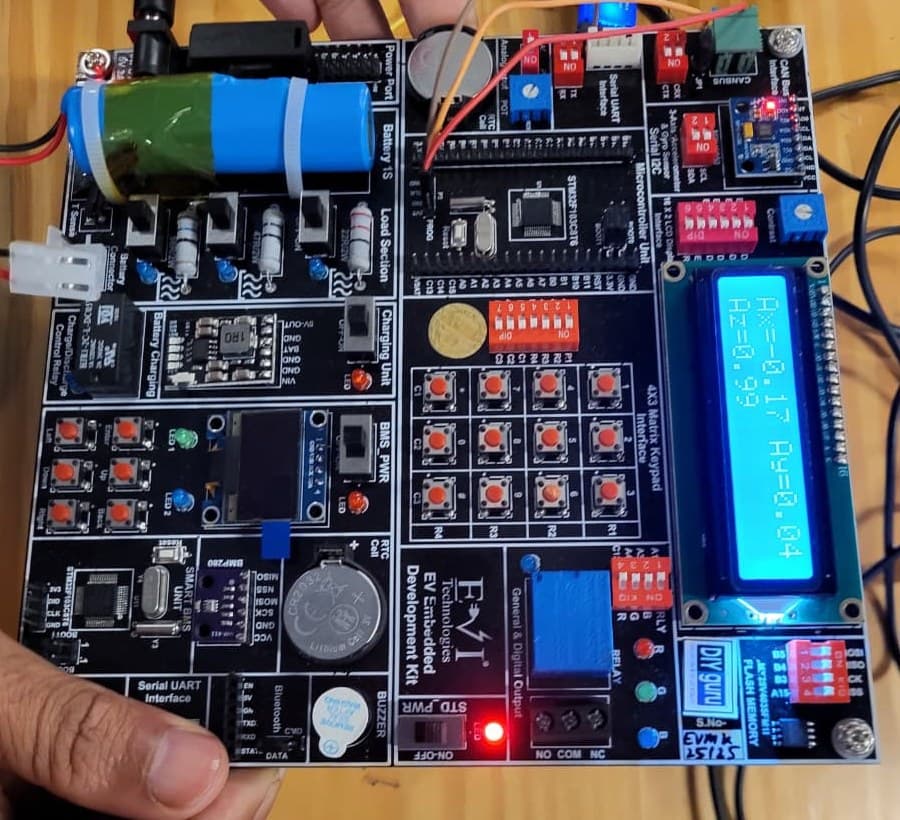
Practise on real hardware
₹10,000 + GST
See what's in the kitTrainer Support
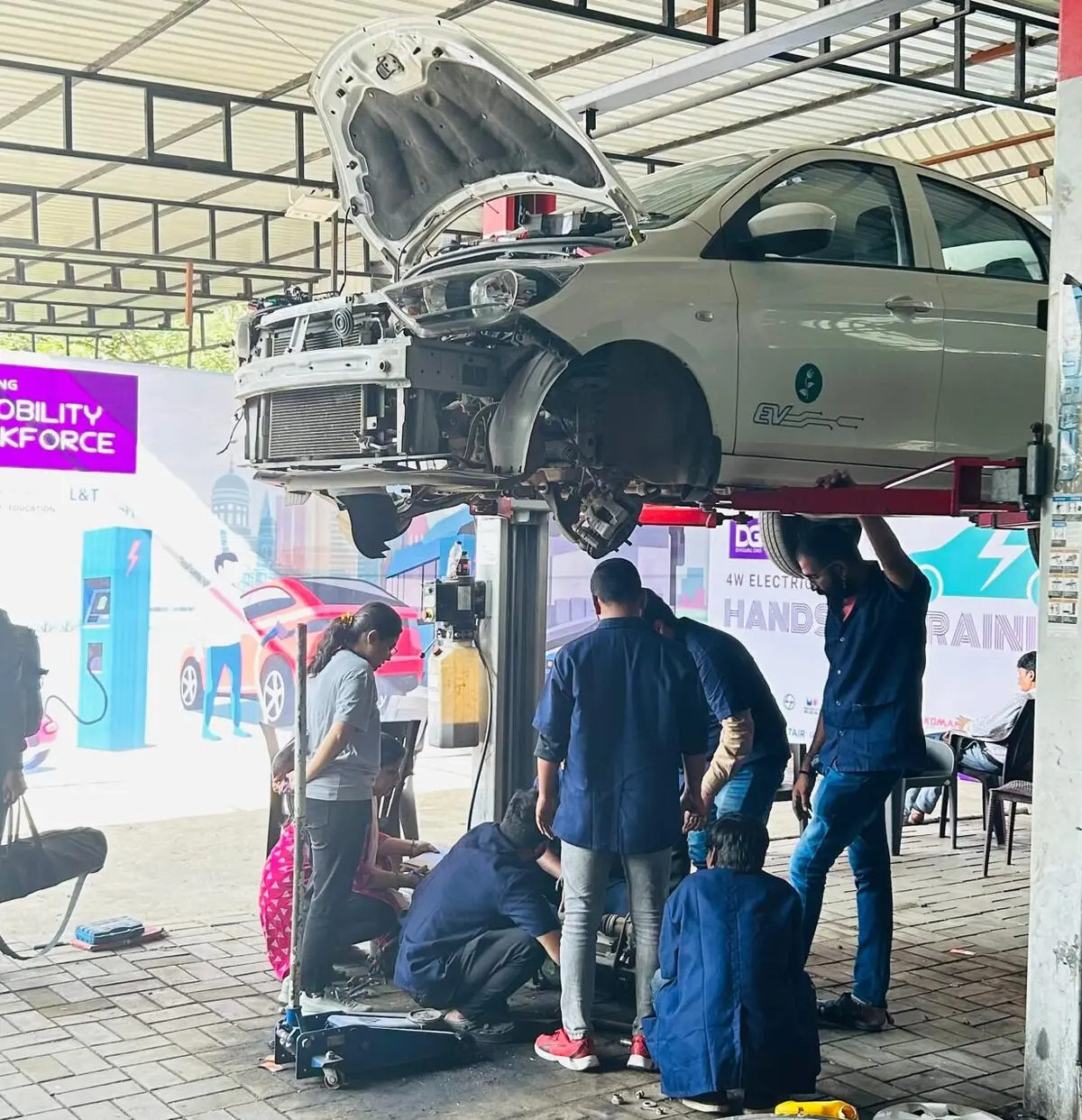
Post doubts in the course Q&A, for example on a roll-centre construction, a load-transfer calculation or the quarter-car equations, and a trainer will reply; including your working helps. Live doubt-clearing sessions are offered when scheduled.
Bharat eMobility Recruitathon
The Bharat eMobility Recruitathon brings our learners face to face with companies hiring across the EV industry. Watch the Delhi and Pune chapters.
Reviews
★★★★★
Good Knowledge on Vehicle Dynamics
Rakesh G. · Aug 2026
★★★★★
Excellant. In Depth Coverage
SRINATH K. · Dec 2024
Reviewed on courses.diyguru.org
★★★★★
This course is great .
SOUMYADEEP C. · Aug 2020
Reviewed on courses.diyguru.org
★★★★★
Well Planned. My trainer is amazing and very knowledgeable. The course content is well-planned, comprehensive, and elaborate. Thank you, DIYguru!
Viplav B. · Aug 2020
Reviewed on courses.diyguru.org
★★★★★
Awesome. I had an awesome learning experience with DIYguru. All the courses are well structured with self-learning, recorded classes, and assessments. The trainers are good; They connect with students well and answer questions.
ADARSH H. · Jul 2020
Reviewed on courses.diyguru.org
★★★★★
Made Concept. Great use of materials. Great use of examples made concepts more clear.
Luan S. · Jun 2020
Reviewed on courses.diyguru.org
FAQ
Talk to a counsellor
Leave your details — a counsellor will call you about the syllabus, fees, EMI and certificates.
Technical Expertise You Will Gain
The roles these skills are used in, what you'll be able to do, and the parts of the industry that need it.
Government-Certified · Industry-Endorsed · Learner-Approved
Automotive Skills Development Council — recognised by major OEMs worldwide.
National Educational Alliance for Technology — issued under AICTE's premium learning ecosystem.
Learner Stories
The hardware-first approach made all the difference. Came in from a generalist electronics background; the BMS and motor-drive modules gave me concrete vocabulary I could carry into Infineon interviews.

Industry-grade depth without the academic ivory tower. The MATLAB Simulink + capstone defence prepared me for exactly the kind of cross-functional EV problems we solve at Cummins.

Started with electronics, walked into a BMS role in Germany. The applied projects + mentor reviews are what carried me through — the certifications opened the door, the depth got me hired.

Recorded lessons at your own pace · trainer doubt support · verifiable certificate on completion.