
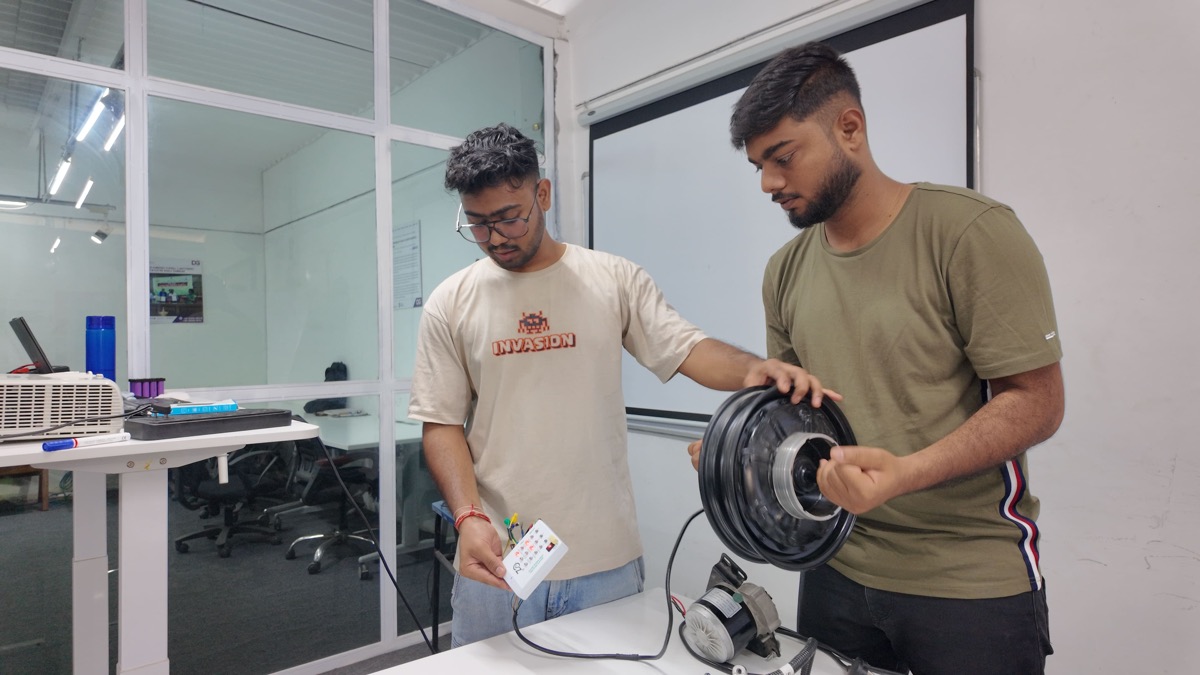
Why this happens
A hub motor is a sealed wheel with bearings, magnets and windings, and it often shares space with a brake disc or drum. A faint electrical whine at low speed is normal because the controller switches current rapidly. New grinding, clicking or rumbling usually comes from bearings, a rubbing brake, loose fasteners or something trapped in the wheel.
What you need
Tools
- Centre stand or bike stand
- Smartphone to record the noise
- Torch
- Hex keys and spanners
- Torque wrench
- Mechanic's stethoscope or a long screwdriver held to the ear
Materials
- Notebook
- Rag
- Thread-locking compound only where the manual specifies it
Before you start
- Keep fingers, sleeves and tools away from spinning wheels and brake discs.
- Brake discs get hot after riding; let them cool before touching.
- Do not open the hub motor yourself; the magnets are strong and it may void warranty.
- Never ride with loose axle nuts.
Step by step
- 1
Record when and how the noise happens
Note whether the noise follows wheel speed or motor power. Ride on a quiet road and listen while accelerating, cruising and coasting with the throttle released. If the noise continues while coasting, it is mechanical: bearings, brakes, tyre or loose parts. If it only happens under power, it is more likely related to the motor or controller. Record a video with sound.
- 2
Spin the wheel by hand with power off
Switch off and put the vehicle on its stand. Turn the motor wheel slowly by hand. A hub motor has a slight magnetic cogging feel, which is normal. Listen and feel for grinding, roughness, clicks at the same point each turn, or the wheel stopping quickly. Hold a stethoscope or the end of a screwdriver to the axle area to locate the sound.
- 3
Check for brake rub
Watch the brake disc as it passes through the caliper. A rhythmic scraping that changes when you squeeze and release the lever is usually brake rub from a slightly bent disc or a sticking caliper. On drum brakes, check the adjuster is not too tight. Fix brake rub with the disc brake adjustment guide.
- 4
Check for bearing play
Grip the tyre at the top and bottom and try to rock it side to side against the axle. Any clunk or movement suggests worn wheel or hub bearings or loose axle nuts. Check the axle nuts are tightened to the torque in your manual. Worn bearings inside a hub motor need a workshop, because replacing them means opening the motor.
- 5
Look for loose or trapped parts
Inspect the mudguard, number plate, side panels and cable ties near the wheel. A loose mudguard stay or a cable touching the tyre can make clicks that follow wheel speed. Check the tyre for embedded stones. Check the motor cable where it leaves the axle is secured and not rubbing on the frame or wheel.
- 6
Listen under power on the stand
Switch on with the wheel lifted and give a small amount of throttle. A light, even whine that rises with speed is typical of the controller's switching. A harsh growl, knocking or a stuttering motor under power can mean a Hall sensor fault, a damaged magnet or a winding issue. Keep hands clear of the wheel and stop after a few seconds.
- 7
Tighten and test ride
Tighten any loose fasteners to the manual's torque values, re-route chafing cables and fix brake rub. Take a short test ride and listen again under the same conditions. If you have changed one thing at a time, you will know which fix worked.
- 8
Book the workshop for internal noises
If the noise comes from inside the hub, is a grinding under power, or the wheel has bearing play with correct axle torque, take it to an authorised service centre. Opening a hub motor needs special tools to separate the magnets safely and may void warranty. Bring your video and notes.
How to tell it worked
The noise has gone after fixing brake rub, loose parts or axle torque, or you have isolated it to the hub motor's internals and have a recording to show the service centre.
Stop and call a technician if
- The wheel has play or wobble after the axle nuts are correctly tightened.
- There is grinding or knocking from inside the motor under power.
- The motor gets unusually hot or smells of burning with the noise.
- The motor cable is pulled, twisted or damaged at the axle.
Questions
Is a high-pitched whine from the motor normal?
A light whine at low speed or under acceleration is usually the controller's switching frequency and is normal. A new or much louder whine compared with before is worth checking.
Why does my hub motor feel notchy when turned by hand?
Permanent magnets pulling towards the stator teeth give a slight cogging feel. Grinding, roughness or a scraping sound is not normal.