emobility.academy
Curriculum reviewed by IIT Faculty · Continue learning

Certification Course in Hydrogen Fuel Cell Technology for Electric Vehicles

Hydrogen and fuel cells for electric mobility: hydrogen as an energy carrier and its safety, fuel-cell electrochemistry, the main fuel-cell types (PEM, solid oxide, alkaline and others), and how a stack is built from MEAs, bipolar plates and gas diffusion layers. It then covers how hydrogen is produced (electrolysis an

10+ hours
beginner
English
Recognised & Certified by
ASDC
AICTE NEAT

Course Curriculum

What you will learn

Hydrogen and fuel cells for electric mobility: hydrogen as an energy carrier and its safety, fuel-cell electrochemistry, the main fuel-cell types (PEM, solid oxide, alkaline and others), and how a stack is built from MEA

Modules publishing in progress — enrol now to be notified the moment lessons go live.

Earn a certificate

Add this credential to your resume — and watch employers ask about it

Every completing learner receives a joint certificate carrying ASDC (Government of India) and AICTE NEAT recognition. The certificate carries a public verification code recruiters can validate in seconds via emobility.careers.
  • Issued when you complete the lessons and required quizzes and assignments
  • Digitally signed, with a public verification link and QR code
  • Anyone — an employer or a college — can check it in seconds
  • Shows the course title and the skills it covers
Sample emobility.academy certificate

System Requirements

Hardware & software you'll need

What to have ready before you start this course.

Hardware

  • Laptop, tablet or smartphone with internet access to stream video lessons

Software

  • Modern web browser to access the course player

Associated Skills

What you'll be able to put on your résumé

Fuel cell electrochemistryPEMFC & SOFC typesStack components (MEA, bipolar plates)Polarisation curvesElectrolysis (alkaline, PEM, SOE)Hydrogen storage methodsFCEV architectureFuel cell vs battery EVHydrogen refuelling stationsHydrogen safetyGreen hydrogen policy (India)

DIY Projects Included

Hardware-grounded projects in your portfolio

Work you build while learning — submitted in the course and reviewed by a trainer, and yours to show afterwards.

⚗️
Project 01

Trace an FCEV's energy path

Draw a block diagram of a fuel cell vehicle from hydrogen tank to fuel cell stack, battery buffer, inverter and motor, and label what each block does.

⚖️
Project 02

Compare FCEV and BEV for a bus route

On paper, compare a fuel cell bus and a battery bus for a long intercity route on refuelling or charging time, onboard energy storage and infrastructure needs.

🧪
Project 03

Hydrogen pathway case study

Write a short note comparing grey, blue and green hydrogen production routes and what each means for the overall emissions of a fuel cell vehicle.

Course Benefits

What you'll get out of it

Two audiences. Two angles. Pick the one that maps to where you are today.

For Working Professionals

  • Broader powertrain view
    Understand fuel cell vehicles so you can compare them fairly with battery EVs in your work.
  • Hydrogen basics
    Get clarity on production, storage and refuelling, which matter for any hydrogen mobility project.
  • Fits charging and energy roles
    Useful if you work on energy infrastructure and need to understand hydrogen alongside charging.

For Students & Freshers

  • Emerging-technology exposure
    Learn the fundamentals of a technology that features in clean-energy and mobility discussions.
  • Project topics
    Gives ideas for seminar or project work on fuel cell vehicles and hydrogen infrastructure.
  • Complements EV learning
    Pairs well with battery and charging courses for a complete view of zero-emission vehicles.

Who can take this course?

If any of these sound like you — you'll thrive here

  • Mechanical, chemical and electrical engineering students curious about hydrogen mobility
  • EV professionals who want to understand how fuel cell vehicles differ from battery-electric vehicles
  • Energy-sector professionals exploring green hydrogen applications in transport
  • Learners in charging and energy programmes who want the hydrogen side of the picture
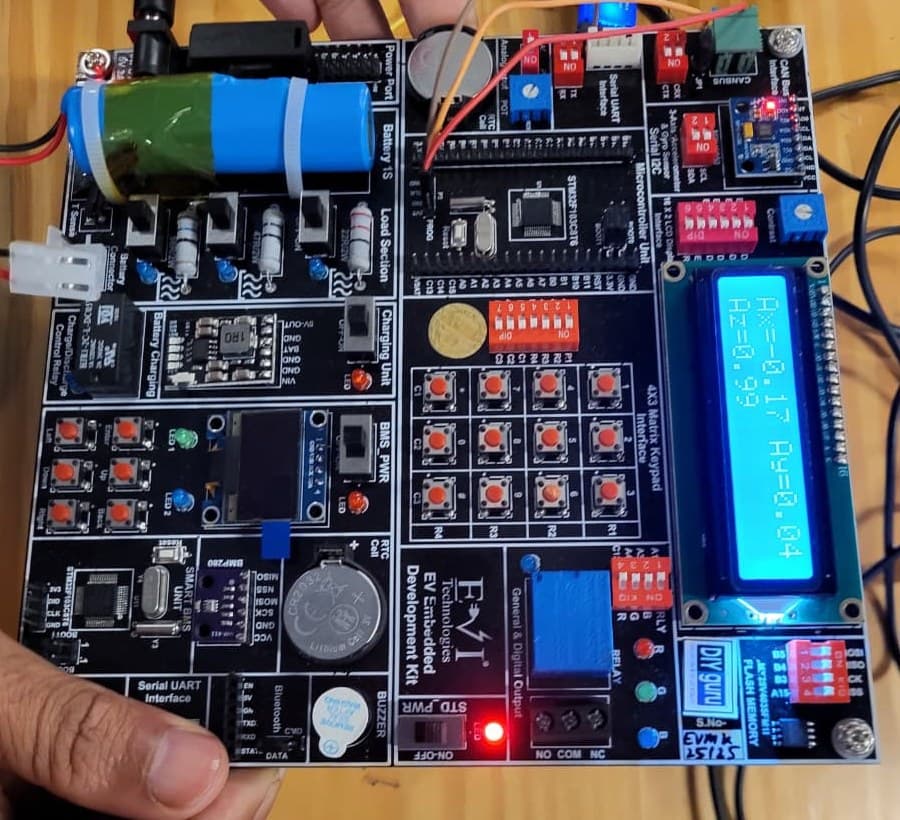
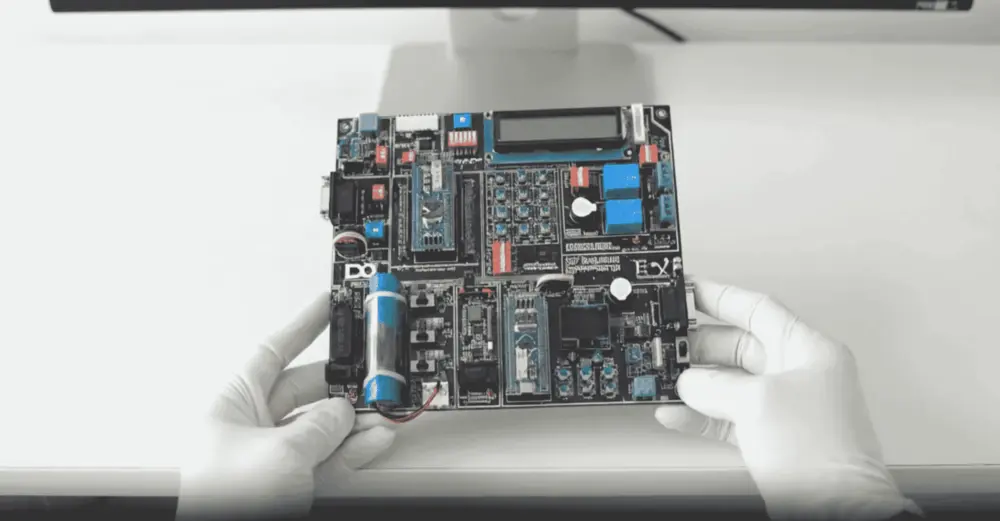
EV Embedded Development Kit board

Practise on real hardware

EV Embedded Development Kit

  • STM32 controller and Smart BMS unit
  • CAN, UART, I2C, SPI and Bluetooth
  • Sensors, LCD, OLED and motor control
  • 15+ guided experiments at home

₹10,000 + GST

See what's in the kit

Trainer Support

Stuck on a concept? Ask a trainer.

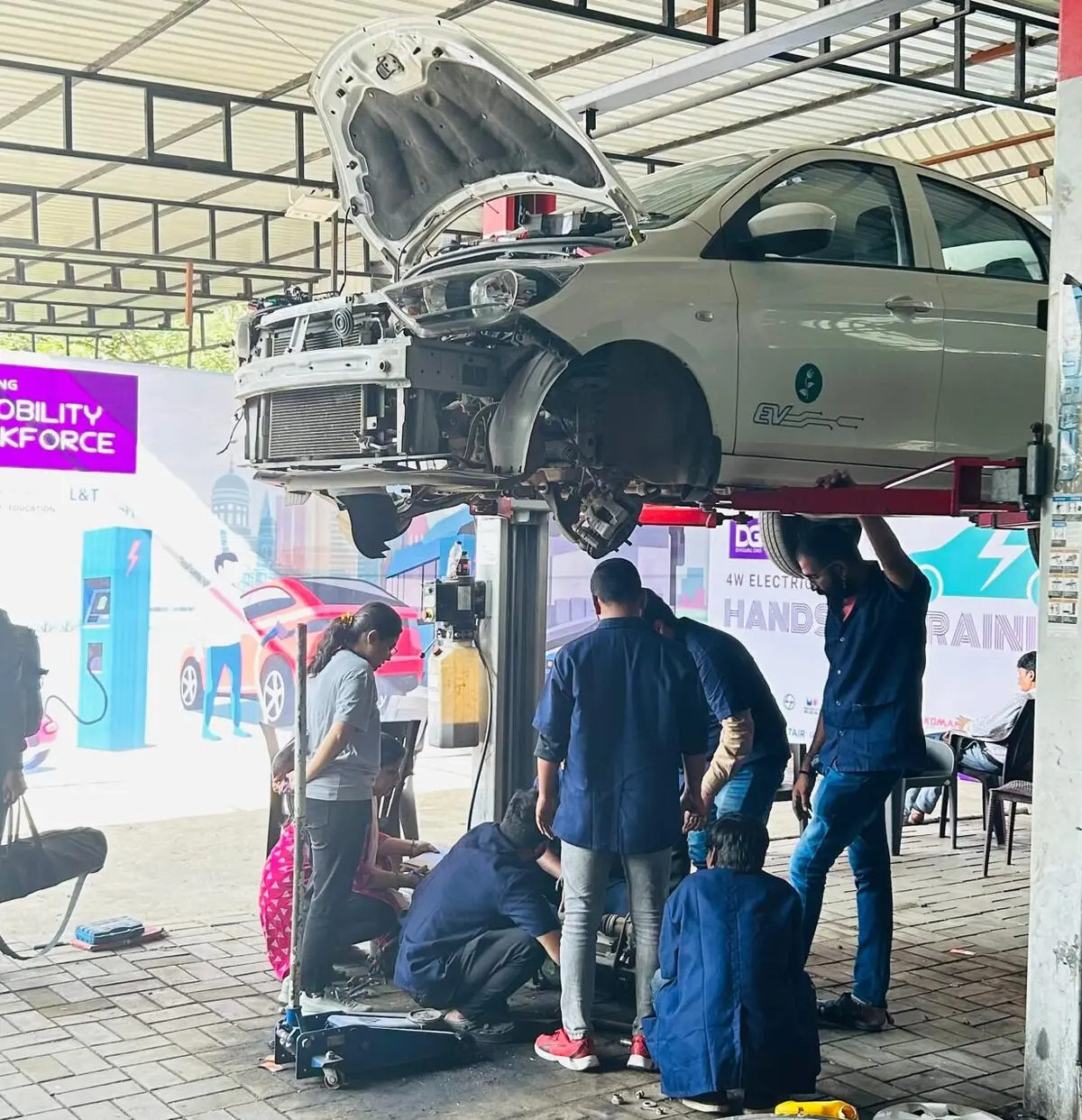
DIYguru trainer working with learners

Post your questions about fuel cell operation, FCEV architecture or hydrogen storage in the course Q&A on the portal and a trainer will answer there. Programme students can also raise them in live doubt-clearing sessions when scheduled.

  • Ask questions in the course Q&A, right next to the lesson
  • Trainers answer on the portal — you're notified when they reply
  • Assignments and projects you submit are reviewed by a trainer
  • Live doubt-clearing sessions when they're scheduled for the course

Bharat eMobility Recruitathon

Meet the EV industry in person

The Bharat eMobility Recruitathon brings our learners face to face with companies hiring across the EV industry. Watch the Delhi and Pune chapters.

Delhi chapterRecruitathon
Pune chapterRecruitathon

FAQ

Frequently asked questions

Do I need a chemistry background?
No special background is needed beyond school-level science. Basic awareness of how electric vehicles work will help you compare fuel cell and battery vehicles.
Is any software needed?
No. The course is delivered as recorded video lessons on the portal, so a browser and internet connection are enough.
How is this different from a battery EV course?
It focuses on vehicles that generate electricity on board from hydrogen, rather than storing all their energy in a battery, and on the hydrogen supply chain that supports them.
Will I get a certificate?
Yes. When you complete all lessons and the required quizzes and assignments, you receive a digitally signed certificate that anyone can check through its public verification link or QR code.
Which programmes include this course?
It is part of the Professional Certification Programme in EV Charging & Hydrogen and the PG Certificate Programme in EV & Embedded Systems.
How is the course delivered?
As recorded video lessons on the portal that you watch at your own pace, with quizzes, assignments and a project where the course includes them. Your progress is saved lesson by lesson.
What if I get stuck?
Ask in the course's Q&A on the portal — a trainer answers there. Live doubt-clearing sessions are added when they are scheduled for the course.
What certificate will I get?
A digitally signed certificate of completion once you finish the lessons and the required quizzes and assignments. Each certificate has a public verification link and QR code anyone can check.

Talk to a counsellor

Questions about Certification Course in Hydrogen Fuel Cell Technology for Electric Vehicles?

Leave your details — a counsellor will call you about the syllabus, fees, EMI and certificates.

Technical Expertise You Will Gain

Where Certification Course in Hydrogen Fuel Cell Technology for Electric Vehicles can take you

The roles these skills are used in, what you'll be able to do, and the parts of the industry that need it.

Key Job Roles

  • →Graduate engineer trainee in hydrogen mobility
  • →Fuel cell systems trainee
  • →Clean energy research associate
  • →Alternative powertrain analyst

Skill Sets

  • →Explain how a fuel cell converts hydrogen into electricity
  • →Describe the main components of a fuel cell electric vehicle
  • →Compare fuel cell and battery-electric vehicles for different use cases
  • →Outline hydrogen production, storage and refuelling options and their safety considerations

Where These Skills Are Used

  • →Hydrogen and fuel cell technology developers
  • →Commercial vehicle and bus manufacturers
  • →Clean energy and green hydrogen projects
  • →Automotive research and development

Government-Certified · Industry-Endorsed · Learner-Approved

Globally recognised credentials

ASDC (Govt of India)

ASDC (Govt of India)

Automotive Skills Development Council — recognised by major OEMs worldwide.

AICTE NEAT

AICTE NEAT

National Educational Alliance for Technology — issued under AICTE's premium learning ecosystem.

Learner Stories

What our learners say

The hardware-first approach made all the difference. Came in from a generalist electronics background; the BMS and motor-drive modules gave me concrete vocabulary I could carry into Infineon interviews.

Souvik Hazra
Souvik Hazra
Senior Manager · Infineon Technologies

Industry-grade depth without the academic ivory tower. The MATLAB Simulink + capstone defence prepared me for exactly the kind of cross-functional EV problems we solve at Cummins.

Sharad Yeola
Sharad Yeola
Application Controls Lead · Cummins Inc.

Started with electronics, walked into a BMS role in Germany. The applied projects + mentor reviews are what carried me through — the certifications opened the door, the depth got me hired.

Jagatjit Barik
Jagatjit Barik
Sr. R&D Engineer (BMS xEV) · Mercedes-Benz

Ready to start Certification Course in Hydrogen Fuel Cell Technology for Electric Vehicles?

Recorded lessons at your own pace · trainer doubt support · verifiable certificate on completion.


Accreditations

Programs Recognised by Govt. Bodies & Industries

ASDC
AICTE NEAT
SIMOPS Saudi
DSD Malaysia
UK Government
UACH
Tata Technologies
ADYPU
UDYOGA Karnataka
Ola Mobility Institute