emobility.academy
Curriculum reviewed by IIT Faculty · Continue learning

Certification Course in Advance Vehicle Dynamics

This certification program provides an in-depth understanding of vehicle dynamics, specifically tailored for electric vehicles (EVs). Learners will explore the relationship between forces, aerodynamics, mass distribution, energy consumption, and the overall performance of an EV. The course combines theoretical concepts
4+ hours
14 video lessons
4 modules
beginner
English
Recognised & Certified by
ASDC
AICTE NEAT

Course Curriculum

14 lessons across 4 modules

This certification program provides an in-depth understanding of vehicle dynamics, specifically tailored for electric vehicles (EVs). Learners will explore the relationship between forces, aerodynamics, mass distribution

1
Module 1

Module 1: Introduction to Vehicle Dynamics and EV Performance

2 lessons
  1. 1

    Topic 1.1 Vehicle Dynamics and EV Performance_Aerodynamics & Battery Management System

    32 min· free trial

  2. 2

    Topic 1.2: Factors Affecting Vehicle Performance & EV Range

    26 min· free trial

2
Module 2

Module 2: Vehicle Weight Influence & Stability Parameters

5 lessons
  1. 1

    Topic 2.1: Influence of Vehicle Mass on Electric Vehicle Performance

    21 min

  2. 2

    Topic 2.2: Understanding Dry Weight and Kerb Weight in Electric Vehicles

    10 min

  3. 3

    Topic 2.3: Gross Vehicle Weight and EV Weight Management

    15 min

  4. 4

    Topic 2.4: Impact of Center of Gravity on EV Stability, Handling, and Safety

    14 min

  5. 5

    Topic 2.5: Effect of Terrain on Electric Vehicle Performance and Energy Efficiency

    12 min

3
Module 3

Module 3: Forces, Aerodynamics & Performance

3 lessons
  1. 1

    Topic 3.1: Understanding Tractive and Resistive Forces

    22 min

  2. 2

    Topic 3.2: Aerodynamic Analysis Techniques for EVs CFD, Wind Tunnel & Field Testing

    13 min

  3. 3

    Topic 3.3: Effective Aerodynamic Features for EVs Reducing Drag & Enhancing Range

    19 min

4
Module 4

Module 4: Vehicle Systems Influencing Dynamics & Range

4 lessons
  1. 1

    Topic 4.1 Understanding Aerodynamics, Tires, Weight & Suspension

    20 min

  2. 2

    Topic 4.2 Battery Capacity and Energy Management in Electric Vehicles

    12 min

  3. 3

    Topic 4.3 Wheel Alignment and Its Impact on Performance

    10 min

  4. 4

    Topic 4.4 Electrical System and EV Range Influence Factors

    16 min

Earn a certificate

Add this credential to your resume — and watch employers ask about it

Every completing learner receives a joint certificate carrying ASDC (Government of India) and AICTE NEAT recognition. The certificate carries a public verification code recruiters can validate in seconds via emobility.careers.
  • Issued when you complete the lessons and required quizzes and assignments
  • Digitally signed, with a public verification link and QR code
  • Anyone — an employer or a college — can check it in seconds
  • Shows the course title and the skills it covers
Sample emobility.academy certificate

System Requirements

Hardware & software you'll need

What to have ready before you start this course.

Hardware

  • Any laptop or desktop with internet access for video lessons
  • Calculator or spreadsheet for force and range calculations

Software

  • Spreadsheet software such as Excel or Google Sheets (optional, for your own calculations)

Associated Skills

What you'll be able to put on your résumé

EV range factorsTractive and resistive forcesRolling and aerodynamic dragKerb and gross vehicle weightCentre of gravity effectsTerrain and gradient effectsAerodynamic testing methodsDrag reduction featuresWheel alignment effectsEV energy management

DIY Projects Included

Hardware-grounded projects in your portfolio

Work you build while learning — submitted in the course and reviewed by a trainer, and yours to show afterwards.

📊
Project 01

Range sensitivity sheet

Build a spreadsheet of tractive and resistive forces for an e-scooter or small EV and see how range changes with mass, drag coefficient and gradient.

⚖️
Project 02

Weight and CG audit

Using published specs of two EVs, compare dry, kerb and gross weight and discuss how CG position affects stability and handling.

🌬️
Project 03

Drag reduction review

Pick a vehicle and list the aerodynamic features from Module 3 that could reduce drag, with the expected effect on range.

Course Benefits

What you'll get out of it

Two audiences. Two angles. Pick the one that maps to where you are today.

For Working Professionals

  • Explain range differences
    Link mass, aerodynamics, tyres and electrical losses to real range numbers.
  • Better spec trade-offs
    Judge how adding battery capacity or weight changes performance.
  • Know the testing methods
    Understand where CFD, wind tunnel and field testing fit in aerodynamic development.
  • Quick to complete
    A compact course you can finish alongside work.

For Students & Freshers

  • EV performance basics
    Learn the forces and factors behind every EV range figure.
  • Clear weight terminology
    Understand dry, kerb and gross vehicle weight and why they matter.
  • Useful for project reports
    Use force and range reasoning in academic or competition design reports.
  • A step into vehicle dynamics
    A practical start before deeper suspension and handling study.

What this course includes

Everything you get when you enrol

  • 04 Modules
  • 14 Lectures
  • 4.13 Hours of Video Content
  • Certificate of Completion

Who can take this course?

If any of these sound like you — you'll thrive here

  • EV engineers and students who want to understand why range changes with weight, drag and terrain
  • Battery and powertrain engineers who need the vehicle-level view of energy consumption
  • Product and testing staff at EV OEMs comparing vehicle variants
  • Mechanical Nanodegree and PG learners covering EV performance topics
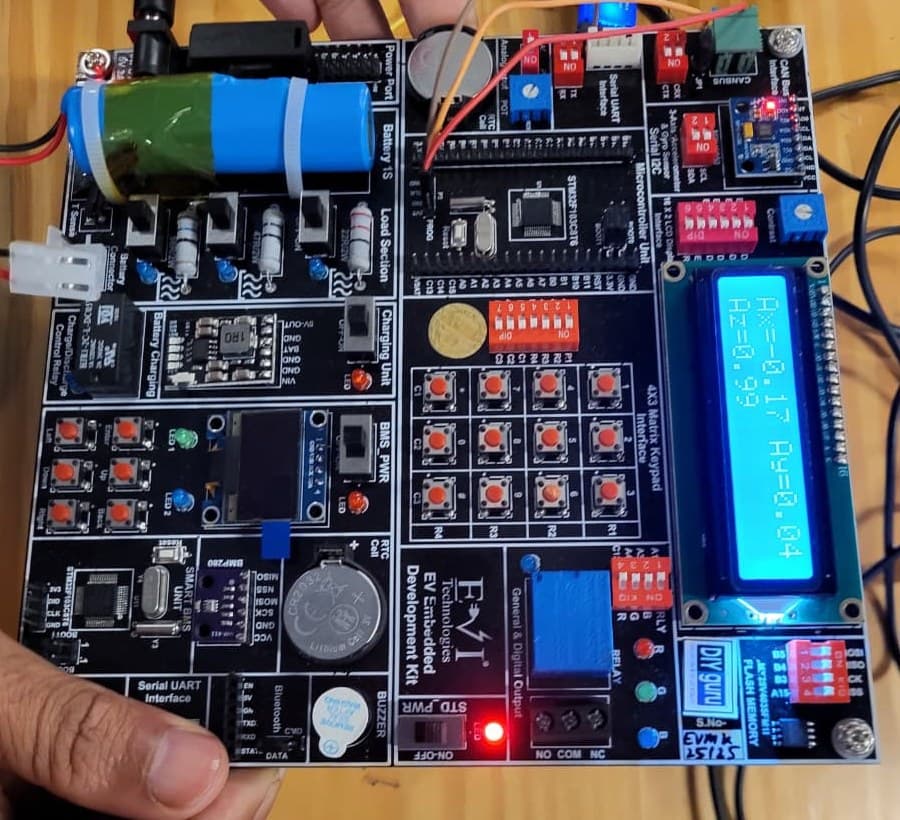
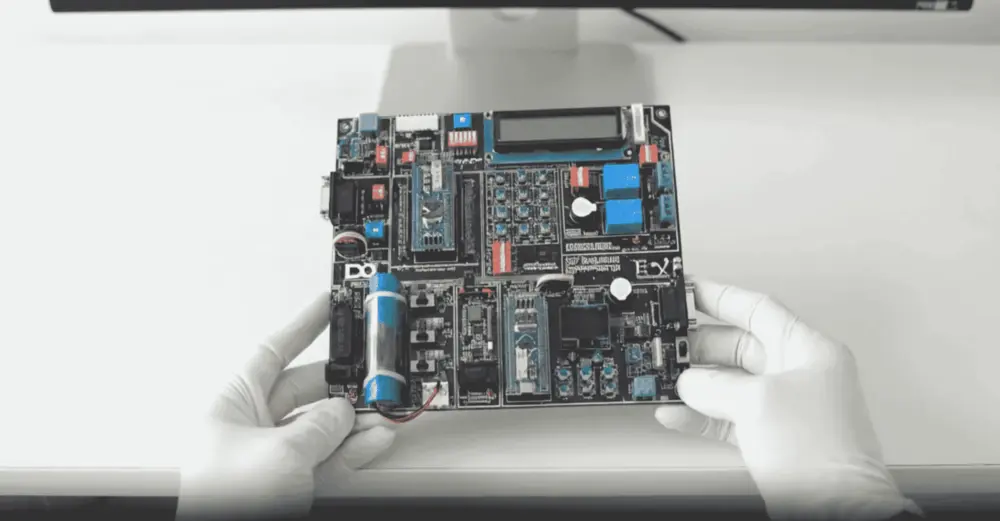
EV Embedded Development Kit board

Practise on real hardware

EV Embedded Development Kit

  • STM32 controller and Smart BMS unit
  • CAN, UART, I2C, SPI and Bluetooth
  • Sensors, LCD, OLED and motor control
  • 15+ guided experiments at home

₹10,000 + GST

See what's in the kit

Trainer Support

Stuck on a concept? Ask a trainer.

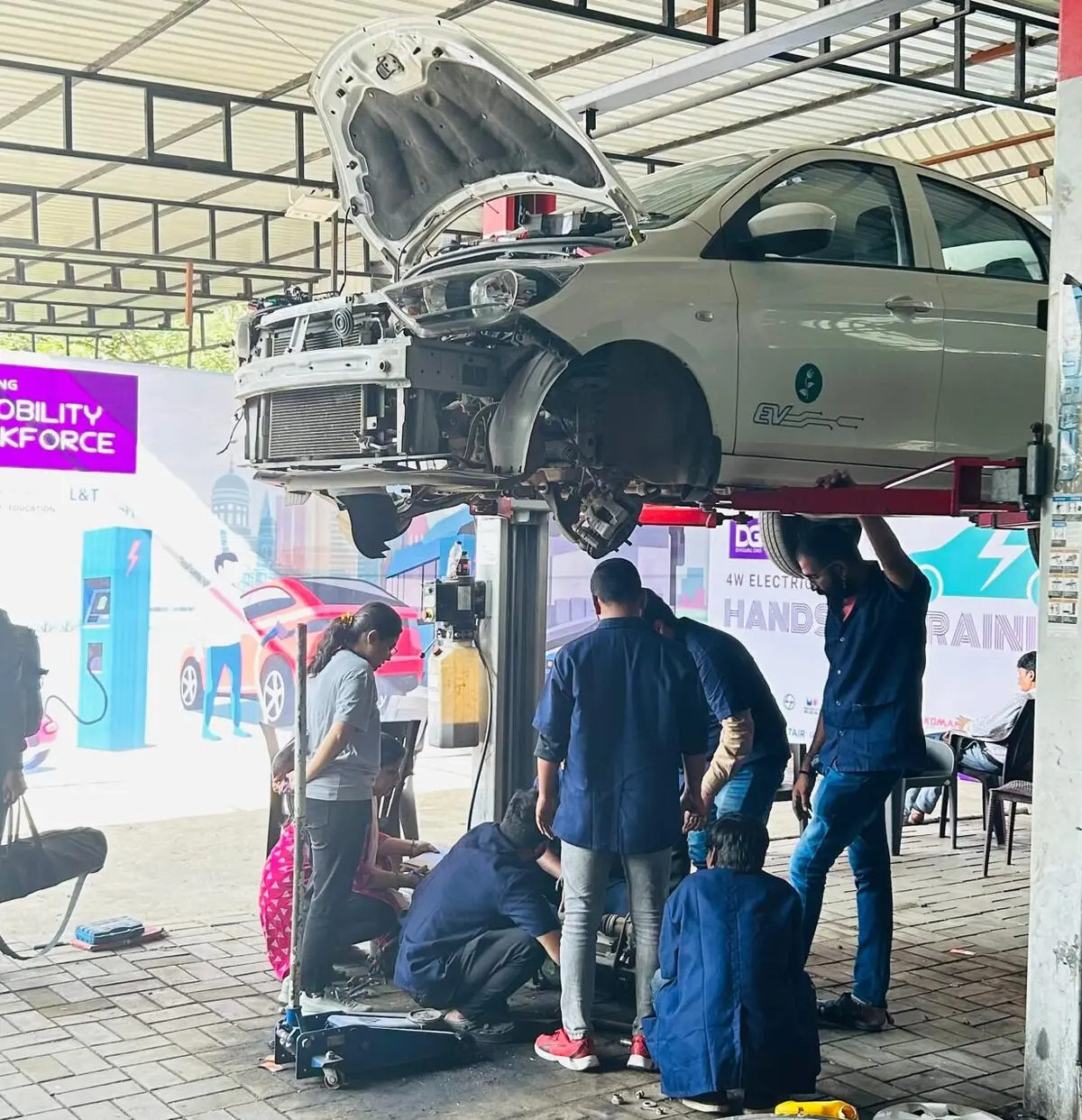
DIYguru trainer working with learners

Ask questions in the course Q&A, for example on calculating resistive forces or how CG height affects stability, and a trainer will answer. Nanodegree and PG programme students also get scheduled live classes and doubt-clearing sessions.

  • Ask questions in the course Q&A, right next to the lesson
  • Trainers answer on the portal — you're notified when they reply
  • Assignments and projects you submit are reviewed by a trainer
  • Live doubt-clearing sessions when they're scheduled for the course

Bharat eMobility Recruitathon

Meet the EV industry in person

The Bharat eMobility Recruitathon brings our learners face to face with companies hiring across the EV industry. Watch the Delhi and Pune chapters.

Delhi chapterRecruitathon
Pune chapterRecruitathon

FAQ

Frequently asked questions

How is this different from Fundamentals of Vehicle Dynamics?
This course is shorter and centred on EV performance and range: weight, CG, forces, aerodynamics and energy management. Fundamentals of Vehicle Dynamics goes deeper into physics, the quarter-car model, lateral and longitudinal dynamics and suspension geometry.
Do I need prior knowledge?
Basic school physics is enough. The course is beginner level.
Is any software required?
No dedicated software. The course is theory and case-study based; a spreadsheet is handy for your own calculations.
Does it cover aerodynamics in detail?
It covers tractive and resistive forces, aerodynamic analysis methods (CFD, wind tunnel and field testing) and drag-reducing features at an overview level, not CFD setup.
Is it part of a programme?
Yes. It is also part of the Advanced Nanodegree in Automotive EV Design & Dynamics (Mechanical) and the PG Certificate Programme in EV & Embedded Systems.
Will I get a certificate?
On completing all lessons and any required quizzes or assignments, you receive a digitally signed certificate that anyone can verify through its public verification link or QR code.
How is the course delivered?
As recorded video lessons on the portal that you watch at your own pace, with quizzes, assignments and a project where the course includes them. Your progress is saved lesson by lesson.
What if I get stuck?
Ask in the course's Q&A on the portal — a trainer answers there. Live doubt-clearing sessions are added when they are scheduled for the course.
What certificate will I get?
A digitally signed certificate of completion once you finish the lessons and the required quizzes and assignments. Each certificate has a public verification link and QR code anyone can check.

Talk to a counsellor

Questions about Certification Course in Advance Vehicle Dynamics?

Leave your details — a counsellor will call you about the syllabus, fees, EMI and certificates.

Technical Expertise You Will Gain

Where Certification Course in Advance Vehicle Dynamics can take you

The roles these skills are used in, what you'll be able to do, and the parts of the industry that need it.

Key Job Roles

  • →EV performance engineer (trainee)
  • →Vehicle testing and validation associate
  • →EV product analyst
  • →Powertrain sizing trainee
  • →Vehicle integration engineer (junior)

Skill Sets

  • →Identify the tractive and resistive forces acting on an EV
  • →Explain how vehicle mass, CG and terrain affect stability and energy use
  • →Compare aerodynamic analysis methods and drag-reducing features
  • →Relate tyres, suspension and wheel alignment to performance and range
  • →Discuss battery capacity and electrical system effects on EV range

Where These Skills Are Used

  • →Electric two-, three- and four-wheeler OEMs
  • →Vehicle testing and validation
  • →EV fleet and range planning
  • →Automotive engineering services
  • →Battery and powertrain suppliers

Government-Certified · Industry-Endorsed · Learner-Approved

Globally recognised credentials

ASDC (Govt of India)

ASDC (Govt of India)

Automotive Skills Development Council — recognised by major OEMs worldwide.

AICTE NEAT

AICTE NEAT

National Educational Alliance for Technology — issued under AICTE's premium learning ecosystem.

Learner Stories

What our learners say

The hardware-first approach made all the difference. Came in from a generalist electronics background; the BMS and motor-drive modules gave me concrete vocabulary I could carry into Infineon interviews.

Souvik Hazra
Souvik Hazra
Senior Manager · Infineon Technologies

Industry-grade depth without the academic ivory tower. The MATLAB Simulink + capstone defence prepared me for exactly the kind of cross-functional EV problems we solve at Cummins.

Sharad Yeola
Sharad Yeola
Application Controls Lead · Cummins Inc.

Started with electronics, walked into a BMS role in Germany. The applied projects + mentor reviews are what carried me through — the certifications opened the door, the depth got me hired.

Jagatjit Barik
Jagatjit Barik
Sr. R&D Engineer (BMS xEV) · Mercedes-Benz

Ready to start Certification Course in Advance Vehicle Dynamics?

Recorded lessons at your own pace · trainer doubt support · verifiable certificate on completion.

Accreditations

Programs Recognised by Govt. Bodies & Industries

ASDC
AICTE NEAT
SIMOPS Saudi
DSD Malaysia
UK Government
UACH
Tata Technologies
ADYPU
UDYOGA Karnataka
Ola Mobility Institute