emobility.academy
Curriculum reviewed by IIT Faculty · Continue learning

Advanced Control Systems for EV: MATLAB for Design & Implementation

This is the follow-on to Basic Control Systems for EV: MATLAB. Basic covers modelling and stability analysis; this course is about designing controllers and taking them towards implementation for EV applications such as motor speed and current control. It is for learners who are already comfortable with transfer functi


beginner
English
Recognised & Certified by
ASDC
AICTE NEAT

Course Curriculum

What you will learn

This is the follow-on to Basic Control Systems for EV: MATLAB. Basic covers modelling and stability analysis; this course is about designing controllers and taking them towards implementation for EV applications such as

Modules publishing in progress — enrol now to be notified the moment lessons go live.

Earn a certificate

Add this credential to your resume — and watch employers ask about it

Every completing learner receives a joint certificate carrying ASDC (Government of India) and AICTE NEAT recognition. The certificate carries a public verification code recruiters can validate in seconds via emobility.careers.
  • Issued when you complete the lessons and required quizzes and assignments
  • Digitally signed, with a public verification link and QR code
  • Anyone — an employer or a college — can check it in seconds
  • Shows the course title and the skills it covers
Sample emobility.academy certificate

System Requirements

Hardware & software you'll need

What to have ready before you start this course.

Hardware

  • Laptop or desktop with 8 GB RAM minimum; 16 GB recommended when running Simulink models
  • Quad-core processor and about 25 GB free disk space for MATLAB, Simulink and toolboxes
  • Stable internet connection for streaming lessons

Software

  • MATLAB with Control System Toolbox (student/trial licence)
  • Simulink for closed-loop simulation (student/trial licence)

Associated Skills

What you'll be able to put on your résumé

Controller design in MATLABPID tuningLead–lag compensationState-space controller designDesign to time-domain specsDesign to frequency-domain specsDiscrete-time controlSimulink loop simulationEV motor speed controlRobustness verification

DIY Projects Included

Hardware-grounded projects in your portfolio

Work you build while learning — submitted in the course and reviewed by a trainer, and yours to show afterwards.

🎛️
Project 01

PID speed controller for an EV motor model

Start from a DC or simplified motor transfer function, design a PID controller in MATLAB to meet overshoot and settling-time targets, and check its gain and phase margins.

🧮
Project 02

Compensator versus PID comparison

Design a lead–lag compensator for the same plant and compare its step response, disturbance rejection and robustness with the PID design.

💻
Project 03

From continuous to discrete controller

Discretise your controller at a chosen sample time and simulate it in a Simulink loop to see how sampling affects performance before it goes to a microcontroller.

Course Benefits

What you'll get out of it

Two audiences. Two angles. Pick the one that maps to where you are today.

For Working Professionals

  • Design to a specification
    Turn overshoot, settling-time and margin targets into controller parameters with a repeatable MATLAB workflow.
  • Closer to firmware
    Look at the steps between a continuous-time design and a controller that runs at a fixed sample rate.
  • Fewer surprises on the bench
    Check robustness in simulation before tuning a real drive or charger.

For Students & Freshers

  • Completes the control track
    Moves you from analysis in the Basic course to the design and implementation skills employers look for in control roles.
  • Project-ready skills
    Controller design for an EV motor or converter makes a strong final-year or thesis project.
  • Practice with MATLAB and Simulink
    You learn the same design-and-verify loop used in model-based development.

Who can take this course?

If any of these sound like you — you'll thrive here

  • Learners who have completed Basic Control Systems for EV: MATLAB, or have equivalent control-analysis experience
  • Electrical, electronics and mechatronics graduates who want to design controllers, not only analyse them
  • Motor control and embedded engineers working on EV drives, chargers or BMS loops
  • PG Certificate Programme in EV & Embedded Systems students continuing their control-systems track
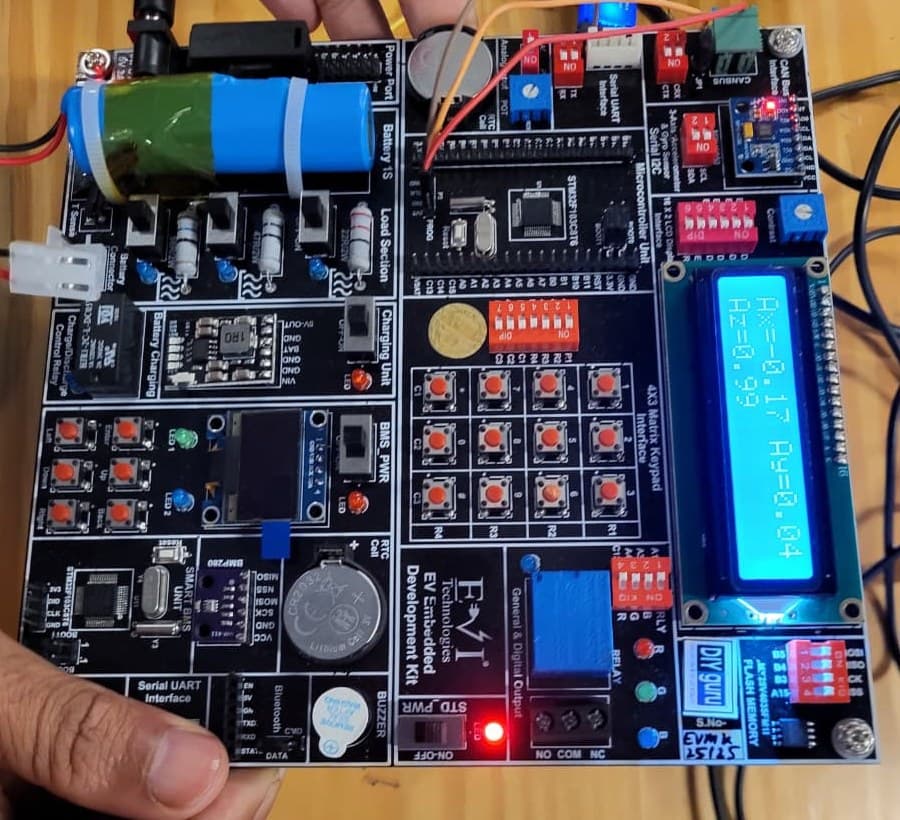
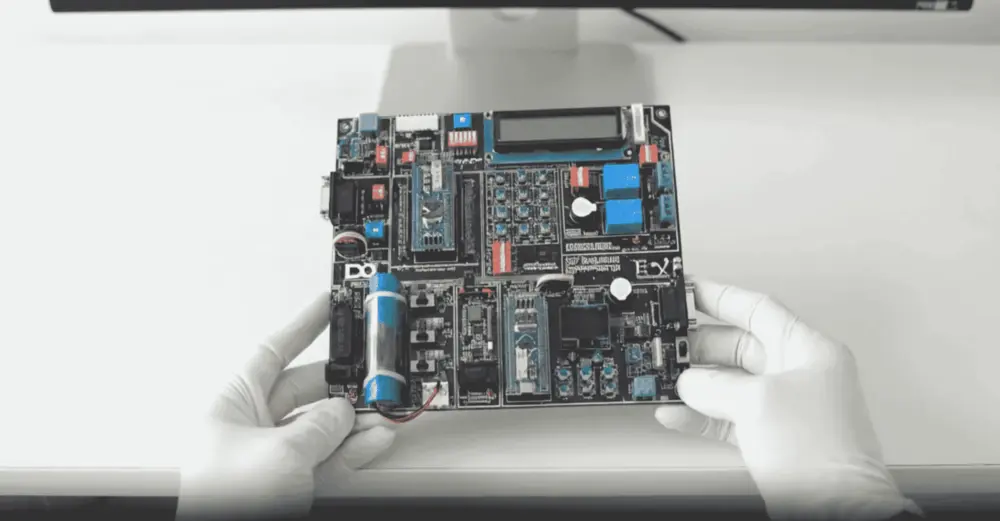
EV Embedded Development Kit board

Practise on real hardware

EV Embedded Development Kit

  • STM32 controller and Smart BMS unit
  • CAN, UART, I2C, SPI and Bluetooth
  • Sensors, LCD, OLED and motor control
  • 15+ guided experiments at home

₹10,000 + GST

See what's in the kit

Trainer Support

Stuck on a concept? Ask a trainer.

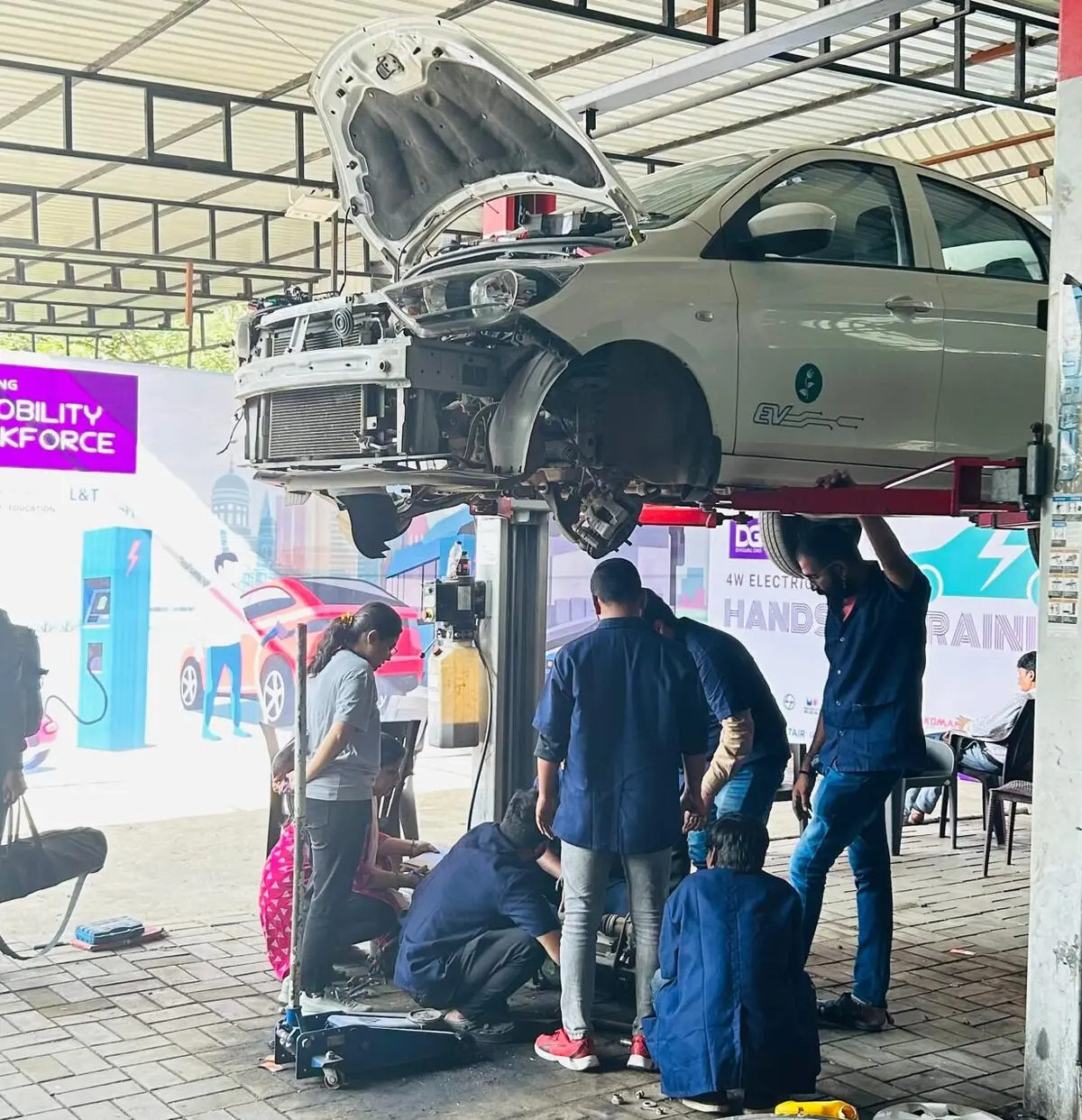
DIYguru trainer working with learners

Post design doubts in the course Q&A on the portal, for example a controller that meets overshoot but fails a margin check, or a discretised loop that behaves differently from the continuous one. Trainers answer there, and live doubt-clearing sessions are held when scheduled.

  • Ask questions in the course Q&A, right next to the lesson
  • Trainers answer on the portal — you're notified when they reply
  • Assignments and projects you submit are reviewed by a trainer
  • Live doubt-clearing sessions when they're scheduled for the course

Bharat eMobility Recruitathon

Meet the EV industry in person

The Bharat eMobility Recruitathon brings our learners face to face with companies hiring across the EV industry. Watch the Delhi and Pune chapters.

Delhi chapterRecruitathon
Pune chapterRecruitathon

FAQ

Frequently asked questions

Should I take the Basic course first?
Yes, that is recommended. This course assumes you can already build transfer-function and state-space models and read step, Bode, Nyquist and root-locus plots, which is what Basic Control Systems for EV: MATLAB teaches.
How is it different from Basic Control Systems for EV?
Basic is about modelling and analysing systems: responses, feedback performance and stability. Advanced uses those tools to design controllers and simulate them for implementation in EV applications.
Which software do I need?
MATLAB with the Control System Toolbox and Simulink, which require a licence (student or trial).
Where can I see the lesson-by-lesson syllabus?
The curriculum section of this page lists the modules and lessons as they are published. If you need a topic confirmed before enrolling, ask through the course enquiry or Q&A.
Is it part of a programme?
Yes. It is part of the PG Certificate Programme in EV & Embedded Systems, where it follows Basic Control Systems for EV. It can also be taken on its own.
Will I get a certificate?
On completing all lessons and the required quizzes/assignments, you receive a digitally signed certificate that anyone can verify through its public verification link or QR code.
How is the course delivered?
As recorded video lessons on the portal that you watch at your own pace, with quizzes, assignments and a project where the course includes them. Your progress is saved lesson by lesson.
What if I get stuck?
Ask in the course's Q&A on the portal — a trainer answers there. Live doubt-clearing sessions are added when they are scheduled for the course.
What certificate will I get?
A digitally signed certificate of completion once you finish the lessons and the required quizzes and assignments. Each certificate has a public verification link and QR code anyone can check.

Talk to a counsellor

Questions about Advanced Control Systems for EV: MATLAB for Design & Implementation?

Leave your details — a counsellor will call you about the syllabus, fees, EMI and certificates.

Technical Expertise You Will Gain

Where Advanced Control Systems for EV: MATLAB for Design & Implementation can take you

The roles these skills are used in, what you'll be able to do, and the parts of the industry that need it.

Key Job Roles

  • →Control Systems Engineer
  • →Motor Control Engineer – Entry Level
  • →Model-Based Design Engineer
  • →Embedded Control Software Engineer – Trainee

Skill Sets

  • →Design controllers in MATLAB to meet time-domain and frequency-domain specifications
  • →Tune and compare PID and compensator-based controllers for EV plants
  • →Verify closed-loop stability and robustness of a designed controller
  • →Simulate controllers in Simulink and prepare them for discrete-time implementation

Where These Skills Are Used

  • →EV motor drive and inverter development
  • →On-board and off-board charger development
  • →Automotive embedded control software
  • →Industrial drives and automation
  • →Engineering simulation services

Government-Certified · Industry-Endorsed · Learner-Approved

Globally recognised credentials

ASDC (Govt of India)

ASDC (Govt of India)

Automotive Skills Development Council — recognised by major OEMs worldwide.

AICTE NEAT

AICTE NEAT

National Educational Alliance for Technology — issued under AICTE's premium learning ecosystem.

Learner Stories

What our learners say

The hardware-first approach made all the difference. Came in from a generalist electronics background; the BMS and motor-drive modules gave me concrete vocabulary I could carry into Infineon interviews.

Souvik Hazra
Souvik Hazra
Senior Manager · Infineon Technologies

Industry-grade depth without the academic ivory tower. The MATLAB Simulink + capstone defence prepared me for exactly the kind of cross-functional EV problems we solve at Cummins.

Sharad Yeola
Sharad Yeola
Application Controls Lead · Cummins Inc.

Started with electronics, walked into a BMS role in Germany. The applied projects + mentor reviews are what carried me through — the certifications opened the door, the depth got me hired.

Jagatjit Barik
Jagatjit Barik
Sr. R&D Engineer (BMS xEV) · Mercedes-Benz

Ready to start Advanced Control Systems for EV: MATLAB for Design & Implementation?

Recorded lessons at your own pace · trainer doubt support · verifiable certificate on completion.


Accreditations

Programs Recognised by Govt. Bodies & Industries

ASDC
AICTE NEAT
SIMOPS Saudi
DSD Malaysia
UK Government
UACH
Tata Technologies
ADYPU
UDYOGA Karnataka
Ola Mobility Institute