
- There are two types of Winding in it:
- Field winding: To generate necessary flux
- Armature winding: To generate armature EMF or torque.
- Stator which is the stationary part of the machine, consists of field winding and the rotor, which is the rotating part, consists of armature winding.
- Stator is made up of soft iron poles, while the rotor is made up of silicon steel lamination.
- Commutator is the part of the motor which provides the commutation process.
- Brushes are used to connect stationary supplies with rotating commutators.
- Separately Excited: Field is excited separately by DC source.
- Self excited: Field is excited by some amount of armature current.
- Shunt motor: Field is in parallel with armature winding.
- Series motor: Field is in series with armature winding.
- Compound motor: It contains both shunt and series field winding.
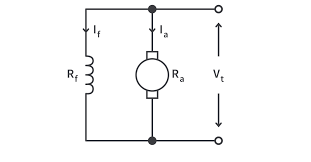
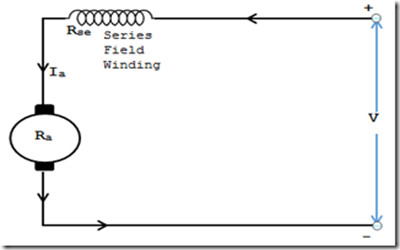 Shunt Series
Characteristics and applications of all these types of motor are different.
- DC shunt motors are used for constant speed due to the constant flux.
- Dc series motors are used for high starting torque applications, because the field is connected in series with the armature.
- DC compounds are used for both constant and high torque applications.
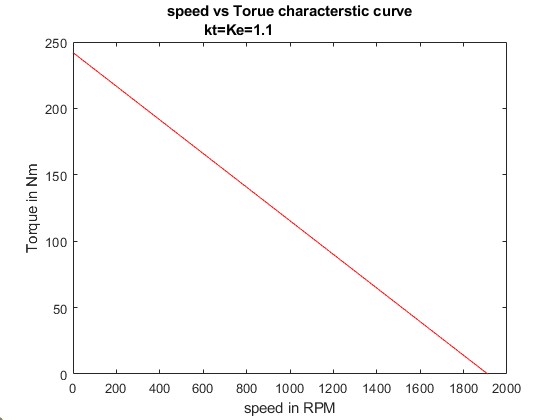 The characteristic shows that at no load, armature current is very less so torque is less but speed is high for motor, but at full load condition, armature current is more due to that full load torque produced, and speed gets decreased. This type of application is best suitable for high starting torque.