
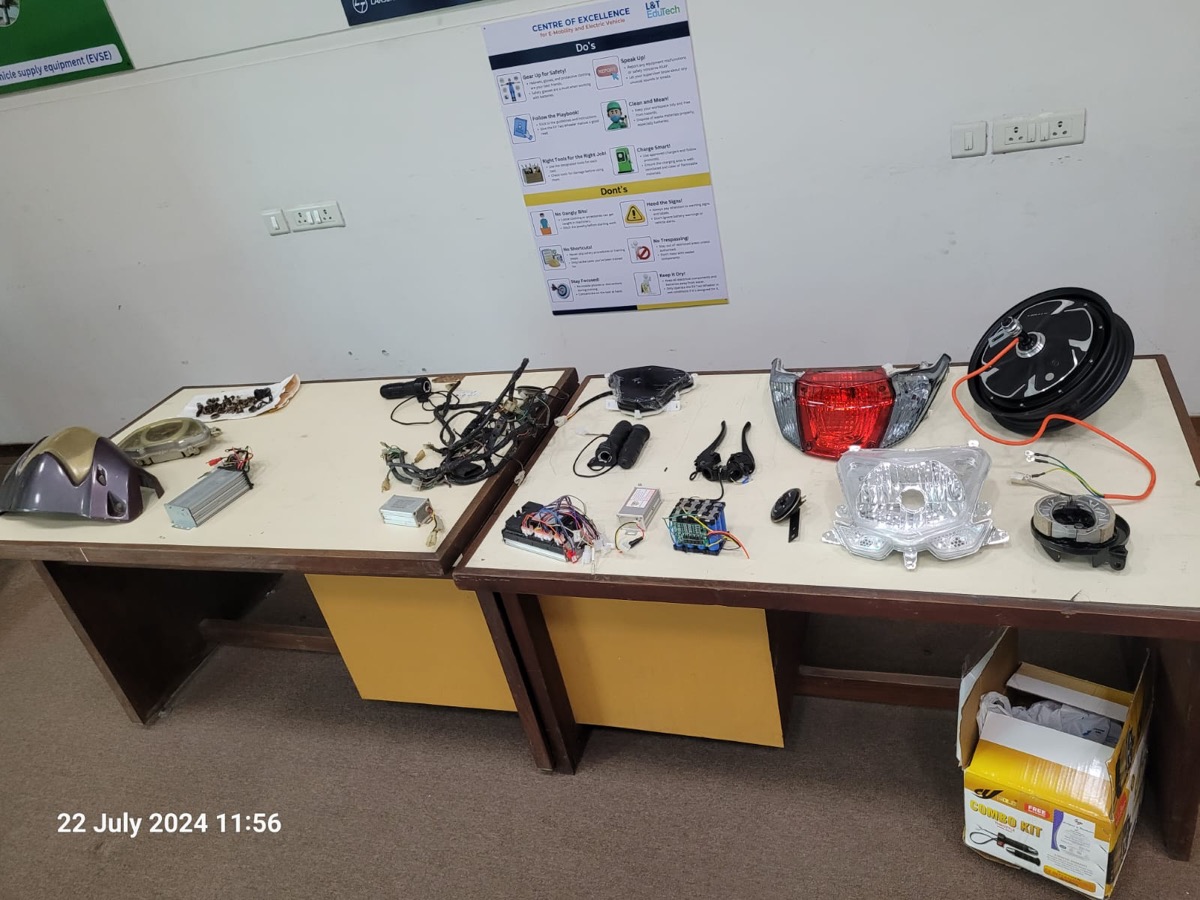
Why this happens
EV traction systems can hold voltages and energy high enough to cause fatal shock, arc flash or fire, and some parts stay charged after the vehicle is switched off. Manufacturers design service procedures, special tools and training around these risks, and sealed parts often carry warranty conditions, so knowing the line is itself a key safety skill.
What you need
Tools
- Owner's manual
- Service booklet and warranty card
Materials
- Contact details of your authorised service centre
- Notebook for symptoms and dates
Before you start
- Never touch orange high-voltage cables or connectors on an electric car, even with the car switched off.
- Never open a lithium battery pack, bypass the BMS or use a non-matching charger.
- Never disable brake cut-off switches or change controller limits.
- Opening sealed parts may void your warranty.
Step by step
- 1
Recognise electric car high-voltage parts
In electric cars, high-voltage cables are usually bright orange, and the traction battery, inverter, motor, onboard charger and DC-DC converter carry high voltage. Never touch, unplug, cut or probe these parts or their connectors. Owner jobs on a car are limited to apps, standard read-only OBD-II tools, tyres, wipers, driving habits and 12 V accessories through proper points.
- 2
Keep out of battery packs
Do not open any lithium battery pack, whether from a car, scooter, e-rickshaw or e-bike. Do not replace cells, rebuild packs, spot-weld, rewire or remove the BMS. Packs contain stored energy you cannot switch off, and a slip can cause an instant short circuit and fire. Owner battery checks stop at the outside: external voltage at the charge port, temperatures, connectors and storage.
- 3
Leave safety-critical controls alone
Do not modify brakes, brake cut-off switches, throttle wiring, controller software or speed limits. Brake switches cut motor power when you brake; disabling them is dangerous. Controller changes can cause runaway acceleration and can take a low-speed vehicle out of its approved category, making it illegal without registration and insurance.
- 4
Respect warranty seals
Check your warranty card for sealed parts such as the battery, motor, controller and charger. Breaking a seal or opening a sealed housing may void the warranty, even if you do no harm. If a sealed part fails while under warranty, a service centre repair costs you less than voiding cover would.
- 5
Know the warning signs that need a technician
Take the vehicle to an authorised service centre for burning smells, smoke, unusual heat from the battery area, swelling, water inside the battery or motor, damaged insulation on main cables, repeated error codes, sudden loss of power or brakes behaving differently. Note when it happens and under what conditions to help the technician.
Tip: Photograph dashboard error codes as soon as they appear.
- 6
Separate owner jobs from service jobs
Make a simple two-column list from your owner's manual: jobs the manual lets owners do, such as tyre pressure, cleaning, lights, accessible fuses and charging-port care, and jobs it reserves for service. Stick to the first column. If a job is not mentioned, treat it as a service job.
- 7
Learn properly if you want to go further
If you want to work on high-voltage or battery systems as a career, do it through structured training with supervised labs, proper isolation procedures, rated tools and qualified instructors. Professional technicians follow lock-out procedures, verify absence of voltage with rated instruments and work under supervision; these cannot be replaced by online videos.
How to tell it worked
You can list which jobs on your own vehicle are safe owner tasks and which belong to the service centre, and you have the contact details and symptom notes ready for when you need them.
Stop and call a technician if
- A job requires removing covers marked with high-voltage warnings or orange cables; stop and book a service.
- The fault involves the battery, motor, controller or charger internals; take it to an authorised service centre.
- Anything is under warranty seal.
- You see damaged insulation, burn marks, swelling or water inside the battery.
Questions
Is it safe to work on a scooter's 48 V or 60 V system?
Owner tasks such as checking external connectors, accessible fuses and lights with the vehicle switched off are reasonable if the manual allows them. Battery internals, controller and motor wiring repairs should go to a trained technician.
Why is an electric car still dangerous when switched off?
The traction battery always holds energy, and some components can store charge for a while after shutdown. Only trained technicians following the manufacturer's isolation procedure should work on these systems.