emobility.academy
★ 4.8 rated by 1,500+ verified learners · curriculum reviewed by IIT Faculty · Continue learning
🏛️ IIT-Faculty Reviewed✅ ASDC · AICTE NEAT🌍 Available worldwide
★★★★★4.8 / 5 — 1,500+ verified reviews

Electric Vehicle Fundamentals & Project-Based Internship Certification Program

This course offers a comprehensive foundation in Electric Vehicle (EV) technology, covering core electrical concepts, energy storage systems (chemical & mechanical), circuit laws, and power electronics, including converters, inverters, MOSFETs, IGBTs, BJTs, and GTOs. It also explores motor technologies such as BLDC and
66 video lessons
8 modules
beginner
English
Recognised & Certified by
ASDC
AICTE NEAT

Course Curriculum

78 lessons across 8 modules

This course offers a comprehensive foundation in Electric Vehicle (EV) technology, covering core electrical concepts, energy storage systems (chemical & mechanical), circuit laws, and power electronics, including convert

1
Module 1

Welcome to the Course!

1 lesson
  1. 1

    Sign up at eMobility.careers to get exclusive EV job Opportunities!

    text

2
Module 2

Module 1: Fundamentals of Electrical Engineering

16 lessons
  1. 1

    Topic 1: Fundamentals of Electrical Elements

    19 min· free trial

  2. 2

    Topic 2: Basics of Chemical Storage

    10 min· free trial

  3. 3

    Tipic 3: Mechanical Storage Systems

    14 min

  4. 4

    Topic 4: Fundamentals Ohms law

    9 min

  5. 5

    Tppic 5: Circuit Analysis Using Kirchhoff’s Laws

    19 min

  6. 6

    Topic 6: Introduction to Power Electronics

    7 min

  7. 7

    Topic 7: Introduction to GTO & BJT

    7 min

  8. 8

    Topic 8: Introduction of MOSFET & IGBT

    14 min

  9. 9

    Topic 9: Inverters and Their Applications

    8 min

  10. 10

    Topic 10: Basics of Buck-Boost Converters

    17 min

  11. 11

    Topic 11: BLDC Motor Fundamentals

    5 min

  12. 12

    Topic 12: BLDC Motor Control Techniques

    20 min

  13. 13

    Topic 13: Synchronous Motors: Principles & Operation

    12 min

  14. 14

    Topic 14: Fundamentals AC vs DC

    15 min

  15. 15

    Topic 15: Introduction to Electric Vehicle Types

    7 min

  16. 16

    Module:1 Assignment Fundamental (Electrical) (FEV1)

    assignment

3
Module 3

Module 2: Essentials of EV Technology

14 lessons
  1. 1

    Topic 1: Electric Vehicle Components & Architecture

    8 min

  2. 2

    Topic 2: Growth, Trends & Future of the Indian Automotive Sector

    6 min

  3. 3

    Topic 3: Electric Vehicles in India and Globally

    13 min

  4. 4

    Topic 4: Introduction to E-Mobility in India

    16 min

  5. 5

    Topic 5: Future of Mobility in India

    9 min

  6. 6

    Topic 6: Evolution of Electric Vehicles Part 1

    4 min

  7. 7

    Topic 7: Evolution of Electric Vehicles Part 2

    3 min

  8. 8

    Topic 8: Electric Vehicle Archietecture & Electrification

    5 min

  9. 9

    Topic 9: Electric Vehicle Market

    6 min

  10. 10

    Topic 10: Electric Vehicle Ecosystem & Infrastructure

    6 min

  11. 11

    Topic 11: Types of Electric Vehicles Part 1

    8 min

  12. 12

    Topic 12: Types of Electric Vehicles Part 2

    8 min

  13. 13

    Test Quiz Module 2: Essentials of EV Technology

    quiz

  14. 14

    Quiz Solution

    text

4
Module 4

Module 3: Battery Technology for Electric Vehicles

10 lessons
  1. 1

    Topic 1: Battery Fundamentals

    36 min

  2. 2

    Topic 2: Battery Fundamentals & Basic Principles Part 1

    8 min

  3. 3

    Topic 3: Battery Fundamentals & Basic Principles Part 2

    5 min

  4. 4

    Topic 4: Battery Fundamentals & Basic Principles Part 3

    9 min

  5. 5

    Topic 5: Battery Fundamentals & Basic Principles Part 4

    11 min

  6. 6

    Topic 6: Battery Calculations: Part 1

    25 min

  7. 7

    Topic 7: Battery Calculations: Part 2

    6 min

  8. 8

    Topic 8: Battery Calculations: Part 3

    7 min

  9. 9

    Module 3: Quiz

    quiz

  10. 10

    Quiz Solution

    text

5
Module 5

Module 4: Battery Technology

9 lessons
  1. 1

    Topic 1: Battery Management System (BMS)

    7 min

  2. 2

    Topic 2: Functions of Battery Management System (BMS)

    12 min

  3. 3

    Topic 3: Centralized and Decentralized BMS Architectures

    9 min

  4. 4

    Topic 4: Voltage Protection in Battery Management Systems

    11 min

  5. 5

    Topic 5: Thermal Protection in Battery Management Systems

    4 min

  6. 6

    Topic 6: Capacity Management in Battery Systems

    9 min

  7. 7

    Topic 7: Benefits of Battery Management System

    9 min

  8. 8

    Module 4: Quiz

    quiz

  9. 9

    Quiz Solution

    text

6
Module 6

Module 5: EV Fundamentals Charging Infrastructure

16 lessons
  1. 1

    Topic 1: Basics of EV Charging Infrastructure

    2h

  2. 2

    Topic 2: Components of EV Charging Systems – Part 1

    7 min

  3. 3

    Topic 3: Components of EV Charging Systems – Part 2

    7 min

  4. 4

    Topic 4: EV Market Growth and Charging Challenges in India

    9 min

  5. 5

    Topic 5: Core Concepts of EV Charging

    7 min

  6. 6

    Topic 6: EV Charging Levels and Types

    11 min

  7. 7

    Topic 7: EV Charging Power Ratings

    7 min

  8. 8

    Topic 8: EV Battery Swapping Technology

    11 min

  9. 9

    Topic 9: EV Charging Standards

    13 min

  10. 10

    Topic 10: EV Chargers Overview

    4 min

  11. 11

    Topic 11: EV Chargers – Advanced Concepts

    17 min

  12. 12

    Topic 12: Advanced Charging Technologies

    17 min

  13. 13

    Topic 13: AC Charging Power Calculations

    14 min

  14. 14

    Topic 14: AC and DC Charging Fundamentals

    <1 min

  15. 15

    Module 5: Quiz

    quiz

  16. 16

    Quiz Solution

    text

7
Module 7

Module 6: EV System Calculations & Vehicle Dynamics

10 lessons
  1. 1

    Topic 1: Case Study: Ather Electric Vehicles

    16 min

  2. 2

    Topic 2: Basics of EV Vehicle Calculations Part 1

    15 min

  3. 3

    Topic 3: EV Vehicle Calculations Part 2

    4 min

  4. 4

    Topic 4: EV Vehicle Calculations Part 3

    23 min

  5. 5

    Topic 5: EV Vehicle Calculations Part 4

    9 min

  6. 6

    Topic 6: EV Vehicle Calculations Part 5

    15 min

  7. 7

    Topic 7: EV Vehicle Calculations Part 6

    11 min

  8. 8

    Topic 8: EV Vehicle Calculations Part 7

    7 min

  9. 9

    Topic 9: EV Vehicle Calculations Part 8

    9 min

  10. 10

    Topic 10: EV Vehicle Calculations Part 9

    14 min

8
Module 8

Project

2 lessons
  1. 1

    Porject: Electric Vehicle Fundamentals & Project-Based Internship Certification Program

    text

  2. 2

    Project: Electric Vehicle Fundamentals & Project-Based Internship Certification Program

    assignment

Earn a certificate

Add this credential to your resume — and watch employers ask about it

Every completing learner receives a joint certificate carrying ASDC (Government of India) and AICTE NEAT recognition. The certificate carries a public verification code recruiters can validate in seconds via emobility.careers.
  • Issued when you complete the lessons and required quizzes and assignments
  • Digitally signed, with a public verification link and QR code
  • Anyone — an employer or a college — can check it in seconds
  • Shows the course title and the skills it covers
Sample emobility.academy certificate

System Requirements

Hardware & software you'll need

What to have ready before you start this course.

Hardware

  • Any laptop or desktop with internet access for lessons, quizzes and project submission
  • Calculator or spreadsheet for battery and vehicle calculations

Software

  • Spreadsheet software such as Excel or Google Sheets for calculations and the project

Associated Skills

What you'll be able to put on your résumé

Ohm's and Kirchhoff's lawsPower electronics devicesInverters and buck-boost convertersBLDC motor controlEV architectureBattery fundamentalsBattery pack calculationsBMS functionsEV charging levels and standardsBattery swappingEV vehicle calculations

DIY Projects Included

Hardware-grounded projects in your portfolio

Work you build while learning — submitted in the course and reviewed by a trainer, and yours to show afterwards.

🔋
Project 01

Battery pack sizing

Using the Module 3 battery calculations, size a pack (series-parallel cells, voltage, capacity, energy) for a target e-scooter range.

🧮
Project 02

Vehicle performance calculation

Apply the Module 6 EV calculations to estimate power, torque and energy use for a chosen two-wheeler or car.

🔌
Project 03

Charging plan for a vehicle

Pick a charging level and standard for your vehicle and calculate AC charging time and power from Module 5.

Course Benefits

What you'll get out of it

Two audiences. Two angles. Pick the one that maps to where you are today.

For Working Professionals

  • Fill gaps in EV basics
    Revise electrical, power electronics, battery and charging fundamentals in one place.
  • Practical calculations
    Work through battery and vehicle calculations you can reuse.
  • Market context
    Understand the Indian EV market, ecosystem and charging challenges.
  • Project evidence
    Complete a reviewed project that shows applied understanding.

For Students & Freshers

  • Internship certificate on completion
    Complete the project-based programme to receive an internship certificate.
  • Learn by doing
    Quizzes, an assignment and a final project apply each module.
  • Broad foundation
    Covers electrical, battery, BMS, charging and vehicle calculations before you choose a specialisation.
  • Part of CEVT
    It is also a building block of the CEVT – Certified EV Technician Programme.

Who can take this course?

If any of these sound like you — you'll thrive here

  • Engineering and diploma students looking for a project-based EV internship certificate
  • Fresh graduates who want an all-round EV foundation before specialising
  • Electrical and electronics students who want to connect circuit and power electronics basics to EVs
  • Mechanical students who need the electrical side of EVs explained from the basics
  • Career switchers exploring the EV sector
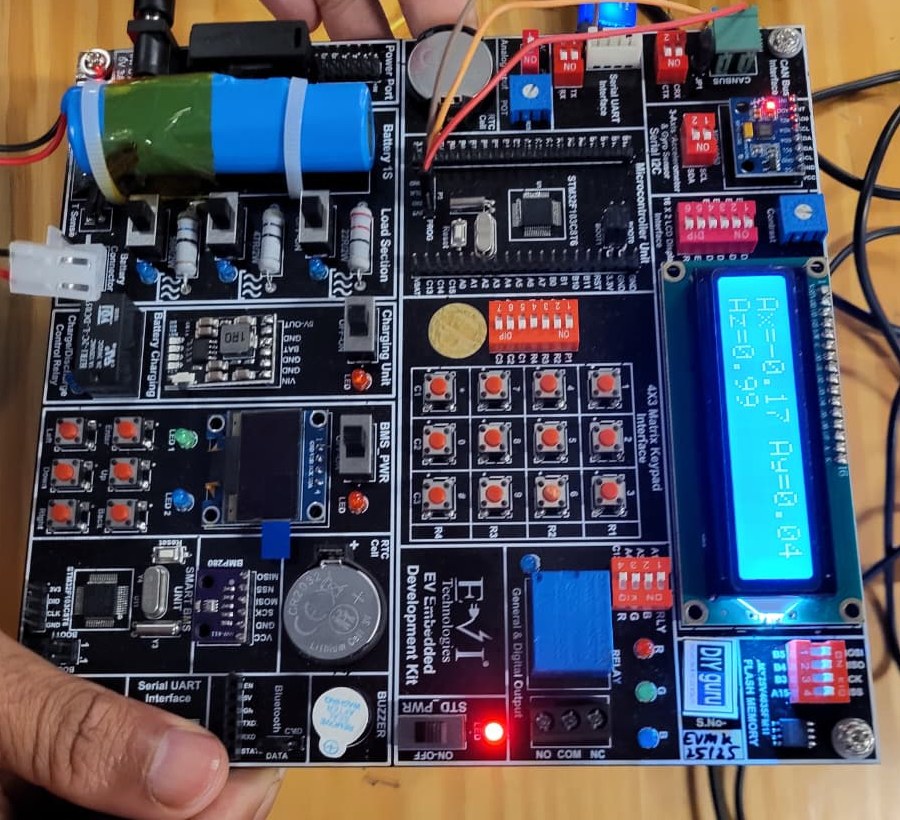
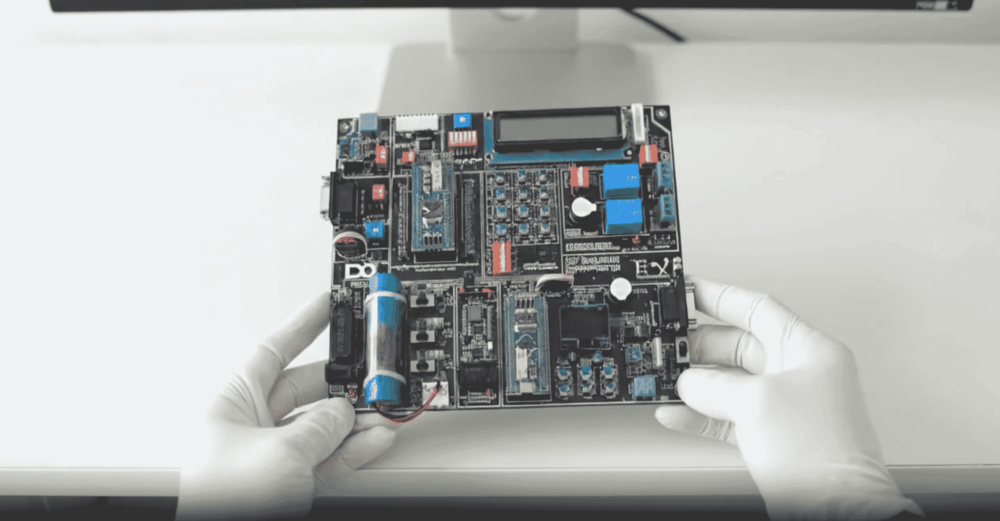
EV Embedded Development Kit board

Practise on real hardware

EV Embedded Development Kit

  • STM32 controller and Smart BMS unit
  • CAN, UART, I2C, SPI and Bluetooth
  • Sensors, LCD, OLED and motor control
  • 15+ guided experiments at home

₹10,000 + GST

See what's in the kit

Trainer Support

Stuck on a concept? Ask a trainer.

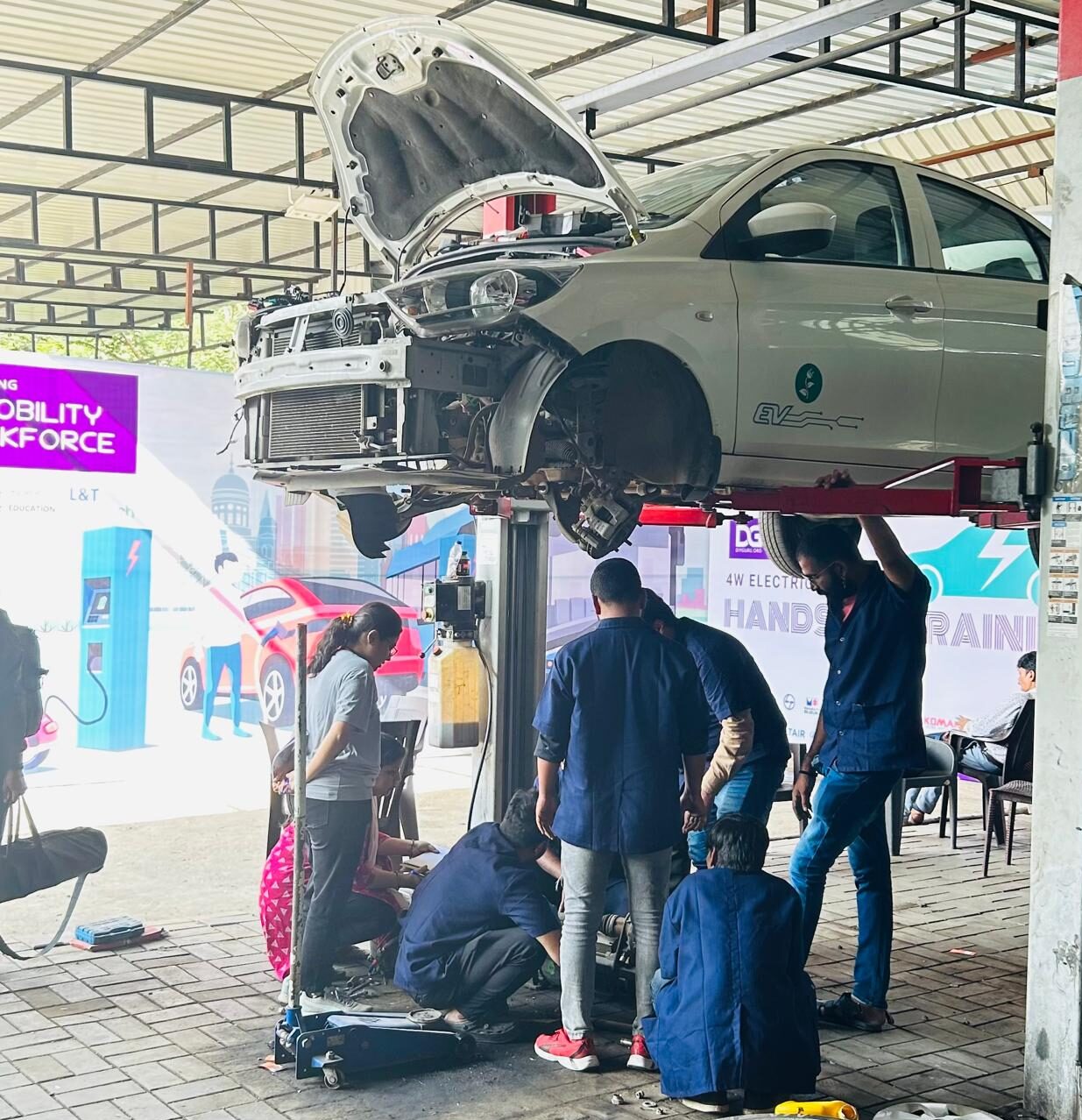
DIYguru trainer working with learners

Ask doubts in the course Q&A, for example on a battery calculation, a quiz answer or your project approach, and a trainer will respond; trainers also review your assignment and project submissions. CEVT programme students also get scheduled live classes and doubt-clearing sessions.

  • Ask questions in the course Q&A, right next to the lesson
  • Trainers answer on the portal — you're notified when they reply
  • Assignments and projects you submit are reviewed by a trainer
  • Live doubt-clearing sessions when they're scheduled for the course

Bharat eMobility Recruitathon

Meet the EV industry in person

The Bharat eMobility Recruitathon brings our learners face to face with companies hiring across the EV industry. Watch the Delhi and Pune chapters.

Delhi chapterRecruitathon
Pune chapterRecruitathon

FAQ

Frequently asked questions

Is this an internship at a company?
No. It is a 1-month project-based learning programme on the portal. You complete the lessons, quizzes, assignment and project, and receive an internship certificate on completion.
Does it guarantee a job or placement?
No. The programme builds EV fundamentals and project experience; it does not include a placement or job offer.
What prior knowledge is needed?
None beyond school-level physics and maths. The course starts with electrical fundamentals.
How do the project and quizzes work?
Most modules end with a quiz and solution, Module 1 has an assignment, and the final project is submitted from the lesson in the course player for trainer review.
Is it part of a programme?
Yes. It is also part of the CEVT – Certified EV Technician Programme.
What certificate do I get?
On completing the lessons, required quizzes, assignment and project, you receive a digitally signed internship certificate that can be verified through its public verification link or QR code.
How is the course delivered?
As recorded video lessons on the portal that you watch at your own pace, with quizzes, assignments and a project where the course includes them. Your progress is saved lesson by lesson.
What if I get stuck?
Ask in the course's Q&A on the portal — a trainer answers there. Live doubt-clearing sessions are added when they are scheduled for the course.
What certificate will I get?
A digitally signed certificate of completion once you finish the lessons and the required quizzes and assignments. Each certificate has a public verification link and QR code anyone can check.

Talk to a counsellor

Questions about Electric Vehicle Fundamentals & Project-Based Internship Certification Program?

Leave your details — a counsellor will call you about the syllabus, fees, EMI and certificates.

Technical Expertise You Will Gain

Where Electric Vehicle Fundamentals & Project-Based Internship Certification Program can take you

The roles these skills are used in, what you'll be able to do, and the parts of the industry that need it.

Key Job Roles

  • →EV technician trainee
  • →Battery pack assembly or testing trainee
  • →EV charging installation associate
  • →Graduate engineer trainee – EV
  • →EV service and support associate

Skill Sets

  • →Apply circuit laws and explain power electronic devices used in EVs
  • →Explain BLDC and synchronous motor operation and control
  • →Perform battery pack and charging calculations
  • →Describe BMS functions and architectures
  • →Carry out EV performance calculations and present them in a project

Where These Skills Are Used

  • →EV OEMs (two-, three- and four-wheelers)
  • →Battery pack manufacturing and assembly
  • →EV charging infrastructure
  • →EV service and maintenance
  • →EV start-ups

Government-Certified · Industry-Endorsed · Learner-Approved

Globally recognised credentials

ASDC (Govt of India)

ASDC (Govt of India)

Automotive Skills Development Council — recognised by major OEMs worldwide.

AICTE NEAT

AICTE NEAT

National Educational Alliance for Technology — issued under AICTE's premium learning ecosystem.

Learner Stories

What our learners say

The hardware-first approach made all the difference. Came in from a generalist electronics background; the BMS and motor-drive modules gave me concrete vocabulary I could carry into Infineon interviews.

Souvik Hazra
Souvik Hazra
Senior Manager · Infineon Technologies

Industry-grade depth without the academic ivory tower. The MATLAB Simulink + capstone defence prepared me for exactly the kind of cross-functional EV problems we solve at Cummins.

Sharad Yeola
Sharad Yeola
Application Controls Lead · Cummins Inc.

Started with electronics, walked into a BMS role in Germany. The applied projects + mentor reviews are what carried me through — the certifications opened the door, the depth got me hired.

Jagatjit Barik
Jagatjit Barik
Sr. R&D Engineer (BMS xEV) · Mercedes-Benz

Ready to start Electric Vehicle Fundamentals & Project-Based Internship Certification Program?

Recorded lessons at your own pace · trainer doubt support · verifiable certificate on completion.


Accreditations

Programs Recognised by Govt. Bodies & Industries

ASDC
AICTE NEAT
SIMOPS Saudi
DSD Malaysia
UK Government
UACH
Tata Technologies
ADYPU
UDYOGA Karnataka
Ola Mobility Institute