emobility.academy
★ 4.6 from 346 student reviews · Curriculum reviewed by IIT Faculty · Continue learning
4.6 / 5 — 346 student reviews

BMS Course

A free, single-module introduction to lithium-ion batteries and battery management systems. It moves from energy storage basics and lithium chemistries to pack components, FUDS drive-cycle calculations, thermal management needs, BMS architecture, AFE and microcontroller hardware, cell balancing and BMS topologies. It i
8+ hours
15 video lessons
2 modules
beginner
English
Recognised & Certified by
ASDC
AICTE NEAT

Course Curriculum

20 lessons across 2 modules

A free, single-module introduction to lithium-ion batteries and battery management systems. It moves from energy storage basics and lithium chemistries to pack components, FUDS drive-cycle calculations, thermal managemen

1
Module 1

Welcome to the Course!

1 lesson
  1. 1

    Join our EV Community to access the free resources!

    text

2
Module 2

Module: Battery and Battery Management System

19 lessons
  1. 1

    Topic 1: Introduction to Energy Storage Systems & Li-ion Battery

    10 min

  2. 2

    Topic 2: Lithium Chemistry Batteries & Battery Selection Parameters

    10 min

  3. 3

    Topic 3: Power, Energy & Form factor

    9 min

  4. 4

    Topic 4: FUDS Cycle Calculations

    6 min

  5. 5

    Topic 5: Battery Pack Components

    16 min

  6. 6

    Topic 6: BMS and Types

    23 min

  7. 7

    Topic 7: Cell to Pack Mass Ratio & Battery Pack Development

    21 min

  8. 8

    Topic 8: Safety of Battery Pack

    20 min

  9. 9

    Topic 9: Need for Thermal Management System

    16 min

  10. 10

    Topic 10: Modes of Heat Transfer & Types of Thermal Management

    13 min

  11. 11

    Topic 11: BMS Design & Requirements

    15 min

  12. 12

    Topic 12: Types of BMS Architecture & BMS Block Diagram

    12 min

  13. 13

    Topic 13: AFE Hardware & Microcontroller Unit

    11 min

  14. 14

    Topic 14: Battery Cell Balancing

    14 min

  15. 15

    Topic 15: BMS Star and Ring Topology

    10 min

  16. 16

    Further Your Journey in EV Technology!

    text

  17. 17

    Battery & BMS Quiz

    quiz

  18. 18

    Battery & BMS Quiz Solutions

    text

  19. 19

    Congratulations on Successfully Completing the Course!

    text

Earn a certificate

Add this credential to your resume — and watch employers ask about it

Every completing learner receives a joint certificate carrying ASDC (Government of India) and AICTE NEAT recognition. The certificate carries a public verification code recruiters can validate in seconds via emobility.careers.
  • Issued when you complete the lessons and required quizzes and assignments
  • Digitally signed, with a public verification link and QR code
  • Anyone — an employer or a college — can check it in seconds
  • Shows the course title and the skills it covers
Sample emobility.academy certificate

System Requirements

Hardware & software you'll need

What to have ready before you start this course.

Hardware

  • Any laptop, tablet or smartphone with internet access to stream the lessons
  • Notebook and calculator for the FUDS and pack calculations

Software

  • Modern web browser to access the course player

Associated Skills

What you'll be able to put on your résumé

Li-ion chemistry basicsBattery selection parametersPower vs energyFUDS cycle calculationBattery pack componentsCell-to-pack mass ratioPack safetyThermal management basicsBMS architectureAFE and MCUCell balancingStar and ring topology

DIY Projects Included

Hardware-grounded projects in your portfolio

Work you build while learning — submitted in the course and reviewed by a trainer, and yours to show afterwards.

🔋
Project 01

Compare cell chemistries

Make a one-page table comparing common lithium chemistries on energy density, power, cycle life and safety, then pick one for a scooter and justify your choice.

📈
Project 02

Work a FUDS cycle calculation

Following the FUDS lesson, calculate the energy a small vehicle draws over the cycle and use it to estimate the pack energy needed for a target number of cycles.

🧩
Project 03

Draw a BMS block diagram

Sketch a BMS for a 16-cell pack showing the AFE, microcontroller, balancing circuit and communication link, and mark whether you would use a star or ring topology.

Course Benefits

What you'll get out of it

Two audiences. Two angles. Pick the one that maps to where you are today.

For Working Professionals

  • Free, quick primer
    Get the core battery and BMS concepts without paying, before deciding on deeper training.
  • Understand pack failures
    Learn why cell imbalance, heat and poor pack design cause problems you see in the field.
  • Speak the BMS language
    Terms like AFE, cell balancing and BMS topology become clear, which helps when talking to suppliers.

For Students & Freshers

  • No cost to start
    The course is free, so you can explore battery engineering without any financial commitment.
  • Covers the whole chain
    Goes from cell chemistry to pack design to BMS hardware in one compact module.
  • Quiz to check yourself
    A Battery & BMS quiz with solutions at the end helps confirm what you have learnt.
  • Clear next step
    Gives you the foundation needed for advanced BMS, modelling and pack design courses.

What this course includes

Everything you get when you enrol

  • 1 Module
  • 15 Lectures
  • 3.57 hours of Video Content
  • 1 Quiz with Solution.
  • Certificate of Completion.

Who can take this course?

If any of these sound like you — you'll thrive here

  • Diploma and engineering students exploring batteries and BMS before choosing a specialisation
  • Two-wheeler and e-rickshaw technicians who want to understand what the BMS inside a pack actually does
  • Electronics hobbyists planning to build a small lithium-ion pack
  • Working professionals from non-EV backgrounds checking whether battery engineering suits them
  • Students who plan to take a paid Battery & BMS course later and want a free preview of the fundamentals
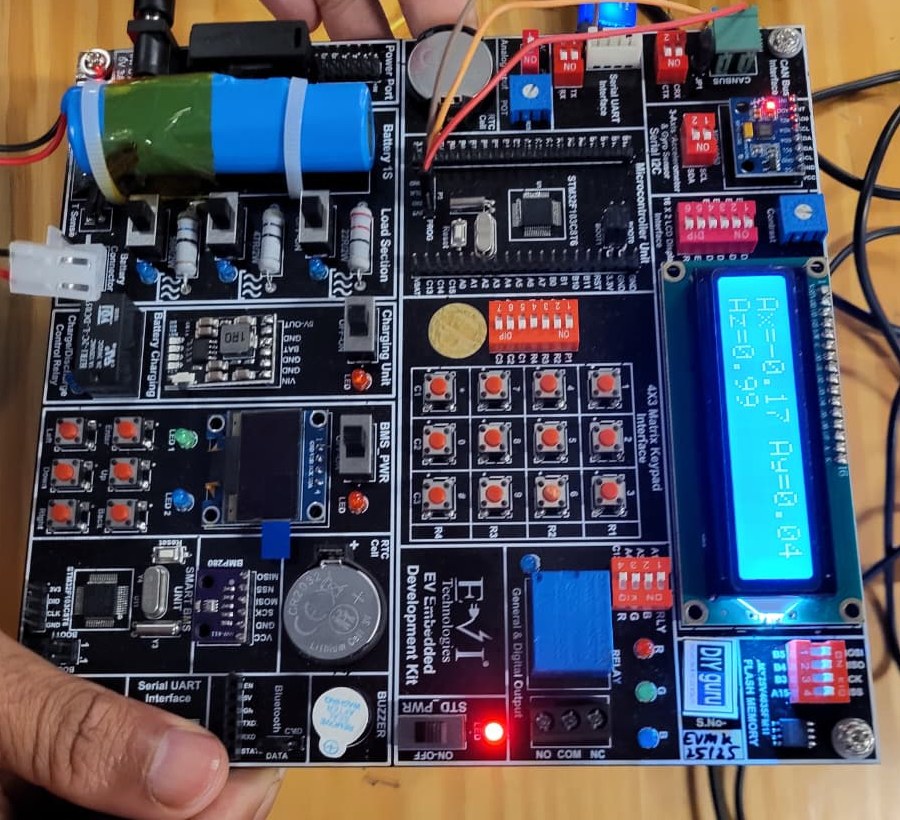
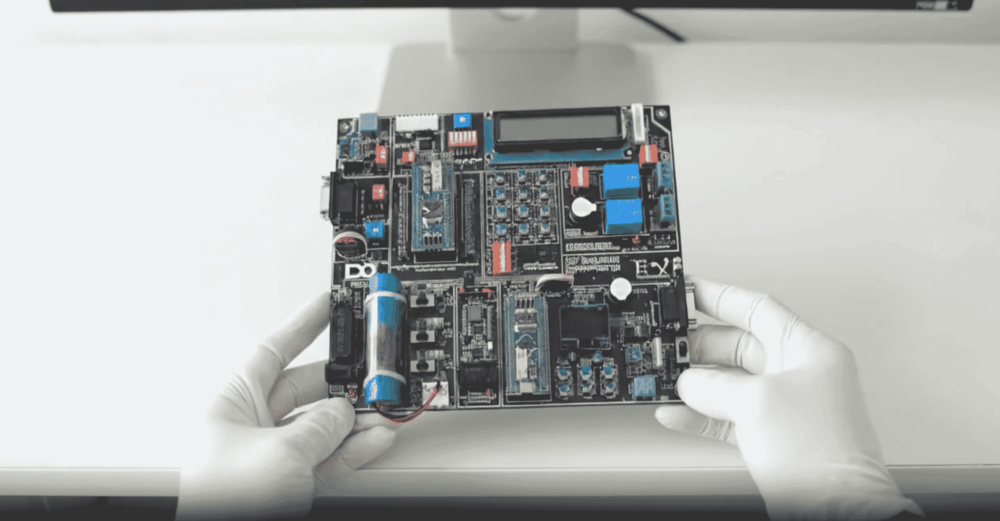
EV Embedded Development Kit board

Practise on real hardware

EV Embedded Development Kit

  • STM32 controller and Smart BMS unit
  • CAN, UART, I2C, SPI and Bluetooth
  • Sensors, LCD, OLED and motor control
  • 15+ guided experiments at home

₹10,000 + GST

See what's in the kit

Trainer Support

Stuck on a concept? Ask a trainer.

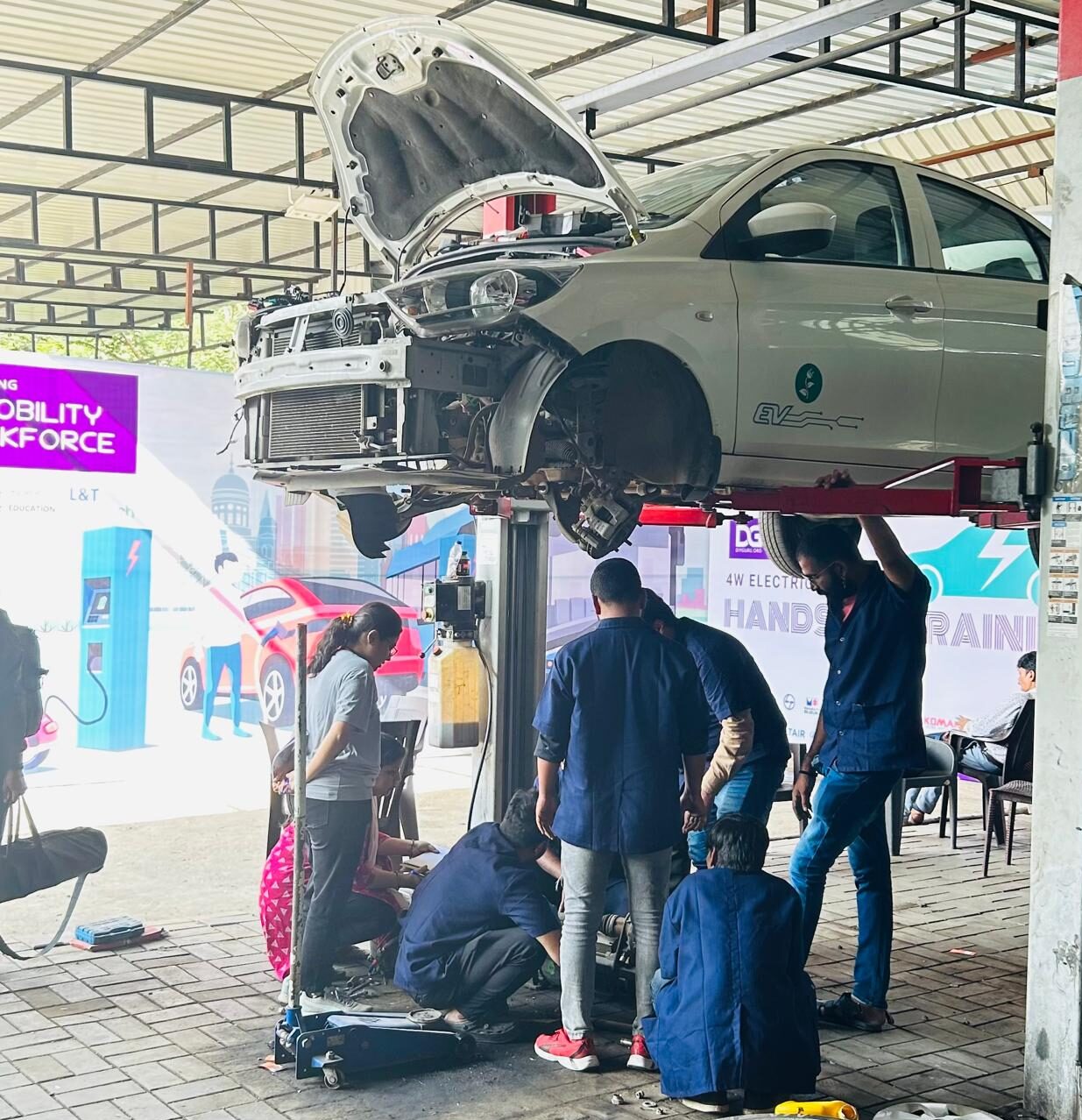
DIYguru trainer working with learners

Ask about any topic, from FUDS calculations to AFE hardware or balancing, in the course Q&A on the portal and a trainer will reply there.

  • Ask questions in the course Q&A, right next to the lesson
  • Trainers answer on the portal — you're notified when they reply
  • Assignments and projects you submit are reviewed by a trainer
  • Live doubt-clearing sessions when they're scheduled for the course

Bharat eMobility Recruitathon

Meet the EV industry in person

The Bharat eMobility Recruitathon brings our learners face to face with companies hiring across the EV industry. Watch the Delhi and Pune chapters.

Delhi chapterRecruitathon
Pune chapterRecruitathon

Reviews

4.6 ★ from 346 student reviews

  • ★★★★★

    GOOD!!

    Soedesh R. · Oct 2026

  • ★★★★★

    nice

    Kaveesh S. · Oct 2026

  • ★★★★★

    good

    Anil R. · Oct 2026

  • ★★★★★

    Actually it is gud basic course for Ev Bms system how it's working and the main component using in the ev module system and its functionality and failure analysis

    SREEJITHSR · Oct 2026

  • ★★★★★

    Excellent

    TRIVENI H. · Oct 2026

  • ★★★★★

    well knowledge i was learned

    NAMALA M. · Oct 2026

FAQ

Frequently asked questions

Is this course really free?
Yes. The BMS Course is free to enrol and complete.
Do I need an electrical background?
No. It starts from energy storage basics. Some comfort with simple calculations helps for the FUDS cycle and pack calculations.
What topics are covered?
Li-ion chemistries, battery selection parameters, power, energy and form factor, FUDS cycle calculations, pack components, safety, thermal management, BMS design and architecture, AFE and MCU hardware, cell balancing, and star and ring topologies.
Is there any assessment?
Yes, a Battery & BMS quiz at the end, followed by a lesson walking through the solutions.
Will I get a certificate?
Yes. When you complete all lessons and the required quizzes and assignments, you receive a digitally signed certificate that anyone can check through its public verification link or QR code.
What should I take after this?
If you want to go deeper, look at the paid advanced BMS, battery pack design and modelling courses on the portal, which build on these fundamentals with MATLAB/Simulink work.
How is the course delivered?
As recorded video lessons on the portal that you watch at your own pace, with quizzes, assignments and a project where the course includes them. Your progress is saved lesson by lesson.
What if I get stuck?
Ask in the course's Q&A on the portal — a trainer answers there. Live doubt-clearing sessions are added when they are scheduled for the course.
What certificate will I get?
A digitally signed certificate of completion once you finish the lessons and the required quizzes and assignments. Each certificate has a public verification link and QR code anyone can check.

Talk to a counsellor

Questions about BMS Course?

Leave your details — a counsellor will call you about the syllabus, fees, EMI and certificates.

Technical Expertise You Will Gain

Where BMS Course can take you

The roles these skills are used in, what you'll be able to do, and the parts of the industry that need it.

Key Job Roles

  • →Battery pack technician
  • →BMS testing trainee
  • →EV service technician (battery focus)
  • →Graduate engineer trainee in battery manufacturing

Skill Sets

  • →Explain how lithium-ion cells store energy and how chemistries differ
  • →Choose battery parameters such as power, energy and form factor for an application
  • →Estimate energy consumption using a FUDS drive cycle
  • →List battery pack components and explain cell-to-pack mass ratio
  • →Describe BMS functions, architecture and the role of AFE and MCU
  • →Explain why cell balancing is needed and how star and ring topologies differ

Where These Skills Are Used

  • →Battery pack assemblers
  • →Electric two-wheeler and three-wheeler makers
  • →Energy storage system integrators
  • →EV service and repair workshops
  • →BMS electronics manufacturers

Government-Certified · Industry-Endorsed · Learner-Approved

Globally recognised credentials

ASDC (Govt of India)

ASDC (Govt of India)

Automotive Skills Development Council — recognised by major OEMs worldwide.

AICTE NEAT

AICTE NEAT

National Educational Alliance for Technology — issued under AICTE's premium learning ecosystem.

Learner Stories

What our learners say

The hardware-first approach made all the difference. Came in from a generalist electronics background; the BMS and motor-drive modules gave me concrete vocabulary I could carry into Infineon interviews.

Souvik Hazra
Souvik Hazra
Senior Manager · Infineon Technologies

Industry-grade depth without the academic ivory tower. The MATLAB Simulink + capstone defence prepared me for exactly the kind of cross-functional EV problems we solve at Cummins.

Sharad Yeola
Sharad Yeola
Application Controls Lead · Cummins Inc.

Started with electronics, walked into a BMS role in Germany. The applied projects + mentor reviews are what carried me through — the certifications opened the door, the depth got me hired.

Jagatjit Barik
Jagatjit Barik
Sr. R&D Engineer (BMS xEV) · Mercedes-Benz

Ready to start BMS Course?

Recorded lessons at your own pace · trainer doubt support · verifiable certificate on completion.


Accreditations

Programs Recognised by Govt. Bodies & Industries

ASDC
AICTE NEAT
SIMOPS Saudi
DSD Malaysia
UK Government
UACH
Tata Technologies
ADYPU
UDYOGA Karnataka
Ola Mobility Institute