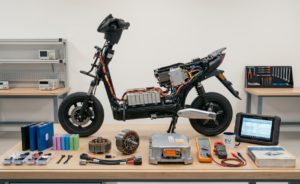
Introduction: Why Switch from ICE to the EV Industry?
The automotive industry is undergoing one of its most significant transformations, with electric vehicles (EVs) now at the center of the industry’s focus. With the global push toward sustainability, carbon neutrality, and green mobility, EVs are increasingly becoming the preferred mode of transport. Governments worldwide have set ambitious targets for EV adoption, and automakers are following suit, transitioning away from traditional internal combustion engines (ICE) to fully electric and hybrid technologies.
For working professionals in the automotive sector, transitioning from the ICE industry to the EV industry presents a tremendous opportunity. Whether you’re an engineer, mechanic, or manager with years of experience in traditional automotive systems, the transition to electric mobility promises new career challenges, job opportunities, and the chance to be a part of the future of transportation.
However, this transition requires specialized skills in electric vehicle systems, including electric powertrains, battery technology, charging infrastructure, and vehicle-to-grid solutions. To help facilitate this transition, a range of EV-focused training programs are now available globally, enabling professionals to upskill and seamlessly integrate into the EV industry.
This article outlines the top 10 global EV training providers that offer advanced courses for professionals transitioning from the ICE industry to EV technology. By enrolling in the right program, you can gain the technical expertise needed to excel in the evolving field of electric mobility.
Why the EV Industry is the Right Career Move for ICE Professionals
The shift to electric vehicles is not just a trend; it’s an industry revolution driven by several factors:
- Government Mandates and Regulations: Many countries have set targets for zero-emission vehicles, with some even banning the sale of new ICE vehicles in the coming decades. These regulations create a massive demand for EV professionals.
- Technological Advancements: Continuous innovation in battery technology, charging infrastructure, and powertrain systems means that the EV sector is a dynamic and fast-evolving field, offering exciting challenges for experienced professionals.
- Market Growth: The global EV market is expected to surpass $800 billion by 2027, and this growth is set to create a wealth of job opportunities in EV manufacturing, research and development (R&D), maintenance, and EV infrastructure development.
- Sustainability and Future-Proofing: As an industry professional, transitioning to the EV sector allows you to align your career with the future of sustainable mobility, which is not only rewarding but also offers long-term stability.
Given the growing demand for EV technology and the high number of professionals seeking to transition from ICE to EV systems, it’s an ideal time to pivot your career and acquire the skills necessary to thrive in the electric vehicle sector.
The Skills Gap in the EV Industry
While the demand for skilled professionals in the EV sector continues to rise, there remains a significant skills gap that needs to be filled. Many professionals who have spent years working with traditional ICE vehicles lack the specialized knowledge required to work with electric drivetrains, battery management systems (BMS), electric motors, and charging infrastructure.
Working in the EV sector requires familiarity with technologies like:
- Battery technologies (lithium-ion, solid-state, etc.)
- Powertrain components (electric motors, inverters, controllers)
- Charging infrastructure (fast-charging stations, home chargers, smart grids)
- Vehicle-to-grid technologies (V2G), including energy storage systems.
For professionals transitioning from ICE systems, upskilling in these areas is essential. Fortunately, many courses are now available that cater to the need for EV-specific knowledge, designed to equip professionals with the technical skills and industry knowledge necessary for successful career transition.
Key Factors to Consider When Choosing an EV Course
1. Industry Recognition and Accreditation
When choosing an EV course, it’s crucial to ensure that the provider is recognized within the industry. Look for certifications or accreditations from recognized institutions like IITs, SAE International, AICTE, or NITI Aayog. These accreditations validate the quality of the program and ensure that it aligns with industry standards.
2. Specialized Technical Knowledge
A career switch from ICE to EV will require specialized training in areas like electric drivetrains, battery management, charging infrastructure, and EV system integration. Courses that provide hands-on training with real-world EV components will better prepare you for a smooth transition.
3. Duration and Flexibility
As a working professional, it’s important to choose a program that fits into your existing schedule. Some programs are self-paced online courses, while others offer in-person workshops or hybrid learning (a mix of online and offline learning). Consider the time commitment and flexibility that works best for you.
4. Career Support and Job Placement
Training providers with strong industry tie-ups and dedicated placement support can help ease your transition into the EV job market. Courses with established networks within the EV industry are more likely to connect you with job opportunities at EV manufacturers, charging infrastructure companies, and automotive R&D labs.
Top 10 EV Course Providers for Professionals Switching from ICE to EV Industry
1. University of Michigan – Electric Vehicle Center (EVC), USA
Overview:
The University of Michigan’s Electric Vehicle Center (EVC) is a renowned institution for research and education in the EV field. With cutting-edge research on electric powertrains, battery systems, and charging technologies, the EVC offers high-level courses that allow professionals from the ICE industry to make a seamless transition into electric vehicle technology.
Key Offerings:
- Courses: Advanced EV engineering, battery systems, power electronics, electric drivetrains.
- Duration: 6–12 months for professional certification programs.
- Mode: Hybrid (online + on-campus).
- Ideal For: Engineers and technicians looking to specialize in electric powertrains and battery technologies.
2. eMobility.Academy by DIYguru, India
Overview:
eMobility.Academy by DIYguru offers a comprehensive training platform specifically for professionals transitioning from the ICE sector to EV technology. The academy provides specialized courses in electric vehicle design, battery management, and charging infrastructure, with a strong focus on practical learning and industry placement.
Key Offerings:
- Courses: EV Technician, Powertrain Design, BMS, Charging Infrastructure.
- Duration: 3–12 months.
- Mode: Hybrid (online + offline).
- Industry Tie-Ups: Collaborations with global automotive companies such as Hyundai, Tata, Bosch, and L&T for job placements.
- Placement Support: emobility.careers job portal for connecting professionals with EV industry employers.
Ideal For: Engineers and automotive professionals looking for practical training and industry connections to transition to the EV industry.
3. SAE International – Hybrid and Electric Vehicle Engineering Academy, USA
Overview:
SAE International is one of the most respected names in automotive engineering. Their Hybrid and Electric Vehicle Engineering Academy provides high-level courses on EV powertrains, vehicle dynamics, and integration. These courses are perfect for engineers who are familiar with ICE systems but want to transition into advanced electric vehicle engineering.
Key Offerings:
- Courses: HEV/PHEV/EV engineering concepts, powertrain integration, vehicle dynamics.
- Duration: 6–12 months (self-paced).
- Mode: Online.
- Industry Tie-Ups: Partnerships with major automotive manufacturers and suppliers.
Ideal For: Engineers with a background in traditional automotive technologies who want to move into advanced EV engineering roles.
4. George Brown College – EV Technician Program, Canada
Overview:
George Brown College offers a 32-week Electric Vehicle Technician Program, which is ideal for professionals looking to switch from traditional automotive repair to electric vehicle diagnostics and repair. The program blends theory with hands-on practical training using state-of-the-art simulation software and real-world EV components.
Key Offerings:
- Courses: EV systems, diagnostics, repair, and maintenance.
- Duration: 32 weeks.
- Mode: Online and in-person.
- Industry Tie-Ups: Collaborations with EV manufacturers for practical exposure.
Ideal For: Technicians looking to specialize in EV maintenance and repair, especially those with an existing background in ICE systems.
5. Legacy EV – EV Fundamentals Bootcamp, USA
Overview:
The Legacy EV Fundamentals Bootcamp provides a fast-paced introduction to electric vehicle technology. With a focus on high-voltage safety and diagnostics, the program is perfect for professionals looking to get up to speed quickly and transition into electric vehicle service roles.
Key Offerings:
- Courses: EV fundamentals, high-voltage safety, powertrain systems.
- Duration: 25 hours (intensive bootcamp).
- Mode: In-person.
- Industry Tie-Ups: Partnerships with major EV manufacturers for practical learning.
Ideal For: Automotive technicians and engineers looking for quick, intensive training in electric vehicle servicing.
6. Tata Technologies – EV Online Certification Courses, India
Overview:
Tata Technologies offers online certification courses in electric vehicle technology, covering topics like battery systems, charging infrastructure, and EV design. These courses are ideal for professionals transitioning from ICE vehicles to working with electric drivetrains and energy storage systems.
Key Offerings:
- Courses: EV Essentials, Energy Storage Systems, Battery Pack Design.
- Duration: 4–6 weeks per course.
- Mode: Online.
- Industry Tie-Ups: Strong connections with major automotive OEMs.
Ideal For: Engineers and technicians who need to upskill in EV technologies without interrupting their current work schedules.
7. CARILEC – EV Training Programs, Caribbean
Overview:
CARILEC offers specialized EV training focusing on high-voltage safety and system diagnostics. The program includes hands-on training with real EV components and live workshops to ensure technicians are ready to tackle the complexities of electric vehicle systems.
Key Offerings:
- Courses: High-voltage safety, EV diagnostics, maintenance.
- Duration: 2–3 days per module.
- Mode: In-person.
- Industry Tie-Ups: Collaborations with local EV manufacturers and service providers.
Ideal For: Automotive technicians in the Caribbean or other regions seeking to specialize in EV servicing.
8. ETUT – European Training Network for Electrical Transport, Europe
Overview:
ETUT offers research-based EV training focused on cutting-edge areas like energy storage, power electronics, and vehicle-to-grid technologies. This program is ideal for engineers looking to move into R&D roles in EV technology.
Key Offerings:
- Courses: Power electronics, energy storage systems, advanced EV systems.
- Duration: 3–4 years (doctoral research).
- Mode: Research-based.
- Industry Tie-Ups: Collaborations with industrial partners for advanced EV technologies.
Ideal For: Engineers looking to transition into research and development roles in electric vehicle technology.
9. Nova Anglia College – Bachelor of Technology (Electric Vehicle), Australia
Overview:
Nova Anglia College offers a Bachelor of Technology program specializing in electric vehicle engineering, providing a deeper understanding of EV systems, battery technologies, and charging infrastructures.
Key Offerings:
- Courses: Electric vehicle design, battery systems, charging infrastructure.
- Duration: 3 years.
- Mode: On-campus.
- Industry Tie-Ups: Collaborations with automotive companies for internships and placements.
Ideal For: Engineers looking to pursue a full-fledged degree in electric vehicle engineering.
10. National Alternative Fuels Training Consortium (NAFTC), USA
Overview:
The National Alternative Fuels Training Consortium offers training programs that introduce alternative fuel technologies, including electric vehicles, to help professionals transition from traditional fuels to electric mobility solutions.
Key Offerings:
- Courses: EV fundamentals, hybrid vehicle technology, alternative fuels.
- Duration: 1–2 days per module.
- Mode: Online and in-person.
- Industry Tie-Ups: Partnerships with educational institutions and government agencies.
Ideal For: Professionals looking for a quick overview of the electric vehicle ecosystem.
Conclusion: Making the Shift from ICE to EV
Transitioning from the ICE industry to the EV sector is an exciting and rewarding move, with many job opportunities awaiting those who are equipped with the right skills. Whether you’re looking to upskill with technical training, advance your career in research and development, or start working as an EV technician, the training providers listed above offer world-class programs that can help you achieve your career goals.
By enrolling in one of these specialized EV courses, you can position yourself for success in the electric mobility revolution. Now is the time to make the switch and secure your place in one of the most promising industries of the future.