emobility.academy
★ 4.8 rated by 1,500+ verified learners · curriculum reviewed by IIT Faculty · Continue learning
🏛️ IIT-Faculty Reviewed✅ ASDC · AICTE NEAT · NSDC🌍 Available worldwide
★★★★★4.8 / 5 — 1,500+ verified reviews

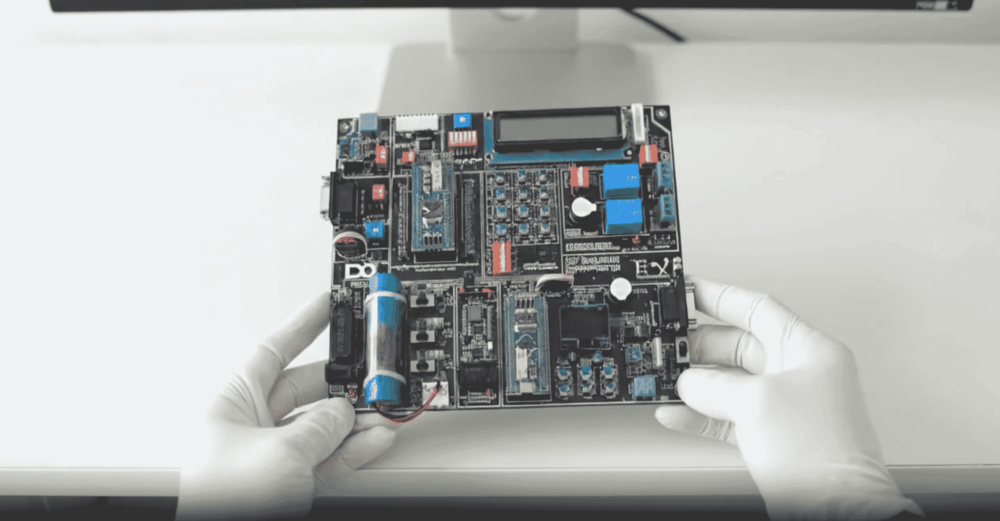
एम्बेडेड सिस्टम सर्टिफ़िकेशन कोर्स: Embedded C, 8051, Arduino और सिमुलेशन
एम्बेडेड सिस्टम सर्टिफ़िकेशन कोर्स: Embedded C, 8051, Arduino और सिमुलेशन
19.5+ hours
94 video lessons
11 modules
beginner
English
Recognised & Certified by
ASDC
AICTE NEAT
Ministry of Education

Course Curriculum

97 lessons across 11 modules

एम्बेडेड सिस्टम सर्टिफ़िकेशन कोर्स: Embedded C, 8051, Arduino और सिमुलेशन

1
Module 1

कोर्स में आपका स्वागत है!

1 lesson
  1. 1

    eMobility.careers पर साइन अप करें और पाएं EV जॉब के विशेष अवसर!

    text

2
Module 2

मॉड्यूल 1: एम्बेडेड सिस्टम का परिचय

5 lessons
  1. 1

    विषय 1: Embedded Systems का परिचय - Microprocessor और Microcontroller

    16 min· free trial

  2. 2

    विषय 2: Embedded Processors के विभिन्न प्रकार भाग-1

    21 min· free trial

  3. 3

    विषय 3: Embedded Processors के विभिन्न प्रकार भाग-2

    13 min

  4. 4

    विषय 4: Microcontrollers का वर्गीकरण

    20 min

  5. 5

    विषय 5: Microcontroller के Elements

    18 min

3
Module 3

मॉड्यूल 2: 8051 माइक्रोकंट्रोलर की बुनियादी बातें

5 lessons
  1. 1

    विषय 1: 8051 Microcontroller और उसका Pin Diagram

    16 min

  2. 2

    विषय 2: 8051 Pin diagram विस्तार से

    9 min

  3. 3

    विषय 3: 8051 Microcontroller का Architecture भाग-1

    16 min

  4. 4

    विषय 4: 8051 Microcontroller का Architecture भाग-2

    17 min

  5. 5

    विषय 5: 8051 Microcontroller का Architecture भाग-3

    16 min

4
Module 4

मॉड्यूल 3: 8051 माइक्रोकंट्रोलर के एड्रेसिंग मोड और इंस्ट्रक्शन सेट

6 lessons
  1. 1

    विषय 1: 8051 के Addressing Modes

    19 min

  2. 2

    विषय 2: 8051 का डेटा ट्रांसफ़र इंस्ट्रक्शन सेट

    14 min

  3. 3

    विषय 3: 8051 का Logical Instructions Set

    16 min

  4. 4

    विषय 4: 8051 का Boolean और Arithmetic Instruction Set

    13 min

  5. 5

    विषय 5: BCD numbers और Sample Programs

    18 min

  6. 6

    विषय 6: 8051 का Program Branching Instruction Set

    16 min

5
Module 5

मॉड्यूल 4: 8051 माइक्रोकंट्रोलर में टाइमर, TCON रजिस्टर और इंटरप्ट

5 lessons
  1. 1

    विषय 1: 8051 में Timers और Counters

    17 min

  2. 2

    विषय 2: Timers के Modes और TMOD Register

    15 min

  3. 3

    विषय 3: TCON Register और Sample Program

    18 min

  4. 4

    विषय 4: Sample Programs और Interrupt

    17 min

  5. 5

    विषय 5: Interrupts (जारी) और 8051 में Serial Communication

    19 min

6
Module 6

मॉड्यूल 5: Embedded C प्रोग्रामिंग और डेवलपमेंट के लिए एम्बेडेड एप्लिकेशन

11 lessons
  1. 1

    विषय 1: C Language

    10 min

  2. 2

    विषय 2: Keil Software से 8051 Programming

    16 min

  3. 3

    विषय 3: C में Data Types और 8051 C Programs

    14 min

  4. 4

    विषय 4: 8051 C Programming भाग-1

    16 min

  5. 5

    विषय 5: 8051 C Programming भाग-2

    9 min

  6. 6

    विषय 6: 8051 Programming के लिए सॉफ़्टवेयर आवश्यकताएं - Keil, USBap और ProgISP

    15 min

  7. 7

    विषय 7: LED Control के लिए 8051 Program लिखने की स्टेप-बाय-स्टेप गाइड भाग-1

    17 min

  8. 8

    विषय 8: LED Control के लिए 8051 Program लिखने की स्टेप-बाय-स्टेप गाइड भाग-2

    12 min

  9. 9

    विषय 9a: LCD Interfacing 8051 के साथ

    12 min

  10. 10

    विषय 9b: LCD Interfacing - LCD के सामान्य Codes

    18 min

  11. 11

    विषय 9c: LCD Interfacing Program

    18 min

7
Module 7

मॉड्यूल 6: एम्बेडेड सिस्टम के लिए कम्युनिकेशन प्रोटोकॉल

13 lessons
  1. 1

    विषय 1: कम्युनिकेशन प्रोटोकॉल्स का परिचय - सिंक्रोनस और एसिंक्रोनस प्रोटोकॉल्स

    21 min

  2. 2

    विषय 2: Communication Topologies के प्रकार और UART व RS232 की पड़ताल

    19 min

  3. 3

    विषय 3: UART की व्याख्या।

    15 min

  4. 4

    विषय 4: I2C Communication Protocol भाग 1

    13 min

  5. 5

    विषय 5: I2C Communication Protocol भाग 2

    17 min

  6. 6

    विषय 6: I2C Communication Protocol भाग 3

    15 min

  7. 7

    विषय 7: SPI Communication Protocol भाग 1

    16 min

  8. 8

    विषय 8: SPI Communication Protocol भाग 2

    17 min

  9. 9

    विषय 9: SPI Communication Protocol भाग 3

    15 min

  10. 10

    विषय 10: CAN Communication Protocol भाग 1

    17 min

  11. 11

    विषय 11: CAN Communication Protocol भाग 2

    15 min

  12. 12

    विषय 12: CAN Communication Protocol भाग 3

    15 min

  13. 13

    विषय 13: CAN Communication Protocol भाग 4

    17 min

8
Module 8

मॉड्यूल 7: एम्बेडेड सिस्टम के लिए Arduino की शुरुआत

10 lessons
  1. 1

    विषय 1: Arduino का परिचय

    4 min

  2. 2

    विषय 02: Microcontroller की बुनियादी बातें

    7 min

  3. 3

    विषय 3: Microcontroller और Microprocessor में अंतर

    4 min

  4. 4

    विषय 4: Arduino Pin Diagram

    5 min

  5. 5

    विषय 5: Arduino IDE की इंस्टॉलेशन

    4 min

  6. 6

    विषय 6: Arduino IDE को जानना और Arduino को सिमुलेटर (Tinkercad) में इम्पोर्ट करना

    10 min

  7. 7

    विषय 7: Tinkercad के साथ काम करना

    8 min

  8. 8

    विषय 8: Tinkercad में Arduino LED Sketch डिज़ाइन करना

    10 min

  9. 9

    विषय 9: IDE और Tinkercad में Arduino LED Code लिखना और Simulate करना

    9 min

  10. 10

    विषय 10: Arduino Data Display और Debugging के लिए Tinkercad में Serial Monitor का उपयोग

    8 min

9
Module 9

मॉड्यूल 8: एम्बेडेड सिस्टम के लिए Arduino आधारित डेवलपमेंट के साथ सिमुलेशन

16 lessons
  1. 1

    विषय 1: Arduino IDE Programming का परिचय

    13 min

  2. 2

    विषय 2: Variable की Declaration

    9 min

  3. 3

    विषय 3: Variables के Data Types

    11 min

  4. 4

    विषय 4: Arithmetic Operators - भाग 1

    11 min

  5. 5

    विषय 5: Arithmetic Operators - भाग 2

    8 min

  6. 6

    विषय 6: पिछले मॉड्यूल्स पर आधारित अभ्यास

    7 min

  7. 7

    विषय 7: Conditional Statements - 'If' और 'If else' Statements

    14 min

  8. 8

    विषय 8: Numbers

    12 min

  9. 9

    विषय 9: Functions

    10 min

  10. 10

    विषय 10: Tinkercad में Arduino LED Blinking Program बनाना - भाग 1

    12 min

  11. 11

    विषय 11: Tinkercad में Arduino LED Blinking Program बनाना - भाग 2

    11 min

  12. 12

    विषय 12: Loop Statements - 'While' Loop

    9 min

  13. 13

    विषय 13: Loop Statements - For Loop

    4 min

  14. 14

    विषय 14: Arduino LED Blinking Program में 'For' Loop और Array लागू करना - भाग 1

    11 min

  15. 15

    विषय 15: Arduino LED ब्लिंकिंग प्रोग्राम में 'For' लूप और ऐरे लागू करना - भाग 2

    7 min

  16. 16

    विषय 16: LED Brightness को Adjust करना

    9 min

10
Module 10

मॉड्यूल 9: Arduino आधारित प्रोजेक्ट डेवलपमेंट

23 lessons
  1. 1

    विषय 1: Arduino में Slide Switch का उपयोग - External Inputs देना

    9 min

  2. 2

    विषय 2: Arduino LED कंट्रोल प्रोजेक्ट के स्कीमैटिक व्यू को समझना

    8 min

  3. 3

    विषय 3: Inputs देने के लिए Push Button का उपयोग

    9 min

  4. 4

    विषय 4: LED को Control करने के लिए Push Button का Arduino Sketch लिखना और Simulate करना

    13 min

  5. 5

    विषय 5: LED को Control करने के लिए Slide Switch का Arduino Sketch लिखना और Simulate करना

    14 min

  6. 6

    विषय 6: Arduino Input Control के लिए Potentiometer को समझना

    9 min

  7. 7

    विषय 7: Arduino के साथ Potentiometer का उपयोग - Code और Simulation

    13 min

  8. 8

    विषय 8: Arduino में LED Control के लिए Potentiometer का उपयोग

    9 min

  9. 9

    विषय 9: Tinkercad में LCD को Feedback Device के रूप में समझना

    8 min

  10. 10

    विषय 10: Arduino के साथ LCD Interfacing

    10 min

  11. 11

    विषय 11: LCD Display के लिए Arduino Sketch लिखना

    10 min

  12. 12

    विषय 12: LCD Display के लिए Arduino Sketch को Simulate करना

    8 min

  13. 13

    विषय 13: प्रोजेक्ट - Arduino के साथ LCD और Push Button Interfacing

    9 min

  14. 14

    विषय 14: Tinkercad में Arduino के लिए Sensors का अवलोकन

    8 min

  15. 15

    विषय 15: Photoresistor Sensor को समझना - कार्यप्रणाली और Specifications

    10 min

  16. 16

    विषय 16: Photoresistor Sensor के लिए Arduino Sketch लिखना और Simulate करना

    8 min

  17. 17

    विषय 17: Photoresistor-आधारित LED Control Arduino प्रोजेक्ट

    9 min

  18. 18

    विषय 18: Ultrasonic Sensor को समझना - कार्यप्रणाली और Specifications

    10 min

  19. 19

    विषय 19: Ultrasonic Sensor के लिए Interfacing और Arduino Sketch लिखना

    10 min

  20. 20

    विषय 21: Arduino से LED Control करने के लिए Transistor का उपयोग

    15 min

  21. 21

    विषय 22: Arduino के साथ Motor Control का परिचय

    10 min

  22. 22

    विषय 23: Motor Direction Control के लिए H-Bridge को समझना

    3 min

  23. 23

    विषय 24: Arduino के साथ H-Bridge Motor Control लागू करना

    17 min

11
Module 11

DIY प्रोजेक्ट:

2 lessons
  1. 1

    प्रोजेक्ट: एन्हांस्ड इलेक्ट्रिक व्हीकल (EV) चार्जिंग स्टेशन मैनेजमेंट सिस्टम

    assignment

  2. 2

    कोर्स सफलतापूर्वक पूरा करने पर बधाई!

    text

Earn a certificate

Add this credential to your resume — and watch employers ask about it

Every completing learner receives a joint certificate carrying ASDC (Government of India) and AICTE NEAT recognition. The certificate carries a public verification code recruiters can validate in seconds via emobility.careers.
  • Government-recognised by Ministry of Education + NSDC
  • Validated globally by automotive OEMs and Tier-1 suppliers
  • Public verification URL — every recruiter can check authenticity
  • Issued within 14 days of capstone-project approval
Sample emobility.academy certificate

System Requirements

Hardware & software you'll need

Lightweight on hardware — most modern laptops handle it. Software is free / academic-licensed.

Hardware

  • 8 GB+ RAM (16 GB recommended for MATLAB Simulink)
  • Quad-core processor (Intel i5 / AMD Ryzen 5 or newer)
  • 8 GB+ free disk space for project files and simulation outputs
  • Stable internet connection (5 Mbps+) for live sessions and Bunny video streaming

Software

  • MATLAB R2018a or later (free academic licence works)
  • Simulink + Simscape (included in the academic MATLAB bundle)
  • Arduino IDE or STM32CubeIDE for embedded sessions
  • Optional: SolidWorks / Fusion 360 for 3D module visualisation

Associated Skills

What you'll be able to put on your résumé

Battery ModelingBMS DesignCell ChemistryMATLAB SimulinkEmbedded CCAN ProtocolPowertrain IntegrationThermal ManagementEV Safety (HV)Drive Cycle AnalysisState-of-Charge EstimationVehicle Dynamics

DIY Projects Included

Hardware-grounded projects in your portfolio

Every project is defended in front of an industry panel and graded by our mentors. Your portfolio after this course is what gets you the interview.

🔋
Project 01

Design a Complete Battery Management System

End-to-end BMS design — cell-monitoring IC selection, balancing strategy, SoC/SoH algorithm, fault diagnostics. Defended in a panel review on the cohort's final week.

⚙️
Project 02

Simulate a Full EV Powertrain in MATLAB Simulink

Model a 2-wheeler / 4-wheeler powertrain from motor to wheels, run it through MIDC + WLTP drive cycles, and predict range against the spec sheet.

🔌
Project 03

Build a Working EVSE Prototype

Assemble a Level-1 / Level-2 EVSE on a benchtop kit — CP/PP signalling, contactor + relay logic, Type-2 connector wiring, safety lockouts.

Course Benefits

What you'll get out of it

Two audiences. Two angles. Pick the one that maps to where you are today.

For Working Professionals

  • Production-Grade Vocabulary
    Walk into BMS / powertrain / charging interviews speaking the same language as Bosch, Tata, Mercedes-Benz and Ola engineering leads.
  • Tool Proficiency Recruiters Test For
    MATLAB Simulink, Ansys, Altair, STM32CubeIDE — the exact tools enterprise engineering interviews probe.
  • Industry-Aligned Capstone
    Defend a real EV-system project in front of an industry panel. The deliverable doubles as your portfolio.
  • Direct OEM Network
    1:1 intros into our 300+ hiring-partner network across India, Europe and North America via emobility.careers.
  • Cross-Functional Reach
    Equally relevant to mechanical, electrical, embedded, software and product professionals — the EV stack is genuinely cross-domain.

For Students & Freshers

  • Foundational Depth
    From cell chemistry to vehicle dynamics — the same fundamentals taught in IIT EV labs, delivered remotely.
  • Hands-On Hardware Kit
    Ships worldwide. Real motors, BMS boards, controllers. You touch the hardware your résumé references.
  • Industry-Recognised Credentials
    ASDC + AICTE NEAT joint certificates open doors for freshers and B.Tech candidates.
  • Live IIT-Faculty Sessions
    Weekend sessions with IIT professors and industry trainers — academic rigour you can't get from pre-recorded courses.
  • Capstone Portfolio Piece
    A defendable project at graduation — exactly what placement cells and recruiters look for first.

What this course includes

Everything you get when you enrol

  • - 9 Modules
  • - 95 Lessons
  • - 19.79 hours of Video Content
  • - 1 Project Assignment
  • - Certificate of Completion.

Who can take this course?

If any of these sound like you — you'll thrive here

  • B.E. / B.Tech students in any branch (Mechanical, Electrical, ECE, CSE, Automobile)
  • Diploma + ITI holders looking to upskill into EV roles
  • Working professionals from ICE auto / power-electronics / semiconductor
  • MBA / business professionals entering EV product, sales, or strategy
  • International learners — programme is English-only and timezone-friendly (recordings + live)
  • Entrepreneurs building EV products and looking for technical co-founder-grade depth

Personalised Trainer Support

One mentor. One cohort. Your career, supported end-to-end.

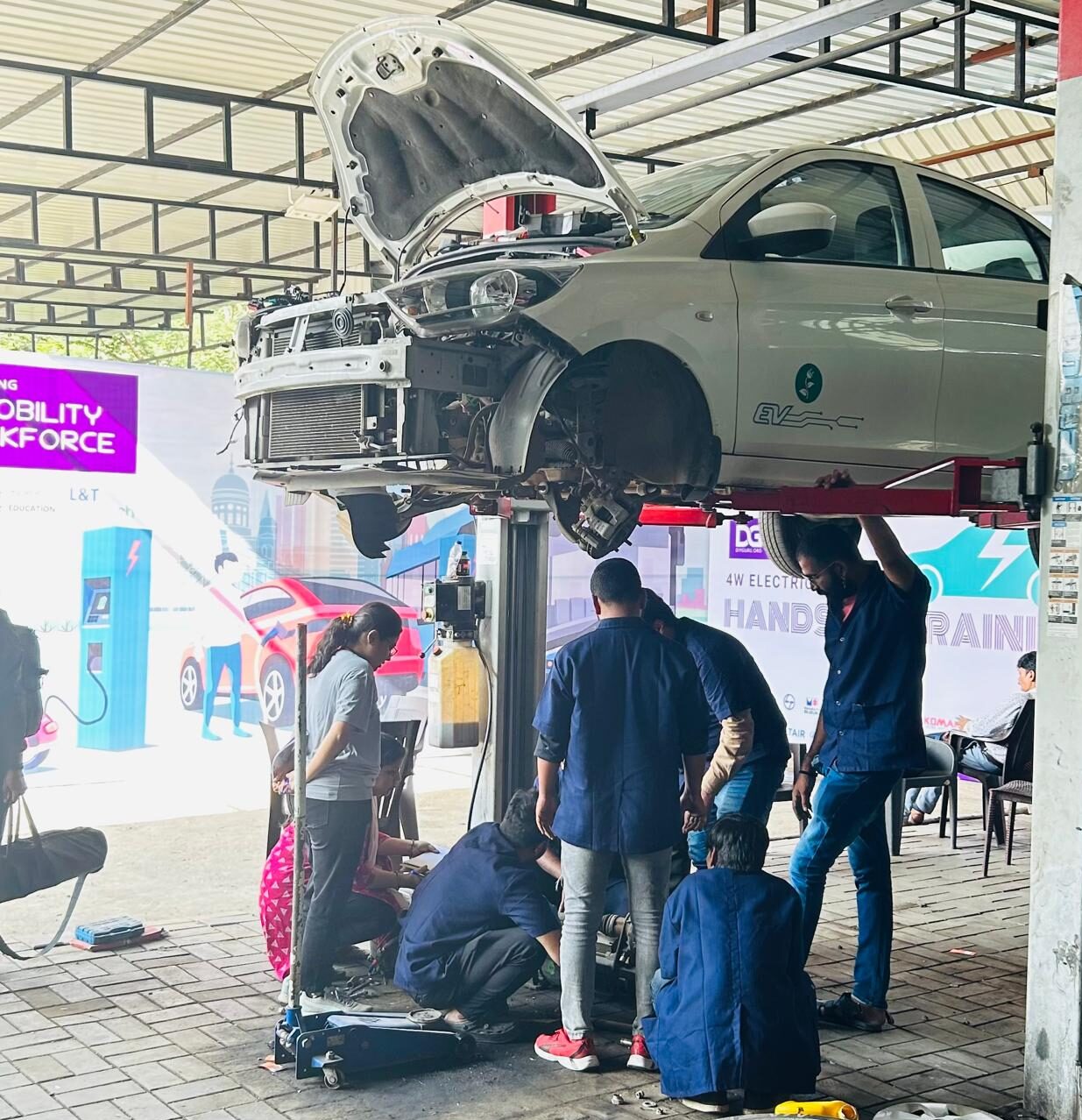
DIYguru trainer working with learners

Every cohort is paired with a dedicated mentor — typically an IIT-trained EV practitioner with 6+ years of industry experience. Weekly 1:1 sessions, async doubt-clearing turnaround within 24 hours, project reviews before submission, and mock interviews tuned to the role you're targeting.

  • Weekly 1:1 mentor calls (30 min, recorded for replay)
  • Async doubt clearing on the cohort forum — <24 hr SLA
  • Pre-submission project reviews + capstone defence prep
  • Mock interviews tuned to your target role + employer
  • Direct mentor intros to alumni at your target company

FAQ

Frequently asked questions

Who is this course for?
Engineering students (B.E./B.Tech, any branch), Diploma + ITI holders, working professionals from ICE auto / power electronics / semiconductor, MBA / business professionals entering EV, international learners, and entrepreneurs. No prior EV experience required.
Will I get hands-on hardware experience?
Yes. A DIY hardware kit ships to your address worldwide — real motors, BMS boards, controllers, and diagnostic tools. Optional physical lab sessions at our Delhi and Pune campuses for India-based learners.
What certification will I receive?
On completion you receive a joint certificate carrying ASDC (Govt of India) and AICTE NEAT recognition. The same credential is accepted by automotive OEMs and Tier-1 suppliers globally.
How is the course delivered?
Live online classes (weekend) + session recordings + optional DIY hardware kit (sold separately) + 1:1 mentor sessions weekly + capstone project with industry-panel defence. English-only delivery; timezone-friendly via async replay.
What career outcomes can I expect?
Average package across alumni cohorts is approximately ₹8.4 LPA in India and $55K–$95K in international markets. Top placements go up to ₹18 LPA / $130K for BMS firmware and propulsion-controls roles.
How does placement support work?
Dedicated placement via emobility.careers — an EV-only job network with 300+ hiring partners across India, Europe, North America and the Middle East. Includes resume reviews, mock interviews, and 1:1 mentor introductions to specific employers.
What if I get stuck?
Weekly 1:1 mentor slots, active community forum with instructors, and async doubt-clearing turnaround within 24 hours. The personalised trainer support portal is included with every cohort — not an upsell.

Talk to a counsellor

Questions about एम्बेडेड सिस्टम सर्टिफ़िकेशन कोर्स: Embedded C, 8051, Arduino और सिमुलेशन?

Leave your details — a counsellor will call you about the syllabus, fees, EMI, certificates and placement support.

Technical Expertise You Will Gain

By the end of this course, you'll design + defend a complete EV system

Hardware competence is the differentiator. Each module pairs theory with a tooling-grounded exercise so your skill claims are demonstrably true at interview time.

Key Job Roles

  • →Battery Engineer
  • →BMS Firmware Developer
  • →Powertrain Engineer
  • →EV Design Engineer
  • →Charging Infrastructure Specialist
  • →Test / Validation Engineer

Skill Sets

  • →Battery pack architecture + thermal management
  • →BMS algorithms (SoC, SoH, cell balancing)
  • →Power electronics + motor-drive control
  • →MATLAB Simulink + Simscape simulation
  • →Embedded firmware development on STM32 / Arduino
  • →EV safety + HV diagnostics

Competitive Hiring Across

  • →Bosch · Tata · Mahindra · Ola · Ather (India)
  • →Mercedes-Benz · Daimler · BMW (Germany)
  • →GM · Tesla suppliers · Cummins (US)
  • →Hydro One · Magna (Canada)
  • →Infineon · STMicroelectronics (Europe)
  • →John Deere · L&T · Maruti Suzuki

Placement Network

Our 95,000+ alumni work at

Engineers from this course currently build at OEMs across India, Europe, North America and the Middle East.


Hiring partner
Hiring partner
Hiring partner
Hiring partner
Hiring partner
Hiring partner
Hiring partner
Hiring partner
Hiring partner
Hiring partner
Hiring partner
Hiring partner
Hiring partner
Hiring partner
Hiring partner
Placement powered by
eMobility.careers

The world's only EV-specific job network. 300+ hiring partners across India, Europe, North America and the Middle East.

Government-Certified · Industry-Endorsed · Learner-Approved

Globally recognised credentials

ASDC (Govt of India)

ASDC (Govt of India)

Automotive Skills Development Council — recognised by major OEMs worldwide.

AICTE NEAT

AICTE NEAT

National Educational Alliance for Technology — issued under AICTE's premium learning ecosystem.

Ministry of Education

Ministry of Education

Recognised by India's Ministry of Education + NSDC skilling framework — accepted globally.

Alumni Stories

What our 95,000+ alumni say

Engineers from Mercedes-Benz, Cummins, Infineon, GM, Hydro One, John Deere and more.

The hardware-first approach made all the difference. Came in from a generalist electronics background; the BMS and motor-drive modules gave me concrete vocabulary I could carry into Infineon interviews.

Souvik Hazra
Souvik Hazra
Senior Manager · Infineon Technologies

Industry-grade depth without the academic ivory tower. The MATLAB Simulink + capstone defence prepared me for exactly the kind of cross-functional EV problems we solve at Cummins.

Sharad Yeola
Sharad Yeola
Application Controls Lead · Cummins Inc.

Started with electronics, walked into a BMS role in Germany. The applied projects + mentor reviews are what carried me through — the certifications opened the door, the depth got me hired.


Jagatjit Barik
Jagatjit Barik
Sr. R&D Engineer (BMS xEV) · Mercedes-Benz

Ready to launch your EV career?

Recorded lessons · government-recognised certificate · DIY kit (sold separately) · weekly 1:1 mentor sessions · 300+ hiring partners.

Accreditations

Programs Recognised by Govt. Bodies & Industries

ASDC
AICTE NEAT
Ministry of Education
SIMOPS Saudi
DSD Malaysia
UK Government
UACH
Tata Technologies
ADYPU
UDYOGA Karnataka
Ola Mobility Institute