emobility.academy
Curriculum reviewed by IIT Faculty · Continue learning

इलेक्ट्रिक व्हीकल के लिए एडवांस्ड पावरट्रेन डेवलपमेंट में सर्टिफ़िकेशन कोर्स

“इलेक्ट्रिक व्हीकल के लिए एडवांस्ड पावरट्रेन” कोर्स एक व्यापक, इंडस्ट्री-उन्मुख प्रोग्राम है, जो शिक्षार्थियों को EV पावरट्रेन आर्किटेक्चर, एनर्जी फ़्लो, मॉडलिंग और सिमुलेशन का गहन ज्ञान देने के लिए बनाया गया है। यह कोर्स मैकेनिकल, इलेक्ट्रिकल और इलेक्ट्रॉनिक सिस्टम के बीच की खाई को पाटता है और आधुनिक इलेक्ट्रिक व्हीकल

21+ hours
88 video lessons
11 modules
beginner
English
Recognised & Certified by
ASDC
AICTE NEAT

Course Curriculum

103 lessons across 11 modules

“इलेक्ट्रिक व्हीकल के लिए एडवांस्ड पावरट्रेन” कोर्स एक व्यापक, इंडस्ट्री-उन्मुख प्रोग्राम है, जो शिक्षार्थियों को EV पावरट्रेन आर्किटेक्चर, एनर्जी फ़्लो, मॉडलिंग और सिमुलेशन का गहन ज्ञान देने के लिए बनाया गया है। यह कोर्

1
Module 1

कोर्स में आपका स्वागत है!

1 lesson
  1. 1

    मुफ़्त लर्निंग मटेरियल पाने के लिए ev.care पर साइन अप करें!

    text

2
Module 2

मॉड्यूल 1: इलेक्ट्रिक व्हीकल पावरट्रेन का परिचय

11 lessons
  1. 1

    विषय 1: Electric Vehicles का परिचय

    17 min· free trial

  2. 2

    विषय 2: भारत में EV नीतियां और सरकारी पहलें

    6 min· free trial

  3. 3

    विषय 3: EV सिस्टम कॉन्फ़िगरेशन और पारंपरिक Powertrain से बदलाव

    9 min

  4. 4

    विषय 4: EV Configurations और Propulsion Systems

    10 min

  5. 5

    विषय 5: EV पावरट्रेन कंपोनेंट्स और DC मोटर की बुनियादी बातें

    11 min

  6. 6

    विषय 6: EVs के लिए BLDC, PMSM और Induction Motors को समझना

    11 min

  7. 7

    विषय 7: EV Motor Control और Circuitry: मोटर्स को कैसे मैनेज किया जाता है

    16 min

  8. 8

    विषय 8: Electric Vehicles के लिए Battery की बुनियादी बातें

    16 min

  9. 9

    विषय 9: EV Battery Pack डिज़ाइन और कंपोनेंट्स

    12 min

  10. 10

    विषय 10: Electric Vehicles में Power Converters

    11 min

  11. 11

    विषय 11: EV Charging को समझना: Ports, Onboard और DC Switching

    7 min

3
Module 3

मॉड्यूल 2: PEV और हाइब्रिड पावरट्रेन आर्किटेक्चर

3 lessons
  1. 1

    विषय 1: Internal Combustion Engine (ICE) Powertrain की बुनियादी बातें

    10 min

  2. 2

    विषय 2: Electrified Powertrain Configurations

    10 min

  3. 3

    विषय 3: HEV Architectures के प्रकार

    17 min

4
Module 4

मॉड्यूल 3: पावरट्रेन स्टैंडर्ड और इंडस्ट्री केस स्टडी

2 lessons
  1. 1

    विषय 1: केस स्टडी: TATA Tiago EV और MG Comet – कंपोनेंट और परफ़ॉर्मेंस की तुलना

    15 min

  2. 2

    विषय 2: केस स्टडी: TATA Nexon EV और MG ZS EV – पैरामीटर-वार वाहन तुलना

    11 min

5
Module 5

मॉड्यूल 4: इलेक्ट्रिक पावरट्रेन के लिए पावर इलेक्ट्रॉनिक्स

6 lessons
  1. 1

    विषय 1: Powertrain Nomenclature और सामान्य पावर रेटिंग्स

    17 min

  2. 2

    विषय 2: Powertrain Thermal Management और Heat Dissipation

    15 min

  3. 3

    विषय 3: Powertrain Filtering और Power Conditioning तकनीकें

    13 min

  4. 4

    विषय 4: Powertrain Systems में Noise Characterization और संबंधित विचार

    4 min

  5. 5

    विषय 6: Electric Powertrains में Voltage Conversion

    3 min

  6. 6

    विषय 7: Voltage Regulator Topologies: Linear और Switching Regulators

    2 min

6
Module 6

मॉड्यूल 5: एमिशन नॉर्म्स, इंजन सेंसर और डायग्नोस्टिक सिस्टम

21 lessons
  1. 1

    विषय 5.1 मॉड्यूल का अवलोकन और सीखने के उद्देश्य

    2 min

  2. 2

    विषय 5.2 एमिशन नॉर्म्स की आवश्यकता

    2 min

  3. 3

    विषय 5.3 नियामक संस्थाएँ और एमिशन मानकों का निर्माण

    7 min

  4. 4

    विषय 5.4 भारत में BS6 मानकों का विकास और क्रियान्वयन

    1 min

  5. 5

    विषय 5.5 वैश्विक और भारतीय एमिशन मानकों का इतिहास

    9 min

  6. 6

    विषय 5.6 गैसोलीन ईंधन केमिस्ट्री और BS4, BS6 व वैश्विक मानकों की तुलना

    12 min

  7. 7

    विषय 5.7 डीज़ल ईंधन केमिस्ट्री और वैश्विक तुलनात्मक एमिशन मानक

    9 min

  8. 8

    विषय 5.8 प्रमुख ऑटोमोटिव प्रदूषक और उनकी अनुमेय सीमाएँ

    20 min

  9. 9

    विषय 5.9 एमिशन कंट्रोल सिस्टम में तकनीकी प्रगति

    1 min

  10. 10

    विषय 5.10 कैटालिटिक कन्वर्टर तकनीकें

    9 min

  11. 11

    विषय 5.11 एमिशन सिस्टम में इंजन सेंसर और एक्चुएटर्स का अवलोकन

    3 min

  12. 12

    विषय 5.12 एयर इनटेक और बूस्ट प्रेशर सेंसर – MAF, MAP, CAC और तापमान सेंसर

    9 min

  13. 13

    विषय 5.13 एग्ज़ॉस्ट तापमान और प्रेशर सेंसिंग मैकेनिज़्म

    4 min

  14. 14

    विषय 5.14 EGR पोज़िशन सेंसर और एक्चुएशन सिस्टम

    8 min

  15. 15

    विषय 5.15 ऑक्सीजन सेंसर – कार्यप्रणाली, कंस्ट्रक्शन और मिक्सचर कंट्रोल

    8 min

  16. 16

    विषय 5.16 NOx सेंसर आर्किटेक्चर और फ़ंक्शनल एनालिसिस

    8 min

  17. 17

    विषय 5.17 BS4 इंजन सेंसर आर्किटेक्चर और इंटीग्रेशन

    10 min

  18. 18

    विषय 5.18 ECUECM और EMS2 सिस्टम

    4 min

  19. 19

    विषय 5.19 वाहन इलेक्ट्रिकल हार्नेस लेआउट – केस स्टडी Hyundai i10

    3 min

  20. 20

    विषय 5.20 ऑन-बोर्ड डायग्नोस्टिक्स (OBD) और फ़ॉल्ट डिटेक्शन प्रोटोकॉल (SAE, ISO आदि)

    16 min

  21. 21

    विषय 5.21 BS6 ट्रांज़िशन पर उपभोक्ता का दृष्टिकोण

    7 min

7
Module 7

मॉड्यूल 6: MATLAB-Simulink से पावरट्रेन मॉडलिंग और सिमुलेशन

6 lessons
  1. 1

    विषय 6.1: EV Modeling भाग I – MATLAB–Simulink में Vehicle Body, Axles और Tire Parameterization

    15 min

  2. 2

    विषय 6.2: EV मॉडलिंग भाग II – ड्राइवट्रेन, मोटर कंट्रोलर (H-Bridge) कॉन्फ़िगरेशन और पैरामीटर सेटअप

    16 min

  3. 3

    विषय 6.3: EV Modeling भाग III – Driver Model, Power Converter और SOC Subsystem

    14 min

  4. 4

    विषय 6.4: Powertrain Modeling भाग I – System-Level Integration और Model Architecture

    1h 15m

  5. 5

    विषय 6.5: Powertrain Modeling भाग II – Battery Modeling और SOC Estimation तकनीकें

    16 min

  6. 6

    विषय 6.6: Powertrain Modeling भाग III – संपूर्ण Powertrain Simulation और Performance Analysis

    12 min

8
Module 8

मॉड्यूल 7: SOLIDWORKS में पावरट्रेन कंपोनेंट की मॉडलिंग और ANSYS से विश्लेषण

22 lessons
  1. 1

    विषय 1: SOLIDWORKS में मोटर शाफ़्ट की 3D मॉडलिंग

    10 min

  2. 2

    विषय 2: मोटर शाफ़्ट का स्ट्रक्चरल एनालिसिस

    10 min

  3. 3

    विषय 3: लेफ़्ट मोटर माउंट की 3D मॉडलिंग

    12 min

  4. 4

    विषय 4: राइट मोटर माउंट की 3D मॉडलिंग

    9 min

  5. 5

    विषय 5: मोटर माउंट असेंबली का स्ट्रक्चरल एनालिसिस

    15 min

  6. 6

    विषय 6: बेयरिंग एडेप्टर की 3D मॉडलिंग - I

    9 min

  7. 7

    विषय 7: बेयरिंग एडेप्टर की 3D मॉडलिंग – भाग II

    9 min

  8. 8

    विषय 8: बेयरिंग एडेप्टर का स्ट्रक्चरल एनालिसिस – भाग III

    10 min

  9. 9

    विषय 9: ड्रिवन स्प्रॉकेट का डिज़ाइन ऑप्टिमाइज़ेशन

    25 min

  10. 10

    विषय 10: ड्राइविंग स्प्रॉकेट का स्ट्रक्चरल एनालिसिस

    9 min

  11. 11

    विषय 11: ड्रिवन स्प्रॉकेट का स्ट्रक्चरल एनालिसिस

    10 min

  12. 12

    विषय 12: लेफ़्ट एक्सेंट्रिक माउंट की 3D मॉडलिंग

    12 min

  13. 13

    विषय 13: लेफ़्ट एक्सेंट्रिक माउंट का स्ट्रक्चरल एनालिसिस

    7 min

  14. 14

    विषय 14: राइट एक्सेंट्रिक माउंट की 3D मॉडलिंग

    10 min

  15. 15

    विषय 15: राइट एक्सेंट्रिक माउंट का स्ट्रक्चरल एनालिसिस

    8 min

  16. 16

    विषय 16: ट्राइपॉड हाउसिंग की 3D मॉडलिंग

    13 min

  17. 17

    विषय 17: ट्राइपॉड हाउसिंग का स्ट्रक्चरल एनालिसिस

    28 min

  18. 18

    विषय 18: एक्सल शाफ़्ट की 3D मॉडलिंग

    11 min

  19. 19

    विषय 19: एक्सल शाफ़्ट का स्ट्रक्चरल एनालिसिस

    14 min

  20. 20

    विषय 20: डिफ़रेंशियल माउंट की 3D मॉडलिंग

    24 min

  21. 21

    विषय 21: डिफ़रेंशियल माउंट का स्ट्रक्चरल एनालिसिस

    8 min

  22. 22

    विषय 22: डिफ़रेंशियल सिस्टम की 3D मॉडलिंग और असेंबली

    17 min

9
Module 9

मॉड्यूल 7: बैटरी मैनेजमेंट सिस्टम (BMS)

9 lessons
  1. 1

    विषय 1: बैटरी मैनेजमेंट सिस्टम (BMS) का परिचय

    10 min

  2. 2

    विषय 2: BMS का ब्लॉक डायग्राम – कंपोनेंट्स और कार्य

    10 min

  3. 3

    विषय 3: BMS डेटा एक्विज़िशन – वोल्टेज, तापमान और करंट मापन

    4 min

  4. 4

    विषय 4: बैटरी मॉनिटरिंग यूनिट (BMU) – आर्किटेक्चर और प्रमुख कंपोनेंट्स

    6 min

  5. 5

    विषय 8.5: बैटरी कंट्रोल यूनिट (BCU) – कार्य, इनपुट और प्रोटेक्शन मैकेनिज़्म

    9 min

  6. 6

    विषय 6: MATLAB Simulink से सेल मॉडलिंग और सिमुलेशन

    49 min

  7. 7

    विषय 7: MATLAB Simulink से BMS मॉडलिंग, सिमुलेशन और एनालिसिस

    38 min

  8. 8

    विषय 8: पावरट्रेन मॉडलिंग और सिमुलेशन – BMS इंटीग्रेशन का दृष्टिकोण

    1h 15m

  9. 9

    विषय 9: BMS इंटीग्रेशन के साथ संपूर्ण इलेक्ट्रिक व्हीकल मॉडलिंग और सिमुलेशन

    45 min

10
Module 10

मॉड्यूल 8: बैटरी थर्मल मैनेजमेंट सिस्टम (BTMS)

20 lessons
  1. 1

    विषय 1: थर्मल मैनेजमेंट का परिचय

    text

  2. 2

    विषय 2: कूलिंग सिस्टम के कंपोनेंट्स

    text

  3. 3

    विषय 3: कूलिंग सिस्टम का रखरखाव और मरम्मत

    text

  4. 4

    विषय 3: हीट लोड को समझना

    text

  5. 5

    विषय 4: मोटर हीट लोड सिमुलेशन

    16 min

  6. 6

    विषय 5: कंट्रोलर हीट लोड सिमुलेशन

    6 min

  7. 7

    विषय 6: रेडिएटर स्पेसिफ़िकेशन

    text

  8. 8

    विषय 7: रेडिएटर की गणनाएँ

    text

  9. 9

    विषय 8: डिज़ाइन फ़्लो

    text

  10. 10

    विषय 9: कूलिंग सिस्टम में त्रुटियाँ और विफलताएँ

    text

  11. 11

    विषय 10: ट्विन रेडिएटर्स

    text

  12. 12

    विषय 9: टेस्टिंग

    text

  13. 13

    विषय 10: केस स्टडी

    text

  14. 14

    विषय 11: कूलिंग सिस्टम का महत्व

    text

  15. 15

    विषय 12: बसबार मॉडलिंग

    7 min

  16. 16

    विषय 13: बसबार सिमुलेशन

    11 min

  17. 17

    विषय 14: सेलटैब्स मॉडलिंग

    20 min

  18. 18

    विषय 15: सेलटैब्स सिमुलेशन

    6 min

  19. 19

    विषय 16: बैटरी पैक मॉडलिंग

    34 min

  20. 20

    विषय 17: बैटरी पैक सिमुलेशन (Battery Pack Simulation)

    12 min

11
Module 11

DIY प्रोजेक्ट:

2 lessons
  1. 1

    प्रोजेक्ट 1: परफ़ॉर्मेंस और एफ़िशिएंसी के लिए इलेक्ट्रिक व्हीकल पावरट्रेन का विकास और ऑप्टिमाइज़ेशन

    assignment

  2. 2

    कोर्स सफलतापूर्वक पूरा करने पर बधाई!

    text

Earn a certificate

Add this credential to your resume — and watch employers ask about it

Every completing learner receives a joint certificate carrying ASDC (Government of India) and AICTE NEAT recognition. The certificate carries a public verification code recruiters can validate in seconds via emobility.careers.
  • Issued when you complete the lessons and required quizzes and assignments
  • Digitally signed, with a public verification link and QR code
  • Anyone — an employer or a college — can check it in seconds
  • Shows the course title and the skills it covers
Sample emobility.academy certificate

System Requirements

Hardware & software you'll need

What to have ready before you start this course.

Hardware

  • Windows laptop or desktop with 16 GB RAM recommended (8 GB minimum); ANSYS and SolidWorks assemblies are memory-heavy
  • Quad-core or better processor and a dedicated graphics card (or a capable integrated GPU) for smooth 3D CAD work
  • About 60 GB free disk space for MATLAB, SolidWorks and ANSYS
  • Three-button mouse for CAD modelling; stable internet for streaming lessons

Software

  • MATLAB and Simulink (student/trial licence)
  • SOLIDWORKS (student/trial licence) for 3D modelling of powertrain components
  • ANSYS (free student version or trial licence) for structural and thermal simulation

Associated Skills

What you'll be able to put on your résumé

EV and HEV architecturesPowertrain power electronicsVehicle modelling in SimulinkSOC estimationSolidWorks 3D modellingANSYS structural analysisDifferential assembly designBMS modellingBattery thermal managementRadiator sizingBusbar and cell-tab simulationEmission norms and OBD

DIY Projects Included

Hardware-grounded projects in your portfolio

Work you build while learning — submitted in the course and reviewed by a trainer, and yours to show afterwards.

🚗
Project 01

Battery-to-wheel powertrain simulation

Build an EV model in MATLAB–Simulink with vehicle body, tyres, drivetrain, H-bridge motor controller, driver model and SOC subsystem, then compare range and performance for two battery sizes.

🔩
Project 02

Motor mount and axle shaft FEA

Model a motor mount and an axle shaft in SolidWorks, run structural analysis in ANSYS under drive torque, and revise the geometry where stresses are high.

🌡️
Project 03

Controller and motor heat-load study

Use the BTMS method from the course to estimate motor and controller heat loads, size a radiator, and simulate busbar or cell-tab heating in the battery pack.

Course Benefits

What you'll get out of it

Two audiences. Two angles. Pick the one that maps to where you are today.

For Working Professionals

  • Mechanical and electrical in one place
    Connect drivetrain CAD/FEA, power electronics, BMS and thermal design to how the whole powertrain performs.
  • A path from ICE to EV
    BS6 emission systems, engine sensors and OBD lessons give ICE engineers familiar reference points while they learn electrified powertrains.
  • Thermal design you can quantify
    Estimate motor and controller heat loads, size radiators, and see how busbars and cell tabs heat up.
  • Benchmark with real vehicles
    Parameter-wise case studies of Indian EVs show how component choices affect performance.

For Students & Freshers

  • Multi-tool portfolio
    You leave with MATLAB–Simulink models, SolidWorks parts and ANSYS results from one powertrain theme.
  • Covers the whole powertrain
    Motors, battery packs, converters, charging, BMS and BTMS are all covered, not just one subsystem.
  • Ready-made project direction
    The final project on powertrain development and optimisation can grow into a final-year or competition-team project.

What this course includes

Everything you get when you enrol

  • 8 Modules
  • 97 Topics
  • 21 Hours of Video Content
  • 1 Project Assignment
  • Certificate of Completion

Who can take this course?

If any of these sound like you — you'll thrive here

  • Mechanical and automobile engineering students who want to combine CAD/FEA work with EV powertrain simulation
  • Electrical and EEE students who want to understand drivetrain hardware, thermal management and emission-side context alongside motors and batteries
  • ICE powertrain, service or diagnostics engineers moving to EV and hybrid platforms
  • Design engineers who model brackets, mounts or shafts and want to apply that to motor and differential components
  • Learners planning EV conversion or prototype projects who need a complete battery-to-wheel picture
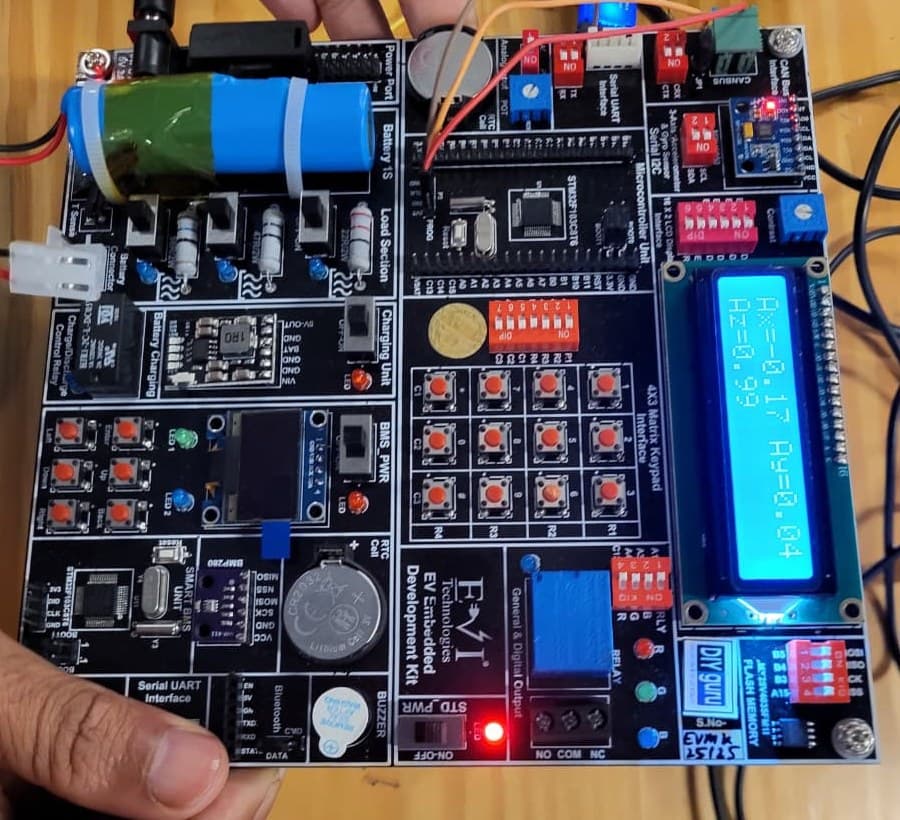
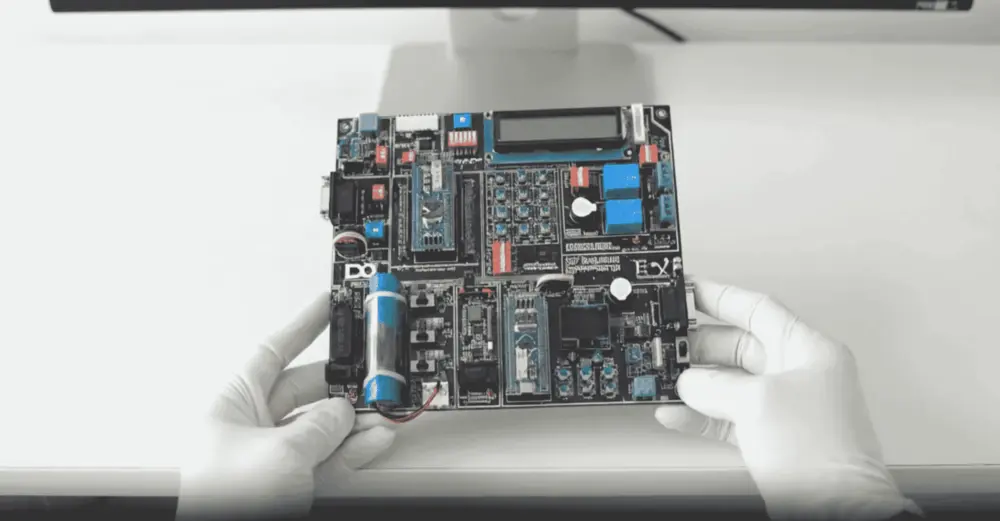
EV Embedded Development Kit board

Practise on real hardware

EV Embedded Development Kit

  • STM32 controller and Smart BMS unit
  • CAN, UART, I2C, SPI and Bluetooth
  • Sensors, LCD, OLED and motor control
  • 15+ guided experiments at home

₹10,000 + GST

See what's in the kit

Trainer Support

Stuck on a concept? Ask a trainer.

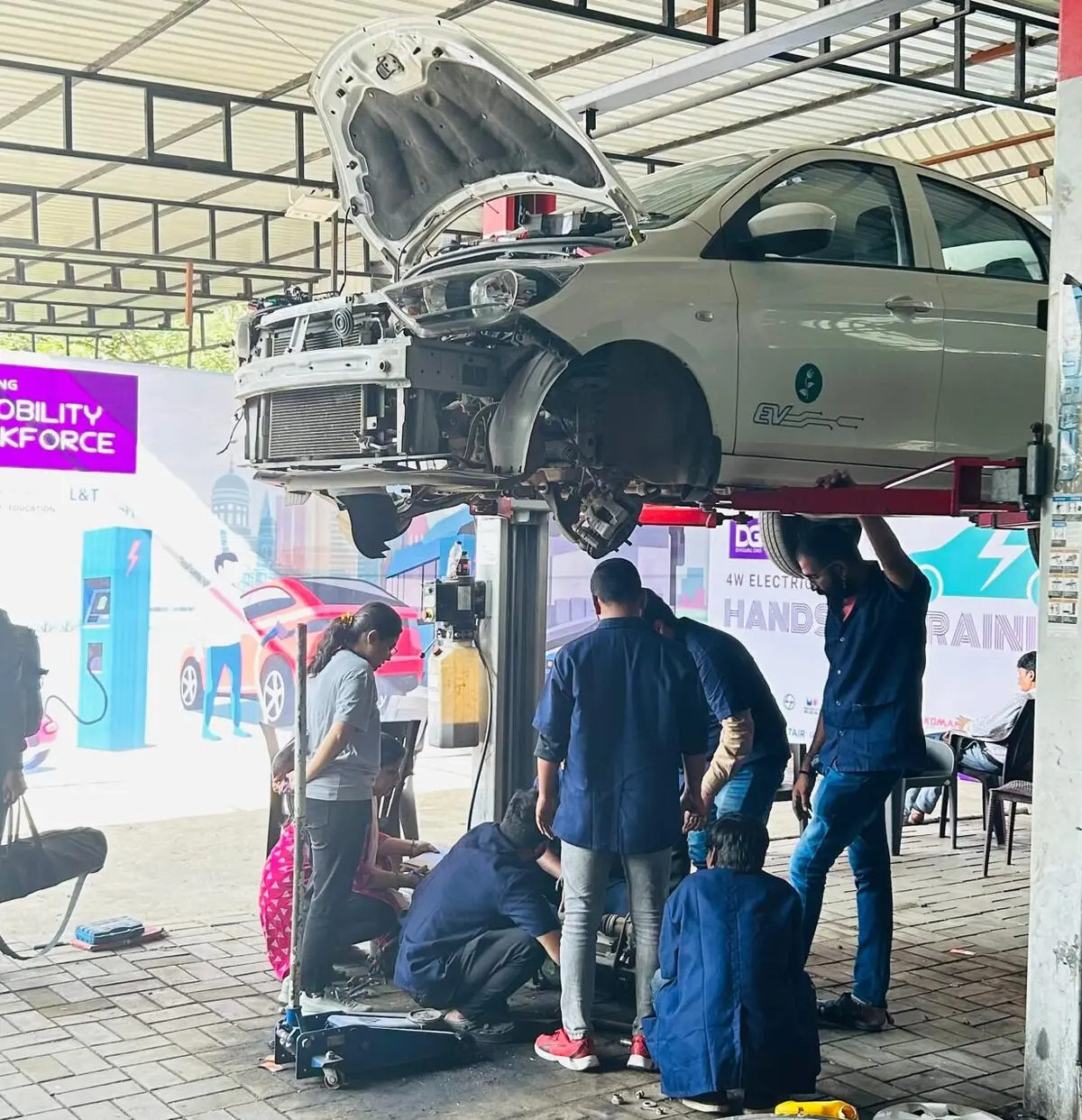
DIYguru trainer working with learners

Use the course Q&A on the portal for doubts across the course, whether a Simulink SOC subsystem, a SolidWorks part, ANSYS boundary conditions or a radiator calculation. Trainers answer there, and live doubt-clearing sessions are held when scheduled.

  • Ask questions in the course Q&A, right next to the lesson
  • Trainers answer on the portal — you're notified when they reply
  • Assignments and projects you submit are reviewed by a trainer
  • Live doubt-clearing sessions when they're scheduled for the course

Bharat eMobility Recruitathon

Meet the EV industry in person

The Bharat eMobility Recruitathon brings our learners face to face with companies hiring across the EV industry. Watch the Delhi and Pune chapters.

Delhi chapterRecruitathon
Pune chapterRecruitathon

FAQ

Frequently asked questions

Is this course electrical or mechanical?
It is both. It covers architectures, power electronics, BMS and MATLAB–Simulink modelling, as well as SolidWorks modelling and ANSYS structural analysis of motor shafts, mounts, sprockets, axles and the differential, plus battery thermal management.
Why does an EV powertrain course include emission norms and engine sensors?
Hybrid powertrains still have an engine, and many learners come from ICE backgrounds. That module covers BS4/BS6 norms, emission control, engine sensors, ECU/EMS and OBD so you can understand the conventional side of an HEV and the shift away from it.
What software do I need?
MATLAB and Simulink, SOLIDWORKS and ANSYS. MATLAB and SOLIDWORKS need a student or trial licence; ANSYS offers a free student version. A Windows machine is needed for SOLIDWORKS.
Do I need prior CAD or MATLAB experience?
The course is listed at beginner level, and the lessons build each model step by step. Some basic familiarity with any CAD tool and with MATLAB will help you move faster through Modules 6 and 7.
How does the project work, and is it part of a programme?
The final DIY project on developing and optimising an EV powertrain is submitted from the lesson in the course player and reviewed by trainers. The course is also a building block of the Advanced Nanodegree in EV Design, Simulation & Analysis (EE), the Professional Certification Programme in Battery Technology & Powertrain, and the PG Certificate Programme in EV & Embedded Systems.
Will I get a certificate?
On completing all lessons and the required quizzes/assignments, you receive a digitally signed certificate that anyone can verify through its public verification link or QR code.
How is the course delivered?
As recorded video lessons on the portal that you watch at your own pace, with quizzes, assignments and a project where the course includes them. Your progress is saved lesson by lesson.
What if I get stuck?
Ask in the course's Q&A on the portal — a trainer answers there. Live doubt-clearing sessions are added when they are scheduled for the course.
What certificate will I get?
A digitally signed certificate of completion once you finish the lessons and the required quizzes and assignments. Each certificate has a public verification link and QR code anyone can check.

Talk to a counsellor

Questions about इलेक्ट्रिक व्हीकल के लिए एडवांस्ड पावरट्रेन डेवलपमेंट में सर्टिफ़िकेशन कोर्स?

Leave your details — a counsellor will call you about the syllabus, fees, EMI and certificates.

Technical Expertise You Will Gain

Where इलेक्ट्रिक व्हीकल के लिए एडवांस्ड पावरट्रेन डेवलपमेंट में सर्टिफ़िकेशन कोर्स can take you

The roles these skills are used in, what you'll be able to do, and the parts of the industry that need it.

Key Job Roles

  • →EV Powertrain Engineer – Graduate
  • →Powertrain Simulation Engineer
  • →CAE / FEA Engineer – Powertrain Components
  • →Battery Thermal Management Engineer – Trainee
  • →Hybrid and EV Systems Engineer – Entry Level

Skill Sets

  • →Compare BEV, HEV and ICE powertrain architectures and their components
  • →Build and run complete EV and powertrain models in MATLAB–Simulink, including battery and SOC estimation
  • →Create 3D models of shafts, mounts, sprockets, axles and differential parts in SolidWorks and check them in ANSYS
  • →Model BMS functions and integrate them into a full-vehicle simulation
  • →Estimate heat loads and design cooling, radiator and pack-level thermal solutions

Where These Skills Are Used

  • →Electric two-, three- and four-wheeler manufacturing
  • →Hybrid and electrified powertrain development
  • →Drivetrain and component manufacturing
  • →Battery pack and thermal-system suppliers
  • →CAE and engineering design services
  • →Retrofit and EV conversion

Government-Certified · Industry-Endorsed · Learner-Approved

Globally recognised credentials

ASDC (Govt of India)

ASDC (Govt of India)

Automotive Skills Development Council — recognised by major OEMs worldwide.

AICTE NEAT

AICTE NEAT

National Educational Alliance for Technology — issued under AICTE's premium learning ecosystem.

Learner Stories

What our learners say

The hardware-first approach made all the difference. Came in from a generalist electronics background; the BMS and motor-drive modules gave me concrete vocabulary I could carry into Infineon interviews.

Souvik Hazra
Souvik Hazra
Senior Manager · Infineon Technologies

Industry-grade depth without the academic ivory tower. The MATLAB Simulink + capstone defence prepared me for exactly the kind of cross-functional EV problems we solve at Cummins.

Sharad Yeola
Sharad Yeola
Application Controls Lead · Cummins Inc.

Started with electronics, walked into a BMS role in Germany. The applied projects + mentor reviews are what carried me through — the certifications opened the door, the depth got me hired.

Jagatjit Barik
Jagatjit Barik
Sr. R&D Engineer (BMS xEV) · Mercedes-Benz

Ready to start इलेक्ट्रिक व्हीकल के लिए एडवांस्ड पावरट्रेन डेवलपमेंट में सर्टिफ़िकेशन कोर्स?

Recorded lessons at your own pace · trainer doubt support · verifiable certificate on completion.


Accreditations

Programs Recognised by Govt. Bodies & Industries

ASDC
AICTE NEAT
SIMOPS Saudi
DSD Malaysia
UK Government
UACH
Tata Technologies
ADYPU
UDYOGA Karnataka
Ola Mobility Institute