🎛️
Project 01
PID speed controller for an EV motor model
Start from a DC or simplified motor transfer function, design a PID controller in MATLAB to meet overshoot and settling-time targets, and check its gain and phase margins.
Advanced control system design for electric vehicles in MATLAB & Simulink: compensators, regulator and discrete control, and practical system modelling. Module 1 is available now; the remaining modules are being released over the next 2–3 weeks.


Course Curriculum
This " Advanced Control Systems for EV: MATLAB for Design & Implementation " course offers an in-depth exploration of electric vehicle (EV) design and simulation, emphasizing control systems and regulator design using MA
Sign up at ev.care to access Free Learning Materials & QnA Support
text
Topic 1: Utilization of Different Control Structures with MATLAB
video· free trial
Topic 2: Stability Analysis of Linear Control System (BIBO, Routh-Hurwitz, Root locus, Nyquist)
video· free trial
Topic 3: System Representation for SISO/MIMO LTI models with a Use-Case of “Inverted Pendulum on a Cart”
video
Topic 4: Design a SISO System with a Use Case of “The DC motor”
video
Topic 5: Design a MIMO Model of Jet Transport Aircraft
video
Topic 6: Arrays of Linear Models, Their Characteristics, and Feedback Interconnection
video
Topic 7: Controllability, Observability, and System Properties with a Use Case of a Geostationary Satellite
video
Topic 8: State-Space Representation of Continuous Systems
video
Topic 9: Use of LTI viewer for analyzing Models, Simulink LTI Viewer
video
Topic 10: Application of SISO Designing Tool
video
Topic 11: Bode Diagram Design for Specific Application
video
Topic 12: Root Locus Design with Specific Application Example
video
Topic 13: Nichols Plot Design with Specific Example
video
Topic 1: Use of different functions for Compensator Design by using MATLAB
video
Topic 2: Design of LQG-Controller by using MATLAB
video
Topic 3: Use of Phase Margin, Gain Margin, Modulus Margin, Delay Margin using MATLAB
video
Topic 4: Understanding Robust Stability and Internal Stability by using MATLAB
video
Topic 5: Youla Parameterization by using MATLAB
video
Topic 1: P, PI, PD, PID Regulator Design by using MATLAB
video
Topic 2: PID Regulator Design for a Dead-Time System and considering Phase Shift using PADE Approximation
video
Topic 3: General Polynomial Method for Regulator Design using MATLAB
video
Topic 4: Analysis of Sampled Data System using MATLAB
video
Topic 5: Design of discrete PID Regulators using MATLAB
video
Topic 1: DC Motor Speed and Position Control System Modelling by using MATLAB
video
Topic 2: Inverted Pendulum System Modelling by using MATLAB
video
Topic 3: Design of Buck Converter in Closed Loop using System-Identification Toolbox
video
Topic 4: Design of Boost Converter in Closed Loop using System-Identification Toolbox
video
Topic 5: Ball & Beam System Modelling and Analysis using MATLAB
video
Project 1: Design and Simulation of an Electric Powertrain Control System Using MATLAB & SIMULINK
assignment
Congratulations on Successfully Completing the Course!
text
Earn a certificate
Every completing learner receives a joint certificate carrying ASDC (Government of India) and AICTE NEAT recognition. The certificate carries a public verification code recruiters can validate in seconds via emobility.careers.
System Requirements
What to have ready before you start this course.
Associated Skills
DIY Projects Included
Work you build while learning — submitted in the course and reviewed by a trainer, and yours to show afterwards.
Start from a DC or simplified motor transfer function, design a PID controller in MATLAB to meet overshoot and settling-time targets, and check its gain and phase margins.
Design a lead–lag compensator for the same plant and compare its step response, disturbance rejection and robustness with the PID design.
Discretise your controller at a chosen sample time and simulate it in a Simulink loop to see how sampling affects performance before it goes to a microcontroller.
Course Benefits
Two audiences. Two angles. Pick the one that maps to where you are today.
What this course includes
Who can take this course?
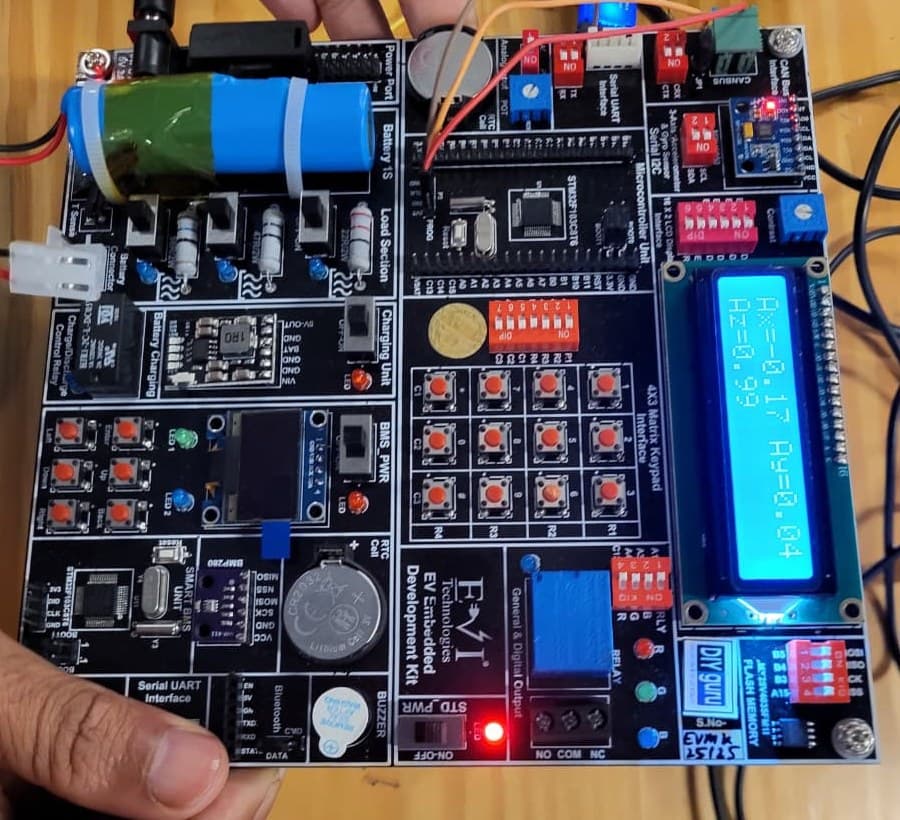
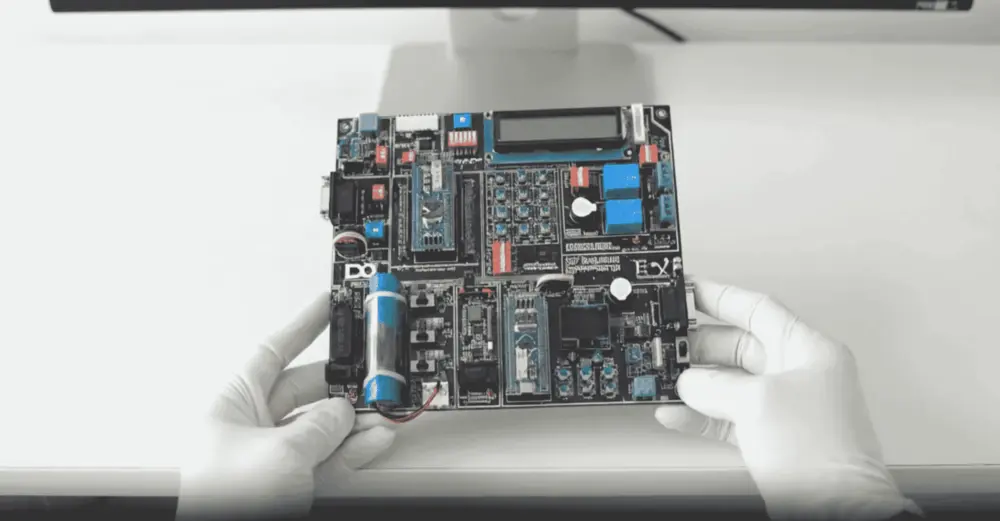
Practise on real hardware
₹10,000 + GST
See what's in the kitTrainer Support
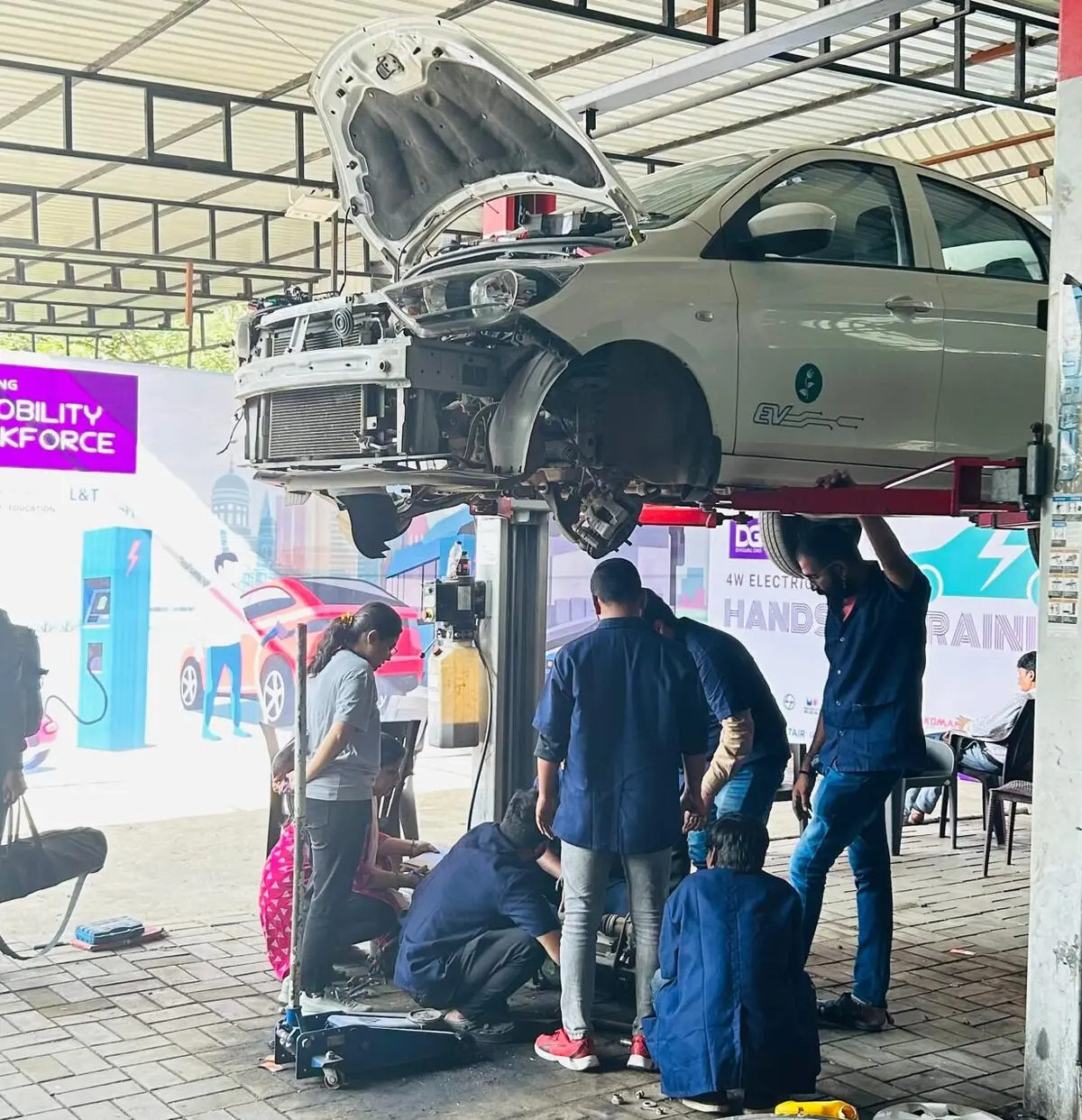
Post design doubts in the course Q&A on the portal, for example a controller that meets overshoot but fails a margin check, or a discretised loop that behaves differently from the continuous one. Trainers answer there, and live doubt-clearing sessions are held when scheduled.
Bharat eMobility Recruitathon
The Bharat eMobility Recruitathon brings our learners face to face with companies hiring across the EV industry. Watch the Delhi and Pune chapters.
FAQ
Talk to a counsellor
Leave your details — a counsellor will call you about the syllabus, fees, EMI and certificates.
Technical Expertise You Will Gain
The roles these skills are used in, what you'll be able to do, and the parts of the industry that need it.
Government-Certified · Industry-Endorsed · Learner-Approved
Automotive Skills Development Council — recognised by major OEMs worldwide.
National Educational Alliance for Technology — issued under AICTE's premium learning ecosystem.
Learner Stories
The hardware-first approach made all the difference. Came in from a generalist electronics background; the BMS and motor-drive modules gave me concrete vocabulary I could carry into Infineon interviews.

Industry-grade depth without the academic ivory tower. The MATLAB Simulink + capstone defence prepared me for exactly the kind of cross-functional EV problems we solve at Cummins.

Started with electronics, walked into a BMS role in Germany. The applied projects + mentor reviews are what carried me through — the certifications opened the door, the depth got me hired.

Recorded lessons at your own pace · trainer doubt support · verifiable certificate on completion.