emobility.academy
β˜… 4.8 rated by 1,500+ verified learners Β· curriculum reviewed by IIT Faculty Β· Continue learning
πŸ›οΈ IIT-Faculty Reviewedβœ… ASDC Β· AICTE NEAT Β· NSDC🌍 Available worldwide
β˜…β˜…β˜…β˜…β˜…4.8 / 5 β€” 1,500+ verified reviews

Electric Vehicle Fundamentals Certification Program

A ground-up course on the electrical and electronics basics an EV technician needs. It starts with atoms, conductors, AC and DC, voltage, current, resistance, Ohm's law, power and energy, series and parallel circuits, short circuits and phase-neutral-earth wiring, then covers resistors, capacitors, inductors and diodes
43 video lessons
4 modules
beginner
English
Recognised & Certified by
ASDC
AICTE NEAT
Ministry of Education

Course Curriculum

44 lessons across 4 modules

A ground-up course on the electrical and electronics basics an EV technician needs. It starts with atoms, conductors, AC and DC, voltage, current, resistance, Ohm's law, power and energy, series and parallel circuits, sh

1
Module 1

Module 1: Fundamentals of Electricity & Basic Circuits

17 lessons
  1. 1

    Topic 1: Overview and the origin of Atom

    10 minΒ· free trial

  2. 2

    Topic 2 : Understanding of Conductor and Insulator

    4 minΒ· free trial

  3. 3

    Topic 3 : Diffence Between Electrical vs Electronics

    5 min

  4. 4

    Topic 4 : Sources of Electricity – Battery, Generator, Solar Panel & Power Plant

    10 min

  5. 5

    Topic 5 : Alternating Current (AC) and Direct Current (DC)

    20 min

  6. 6

    Topic 6 : Understanding Voltage and Current Core Concepts of Electricity

    10 min

  7. 7

    Topic 7 : Understanding Electrical Resistance

    6 min

  8. 8

    Topic 8 : How Voltage Current and Resistance Work Together

    3 min

  9. 9

    Topic 9 : Ohm's Law Explanation

    15 min

  10. 10

    Topic 10: Power in Electrical Systems

    8 min

  11. 11

    Topic 11: Energy in Electrical Systems

    13 min

  12. 12

    Topic 12: Energy vs Power in Electric Vehicles

    6 min

  13. 13

    Topic 13: Introduction to Electric Circuits

    9 min

  14. 14

    Topic 14: Series Circuit and It's Real Life Applications

    13 min

  15. 15

    Topic 15: Parallel Circuit And It's Real Life Applications

    11 min

  16. 16

    Topic 16: Understanding Short Circuits

    7 min

  17. 17

    Topic 17: Electrical Wires - Phase, Neutral and Earthing

    13 min

2
Module 2

Module 2: Fundamentals of Electronics

12 lessons
  1. 1

    Topic 2.01: Basics of Registers

    9 min

  2. 2

    Topic 2.02: Ohm’s Law (V = IR) Explained with Water Pipe Analogy

    4 min

  3. 3

    Topic 3:Types of Resistors

    17 min

  4. 4

    Topic 4: How to read Resistors

    9 min

  5. 5

    Topic 5: Capacitor Fundamentals for Electronics & Power Electronics.mp4

    20 min

  6. 6

    Topic 6: How to Read Capacitor Markings and Specifications

    7 min

  7. 7

    Topic 7: Understanding Inductors and Their Working Principle.mp4

    12 min

  8. 8

    Topic 8: Major Types of Inductors and Their Applications.mp4

    15 min

  9. 9

    Topic 9: Understanding Diodes and Their Working Principle.mp4

    14 min

  10. 10

    Topic 10: Forward and Reverse Biasing of Diodes

    10 min

  11. 11

    Topic 11 Different Types of Diodes and Their Applications

    7 min

  12. 12

    Topic 12: Diode Applications in Electric Vehicles

    8 min

3
Module 3

Module 3: Power Converters in EVs

14 lessons
  1. 1

    Topic 3.01: Introduction to Power Electronics in Electric Vehicles

    6 min

  2. 2

    Topic 3.02: Understanding the Four Types of Power Conversion in Electric Vehicles

    11 min

  3. 3

    Topic 3.03: Applications of AC-to-DC Converters in Electric Vehicles

    17 min

  4. 4

    Topic 3.04: Rectifier Circuit, It's Working Principle and Types of Rectifiers

    16 min

  5. 5

    Topic 3.05: Half Wave Rectifier Working Principle, Circuit Diagram and Practical Demonstration

    16 min

  6. 6

    Topic 3.06: Center Tap Full Wave Rectifier with Working Principle, Circuit Diagram

    25 min

  7. 7

    Topic 3.07: Full Wave Bridge Rectifier, Working Principle and Circuit Diagram

    24 min

  8. 8

    Topic 3.08: Capacitor Filter and Smoothing of DC Output in Rectifier Circuits

    16 min

  9. 9

    Topic 3.09: Inverter Circuit Working Principle and DC to Three Phase AC Conversion in EVs

    11 min

  10. 10

    Topic 3.10: Electric Vehicle DC to AC Conversion Working Principle

    14 min

  11. 11

    Topic 3.11: Electric Vehicle DC DC Converter Working Principle and Types

    14 min

  12. 12

    Topic 3.12: Buck Converter Circuit Diagram and Working in EVs

    10 min

  13. 13

    Topic 3.13: Boost Converter Working Principle and DC to DC Step Up Conversion

    7 min

  14. 14

    Topic 3.14: Electric Vehicle Power Conversion System and Its Main Components

    5 min

4
Module 4

DIYguru Project

1 lesson
  1. 1

    DIYguru Porject

    assignment

Earn a certificate

Add this credential to your resume β€” and watch employers ask about it

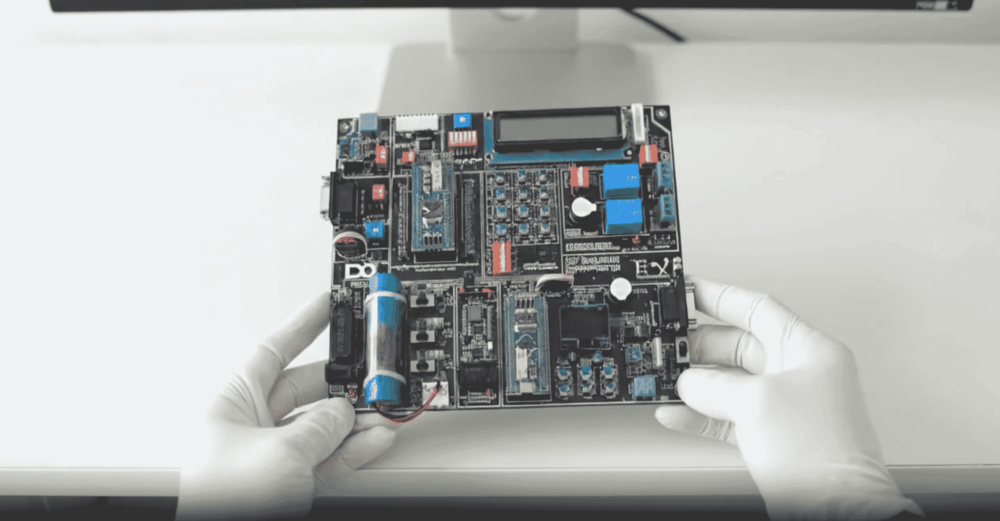
Every completing learner receives a joint certificate carrying ASDC (Government of India) and AICTE NEAT recognition. The certificate carries a public verification code recruiters can validate in seconds via emobility.careers.
  • Issued when you complete the lessons and required quizzes and assignments
  • Digitally signed, with a public verification link and QR code
  • Anyone β€” an employer or a college β€” can check it in seconds
  • Shows the course title and the skills it covers
Sample emobility.academy certificate

System Requirements

Hardware & software you'll need

What to have ready before you start this course.

Hardware

  • Smartphone, tablet or laptop with internet access to watch lessons
  • Optional: a basic digital multimeter and a few resistors, LEDs and a battery for practice

Software

  • Modern web browser to access the course player

Associated Skills

What you'll be able to put on your rΓ©sumΓ©

Voltage, current, resistanceOhm's lawPower and energySeries and parallel circuitsShort circuitsPhase, neutral, earthingReading resistorsCapacitors and inductorsDiode biasingRectifiersInvertersBuck and boost converters

DIY Projects Included

Hardware-grounded projects in your portfolio

Work you build while learning β€” submitted in the course and reviewed by a trainer, and yours to show afterwards.

πŸ’‘
Project 01

Series vs parallel bulbs

With a few low-voltage bulbs, a battery and a multimeter (or on paper), build series and parallel circuits and record how voltage and current change in each.

🎨
Project 02

Component identification drill

Collect a handful of resistors, capacitors and diodes from an old circuit board, read their colour codes and markings, and record their values and ratings.

πŸ”
Project 03

Map an EV's power conversions

Draw an EV block diagram showing where AC-DC rectification, DC-AC inversion and buck and boost DC-DC conversion happen, using the Module 3 lessons.

Course Benefits

What you'll get out of it

Two audiences. Two angles. Pick the one that maps to where you are today.

For Working Professionals

  • Electrical basics for mechanics
    Fill the electrical gap that petrol and diesel mechanics often have before working on EVs.
  • Safer work habits
    Understanding short circuits and phase-neutral-earth wiring is essential for working safely.
  • Read components with confidence
    Learn to identify and read resistors, capacitors, inductors and diodes.
  • Know the converters
    Understand what rectifiers, inverters and DC-DC converters do inside an EV.

For Students & Freshers

  • Starts from the very beginning
    Begins with the atom and builds up step by step, so no prior background is needed.
  • Everyday examples
    Series and parallel circuits are explained with real-life applications and analogies like the water pipe for Ohm's law.
  • Foundation for CEVT
    Prepares you for the later EV technician modules on batteries, motors and diagnostics.
  • Practical demonstrations
    Includes a practical demonstration of a half-wave rectifier.

Who can take this course?

If any of these sound like you β€” you'll thrive here

  • ITI and diploma students starting a career as EV technicians
  • Two-wheeler and car mechanics from the petrol and diesel side who have little electrical background
  • Class 12 pass-outs who want to understand electricity and electronics before working on EVs
  • Electricians who want to learn how rectifiers, inverters and DC-DC converters are used in EVs
  • CEVT programme learners beginning their technician training

Trainer Support

Stuck on a concept? Ask a trainer.

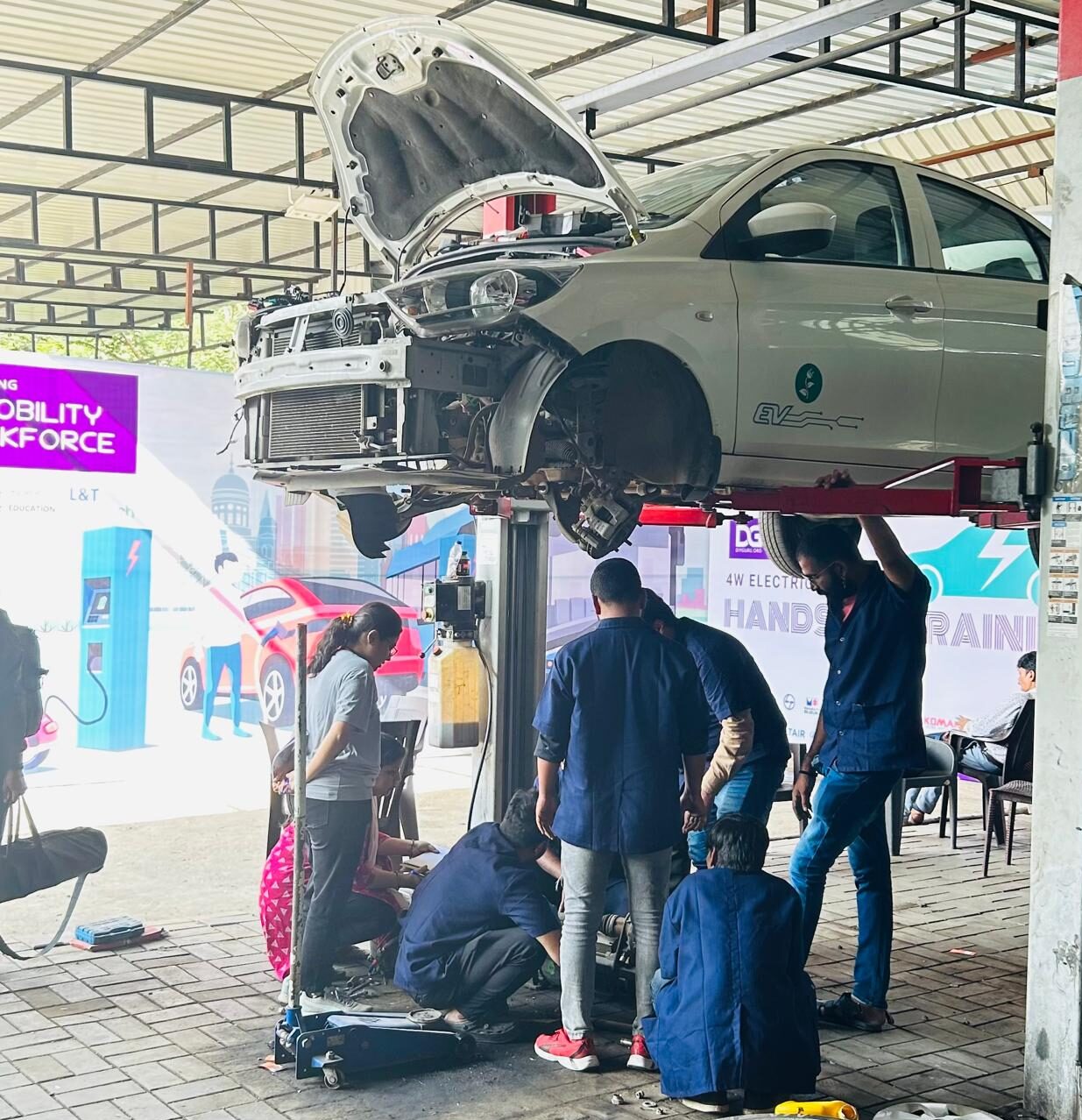
DIYguru trainer working with learners

Ask any doubt, from Ohm's law to rectifier circuits, in the course Q&A on the portal and a trainer will answer there. As part of the CEVT programme you can also bring questions to live doubt-clearing sessions when scheduled.

  • Ask questions in the course Q&A, right next to the lesson
  • Trainers answer on the portal β€” you're notified when they reply
  • Assignments and projects you submit are reviewed by a trainer
  • Live doubt-clearing sessions when they're scheduled for the course

Bharat eMobility Recruitathon

Meet the EV industry in person

The Bharat eMobility Recruitathon brings our learners face to face with companies hiring across the EV industry. Watch the Delhi and Pune chapters.

Delhi chapterRecruitathon
Pune chapterRecruitathon

FAQ

Frequently asked questions

Do I need any electrical knowledge before starting?
No. The course starts with the atom, conductors and insulators and builds up to circuits, components and converters.
Will I need any equipment?
Not to complete the course. A basic multimeter and a few components are useful if you want to practise what you learn, but the lessons are recorded videos on the portal.
What electronics components are covered?
Resistors (types and how to read them), capacitors and their markings, inductors, and diodes including forward and reverse biasing and their uses in EVs.
Is there a project?
Yes, the course includes a DIYguru project lesson. Projects are submitted from the lesson in the course player and reviewed by trainers.
Will I get a certificate?
Yes. When you complete all lessons and the required quizzes and assignments, you receive a digitally signed certificate that anyone can check through its public verification link or QR code.
Is this part of a programme?
Yes. It is the fundamentals course of the CEVT – Certified EV Technician Programme.
How is the course delivered?
As recorded video lessons on the portal that you watch at your own pace, with quizzes, assignments and a project where the course includes them. Your progress is saved lesson by lesson.
What if I get stuck?
Ask in the course's Q&A on the portal β€” a trainer answers there. Live doubt-clearing sessions are added when they are scheduled for the course.
What certificate will I get?
A digitally signed certificate of completion once you finish the lessons and the required quizzes and assignments. Each certificate has a public verification link and QR code anyone can check.

Talk to a counsellor

Questions about Electric Vehicle Fundamentals Certification Program?

Leave your details β€” a counsellor will call you about the syllabus, fees, EMI and certificates.

Technical Expertise You Will Gain

Where Electric Vehicle Fundamentals Certification Program can take you

The roles these skills are used in, what you'll be able to do, and the parts of the industry that need it.

Key Job Roles

  • β†’EV service technician (trainee)
  • β†’EV assembly line technician
  • β†’Electrical helper in EV workshops
  • β†’Charging station maintenance assistant

Skill Sets

  • β†’Apply Ohm's law to calculate voltage, current and resistance
  • β†’Distinguish power and energy and relate them to EV range and battery size
  • β†’Identify series, parallel and short-circuit conditions in a circuit
  • β†’Read resistor colour codes and capacitor markings
  • β†’Explain diode biasing and the working of half-wave, full-wave and bridge rectifiers
  • β†’Explain how inverters and buck and boost converters are used in an EV

Where These Skills Are Used

  • β†’EV service and repair workshops
  • β†’Electric two-wheeler and three-wheeler dealerships
  • β†’EV assembly plants
  • β†’Charging station operations
  • β†’Battery and electronics repair shops

Government-Certified Β· Industry-Endorsed Β· Learner-Approved

Globally recognised credentials

ASDC (Govt of India)

ASDC (Govt of India)

Automotive Skills Development Council β€” recognised by major OEMs worldwide.

AICTE NEAT

AICTE NEAT

National Educational Alliance for Technology β€” issued under AICTE's premium learning ecosystem.

Ministry of Education

Ministry of Education

Recognised by India's Ministry of Education + NSDC skilling framework β€” accepted globally.

Learner Stories

What our learners say

The hardware-first approach made all the difference. Came in from a generalist electronics background; the BMS and motor-drive modules gave me concrete vocabulary I could carry into Infineon interviews.

Souvik Hazra
Souvik Hazra
Senior Manager Β· Infineon Technologies

Industry-grade depth without the academic ivory tower. The MATLAB Simulink + capstone defence prepared me for exactly the kind of cross-functional EV problems we solve at Cummins.

Sharad Yeola
Sharad Yeola
Application Controls Lead Β· Cummins Inc.

Started with electronics, walked into a BMS role in Germany. The applied projects + mentor reviews are what carried me through β€” the certifications opened the door, the depth got me hired.

Jagatjit Barik
Jagatjit Barik
Sr. R&D Engineer (BMS xEV) Β· Mercedes-Benz

Ready to start Electric Vehicle Fundamentals Certification Program?

Recorded lessons at your own pace Β· trainer doubt support Β· verifiable certificate on completion.

Accreditations

Programs Recognised by Govt. Bodies & Industries

ASDC
AICTE NEAT
Ministry of Education
SIMOPS Saudi
DSD Malaysia
UK Government
UACH
Tata Technologies
ADYPU
UDYOGA Karnataka
Ola Mobility Institute