
🛵
Project 01
Size an urban commuter 2W powertrain
Using the use-case method from Module 1, calculate tractive power, then pick a motor, controller, battery pack and charger for a city two-wheeler with a target range and top speed.
A broad engineering course that starts with numerical sizing of an electric two-wheeler (motor, controller, battery pack and charger) and then moves through hybrid vehicle systems, heavy electric vehicles, EV safety and homologation, supply chain, manufacturing and assembly, and advanced battery, motor and charging top
Course Curriculum
A broad engineering course that starts with numerical sizing of an electric two-wheeler (motor, controller, battery pack and charger) and then moves through hybrid vehicle systems, heavy electric vehicles, EV safety and
Sign up at eMobility.careers to get exclusive EV job Opportunities!
text
Topic 1: Understanding various Parameters of Electric 2W
14 min· free trial
Topic 2: EV Component Selections - Part 1
10 min· free trial
Topic 3: EV Component Selections - Part 2
7 min
Topic 4: Calculations of Use Case 1- Part 1
9 min
Topic 5: Calculations of Use Case 1 - Part 2
11 min
Topic 6: Calculations of Use Case 1- Part 3
7 min
Topic 7: Calculation of Case 2 & Case 3
12 min
Topic 8: Motor Sizing and Selection
12 min
Topic 9: Controller Sizing and Selection
7 min
Topic 10: Battery Pack Sizing and Selection
16 min
Topic 11: Charger Sizing and Selection Part 1
13 min
Topic 12: Charger Sizing and Selection Part 2
5 min
Advanced EV Engineering Module 1 Quiz
quiz
Advanced Engineering Module 1 Quiz Solutions
text
Topic 1: Introducing Hybrid Vehicle Systems
6 min
Topic 2: Hybrid Modes of Operations
6 min
Topic 3: Hybrid Vehicle Components and Units
7 min
Topic 4: Hybrid Energy Management System
7 min
Topic 5: Hybrid Drivetrain Part 1 - Industry Ecosystem
8 min
Topic 6: Hybrid Drivetrain Part 2 - Challenges
7 min
Topic 7: Power Flow in Hybrid Systems
5 min
Topic 8: HEV Hyundai Tucsan Study
5 min
Topic 9: HEV Hyundai IONIQ Study
6 min
Advanced EV Engineering - Module 2 Quiz
quiz
Advanced EV Engineering - Module 2 Quiz Solutions
text
Topic 1: Introducing Heavy Vehicle Systems
8 min
Topic 2: Heavy Vehicle Powertrain System Part 1- Technical Aspects
12 min
Topic 3: Heavy Vehicle Powertrains Part 2 - Challenges and Scope of Growth
8 min
Topic 4: Heavy Vehicle Energy Storage Solutions & Propulsion Modes
9 min
Topic 5: Heavy Vehicles Control Systems - High Voltage Power Supply for Heavy Systems
7 min
Topic 6: Safety Systems for Heavy EVs
8 min
Topic 7: Existing Heavy Vehicles within Indian Market - Challenges and Possible Growth
9 min
Topic 8: Maintenance and Fleet Management - Challenges and Future Growth
7 min
Topic 9: India as Largest Tractor Manufacturer - Leading Heavy Vehicle Manufacturers in India & Power Requirements
8 min
Advanced EV Engineering - Module 3 Quiz
quiz
Advanced EV Engineering - Module 3 Quiz Solutions
text
Topic 1: Introduction to Vehicle Safety and Regulations.
8 min
Topic 2: High-Voltage Isolation Techniques
10 min
Topic 3: Role of Sensors, Software in EV Safety
13 min
Topic 4: Fire Safety Measures and Prevention
8 min
Topic 5: Global Regulatory Standards for EV Safety
8 min
Topic 6: Government Policies for EV Safety - Validation and Homologation
6 min
Topic 7: Adoption of EVs in India & Regulations Timeline for EVs Part 1
15 min
Topic 8: Adoption of EVs in India & Regulations Timeline for EVs Part 2
7 min
Topic 9: Government Policies for EV Safety - Commerical Activities
10 min
Topic 10: Emergency Protocols with EVs
11 min
Topic 11: Crash Testing Procedures for EVs - Introduction and Future Scope
10 min
Advanced EV Engineering Module 4 Quiz
quiz
Advanced EV Engineering - Module 4 Quiz Solutions
text
Topic 1: Introduction to EV Supply Chain Management and Logistics
4 min
Topic 2: Components of the EV Supply Chain
7 min
Topic 3: Supply Chain Challenges in the EV Industry
5 min
Topic 4: Logistics Considerations for EV Components
7 min
Topic 5: EV Manufacturing and Just-in-Time Delivery
5 min
Topic 6: Global Sourcing Strategies
8 min
Topic 7: Digitalization and Data Analytics in Supply Chain
6 min
Topic 8: Sustainability Considerations
7 min
Topic 9: Risk Management
7 min
Topic 10: India's 2030 Plan for EV Supply Chain - Balancing Imports and in-house Development
7 min
Advanced EV Engineering - Module 5 Quiz
quiz
Advanced EV Engineering - Module 5 Quiz Solutions
text
Topic 1: Introduction to EV Manufacturing and Assembly
10 min
Topic 2: EV Manufacturing Workflow - Existing Indian Scenario and Dependence on Chinese Market
4 min
Topic 3: Design for Manufacturing (DFM) in EVs
9 min
Topic 4: Material Selection for EV Components
10 min
Topic 5: Quality Control and Assurance in EV Manufacturing
10 min
Topic 6: Battery Pack Assembly and Integration
6 min
Topic 7: EV Chassis and Body Assembly
8 min
Topic 8: Understanding the China's Industry Mindset - 2W & 4W Manufacturing Global Hub
7 min
Topic 9: Environmental Considerations in EV Manufacturing
8 min
Advanced EV Engineering - Module 6 Quiz
quiz
Advanced EV Engineering - Module 6 Quiz Solutions
text
Topic 1: Cell_Mfg & Quality Assurance Part 1
11 min
Topic 2: Cell_Mfg & Quality Assurance Part 2
11 min
Topic 3: Cell_Mfg & Quality Assurance Part 3
11 min
Topic 4: Health_Estimation_Algorithm_Part 1
10 min
Topic 5: Health_Estimation_Algorithm_Part 2
10 min
Topic 6: Health_Estimation_Algorithm_Part 3
11 min
Topic 7: Health_Estimation_Algorithm_Part 4
11 min
Topic 8: Health_Estimation_Algorithm_Part 5
11 min
Topic 9: Thermal Management in Batteries Part 1
14 min
Topic 10: Thermal Management in Batteries Part 2
15 min
Topic 11: Thermal Management in Batteries Part 3
10 min
Topic 12: Thermal Management in Batteries Part 4
10 min
Topic 13: Thermal Management in Batteries Part 5
10 min
Topic 14: Electric Motors Advanced Module 1 - Introduction & Classification
34 min
Topic 15: Electric Motors Advanced Module 2 - Design & Optimization
29 min
Topic 16: Electric Motors Advanced Module 3 - Power Electronics for Motors
11 min
Topic 17: Electric Motors Advanced Module 4 - Switching Strategies & Modulation Techniques
7 min
Topic 18: Electric Motors Advanced Module 5 - Control Techniques Part 1
12 min
Topic 19: Electric Motors Advanced Module 6 - Control Techniques Part 2
12 min
Topic 20: Electric Motors Advanced Module 7 - Control Techniques Part 3
8 min
Topic 21: Electric Motors Advanced Module 8 - Diagnosis
13 min
Topic 22: Electric Motors Advanced Module 9 - Integration
11 min
Topic 23: EV Charging Technology Module 1- Understanding
14 min
Topic 24: EV Charging Technology Module 1- Classification
13 min
Topic 25: EV Charging Technology Module 2 - Battery Charging & Case Studies
10 min
Topic 26: EV Charging Technology Module 2 - Advanced Charging Technologies
11 min
Topic 27 - EV Charging Technology Module 3 - Battery Charging Methods
14 min
Topic 28 - EV Charging Technology Module 3 - Charging Considerations
12 min
Advanced EV Engineering- Module 7 Quiz
quiz
Advanced EV Engineering - Module 7 Quiz Solutions
text
Project 1: Design and Optimization of an Electric Powertrain for Urban Commuter Vehicles with Integrated Thermal Management and Advanced Charging Solutions.
assignment
Congratulations on Successfully Completing the Course!
text
Earn a certificate
Every completing learner receives a joint certificate carrying ASDC (Government of India) and AICTE NEAT recognition. The certificate carries a public verification code recruiters can validate in seconds via emobility.careers.
System Requirements
What to have ready before you start this course.
Associated Skills
DIY Projects Included
Work you build while learning — submitted in the course and reviewed by a trainer, and yours to show afterwards.
Using the use-case method from Module 1, calculate tractive power, then pick a motor, controller, battery pack and charger for a city two-wheeler with a target range and top speed.
Draw the power-flow paths for each hybrid operating mode covered in Module 2 and compare how the energy management system decides between engine, motor and battery.
Complete the course project: design and optimise an electric powertrain for an urban commuter vehicle, including a battery thermal management approach and a suitable charging solution.
Course Benefits
Two audiences. Two angles. Pick the one that maps to where you are today.
What this course includes
Who can take this course?
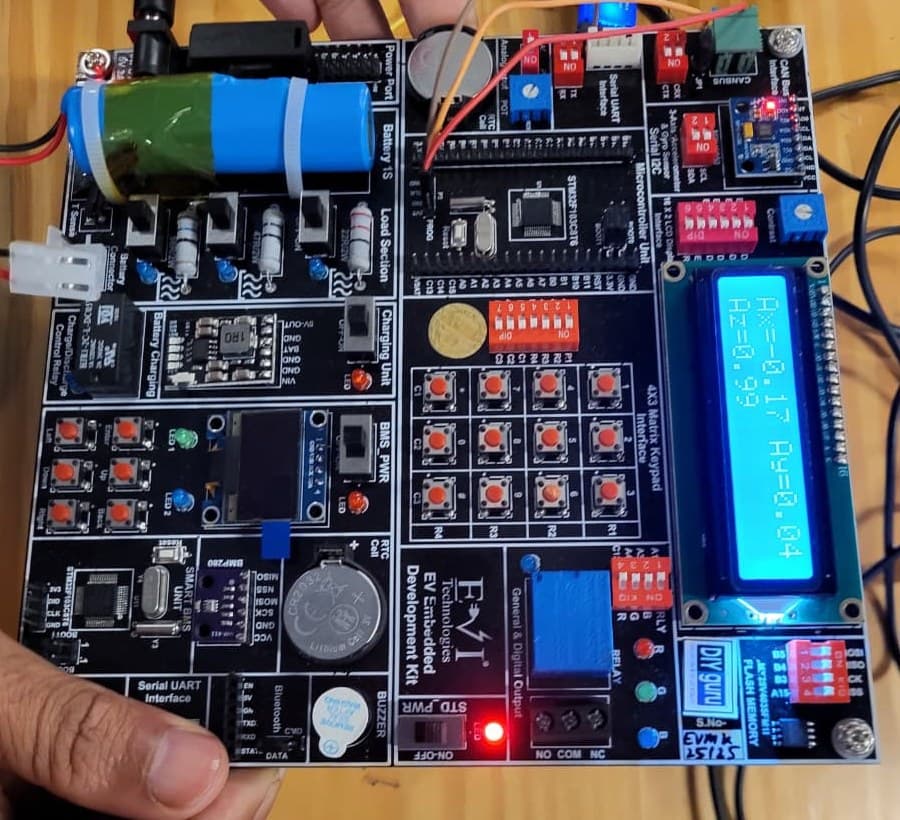
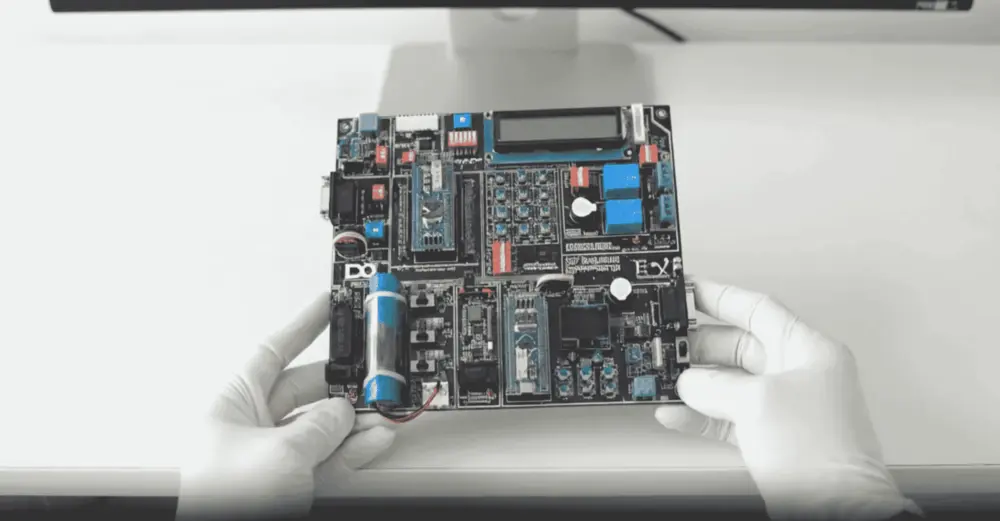
Practise on real hardware
₹10,000 + GST
See what's in the kitTrainer Support
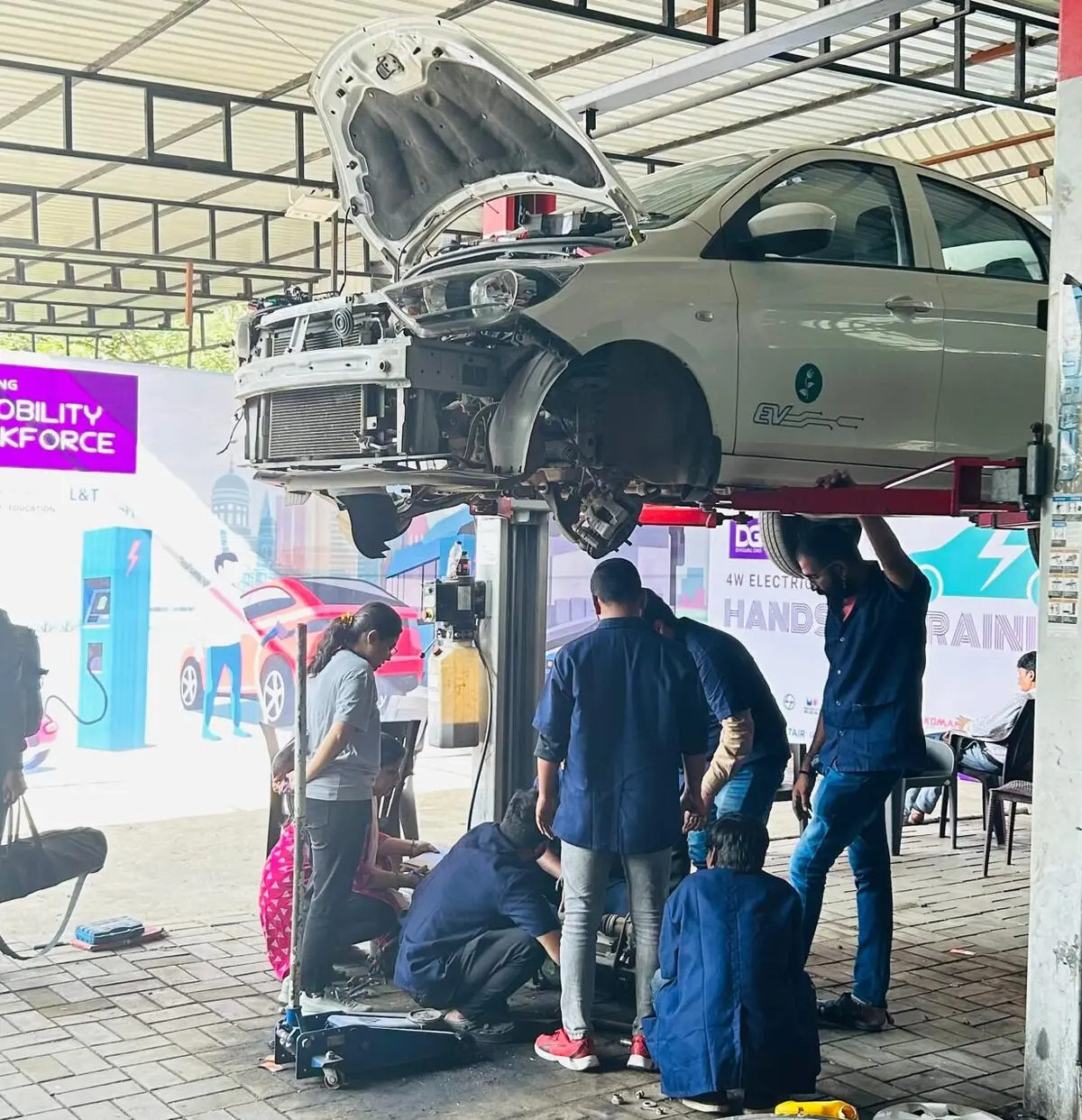
Post questions on any calculation, hybrid power-flow diagram or regulation topic in the course Q&A on the portal and a trainer will answer there. If you are enrolled through a programme, you can also bring doubts to the live doubt-clearing sessions when they are scheduled.
Bharat eMobility Recruitathon
The Bharat eMobility Recruitathon brings our learners face to face with companies hiring across the EV industry. Watch the Delhi and Pune chapters.
Reviews
★★★★★
Learnt a lot from numerical analysis, learnt how to calculate power of a vehicle, but other theoretical parts in the course need constant revision to memorize.
SAURABH K. · Jul 2026
★★★★★
Great learning experience
Udayasinh D. · Jul 2026
★★★★★
wow
Yash G. · Jun 2026
★★★★★
Good Course
Nilesh D. · May 2026
★★★★★
This course greatly tests your detailes understanding of all core principles of EV technology. Thanks DIYGuru
Samuel O. · Apr 2026
★★★★★
The modules are well-organized and easy to follow.
Seema · Apr 2026
FAQ
Talk to a counsellor
Leave your details — a counsellor will call you about the syllabus, fees, EMI and certificates.
Technical Expertise You Will Gain
The roles these skills are used in, what you'll be able to do, and the parts of the industry that need it.
Government-Certified · Industry-Endorsed · Learner-Approved
Automotive Skills Development Council — recognised by major OEMs worldwide.
National Educational Alliance for Technology — issued under AICTE's premium learning ecosystem.
Learner Stories
The hardware-first approach made all the difference. Came in from a generalist electronics background; the BMS and motor-drive modules gave me concrete vocabulary I could carry into Infineon interviews.

Industry-grade depth without the academic ivory tower. The MATLAB Simulink + capstone defence prepared me for exactly the kind of cross-functional EV problems we solve at Cummins.

Started with electronics, walked into a BMS role in Germany. The applied projects + mentor reviews are what carried me through — the certifications opened the door, the depth got me hired.

Recorded lessons at your own pace · trainer doubt support · verifiable certificate on completion.